Beauty and the Beast, as an Echo from Mythology
Beauty and the Beast is an extremely popular fairy tale with hundreds of variations. While it is one of the rare classic tales with attributed authorship, a closer examination reveals a number of shared elements with many other timeless stories.
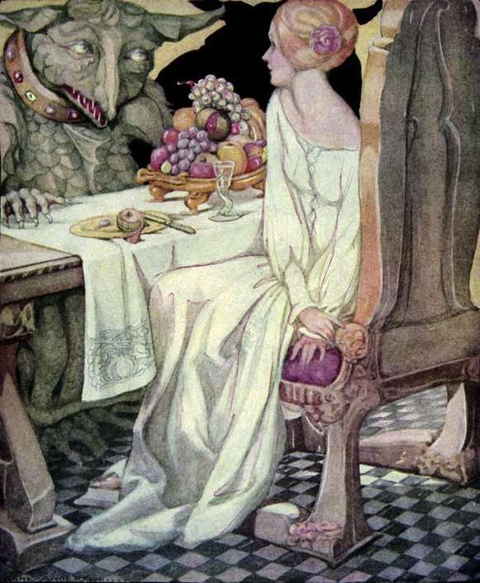
Beauty and the Beast by Anne Anderson
The Brothers Grimm believed every fairy tale is actually an echo of an ancient myth. The narrative of a beautiful
girl, isolated from the world and at the mercy of a beast, is not as original as it might seem, as it appears in not just
one but several myths.
So join us in exploring various Greek and Roman myths, with brief summaries and comparisons!
Summary of Beauty and the Beast
Here are the main elements:
- Beauty (Belle in French) is the name of the youngest and most beautiful of three daughters.
- Her father is a merchant. When he asks his daughters what they want as gifts from his upcoming trip, the two eldest wish for clothes and jewelry, but the youngest wants only a simple rose.
- The merchant finds a rose in a mysterious garden, where he encounters the Beast.
- Beast is willing to spare him only if he sends one of his daughters in exchange for his life.
- Beauty goes to his castle to save her father’s life.
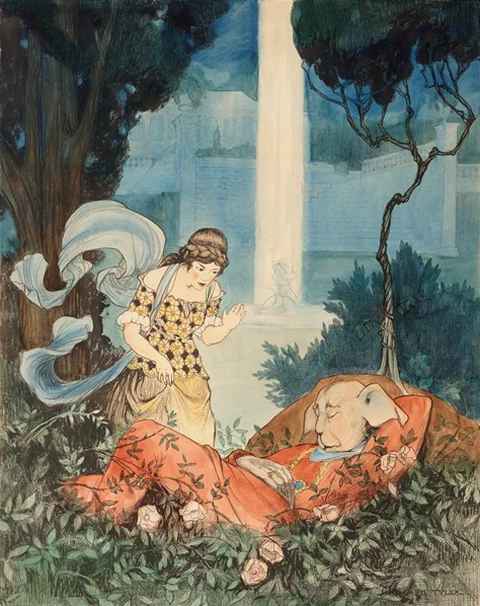
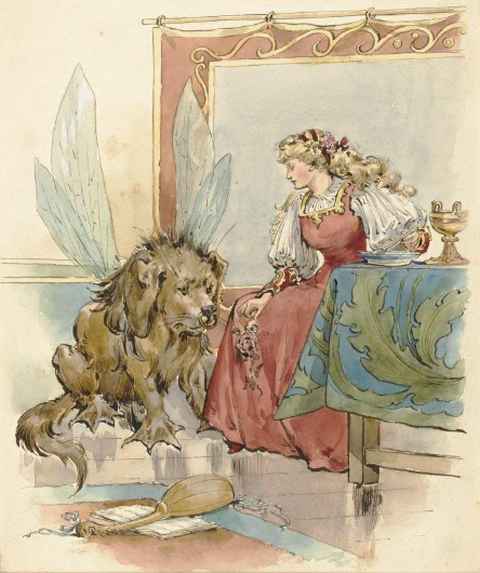
Beauty and the Beast by Elizabeth Tyler Wolcott (left) and Evelyn Stuart Hardy (right)
- Every evening, Beast asks her if she will marry him, and while she refuses him answers, she gradually becomes accustomed to his amiable personality.
- Every night, she dreams about a charming prince who needs her help, but she doesn’t know how to help him.
- Beauty becomes homesick, and Beast gives her permission to leave, but she has to return before a certain
date. If she doesn’t, he will die. - When she tells her sisters about the luxury in Beast’s castle, they become jealous and try to delay her
departure. - Beauty dreams of the Beast being sick and returns just in time to save his life. She accepts his offer of
marriage, and he transforms into a beautiful prince.
From Fairy Tale to Myth(s)
Cupid (Eros) and Psyche
1. Psyche is also the youngest and prettiest of three sisters.
2. Venus (Aphrodite) becomes jealous and plans revenge: She wants her son, Cupid, to make her fall in love with the ugliest creature in the world.
3. Instead, Cupid falls in love with Psyche.
4. Psyche, on the other hand, is so beautiful that no mortal man dares to propose to her.
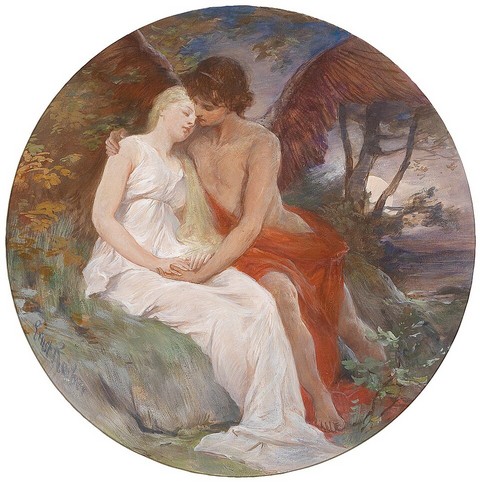
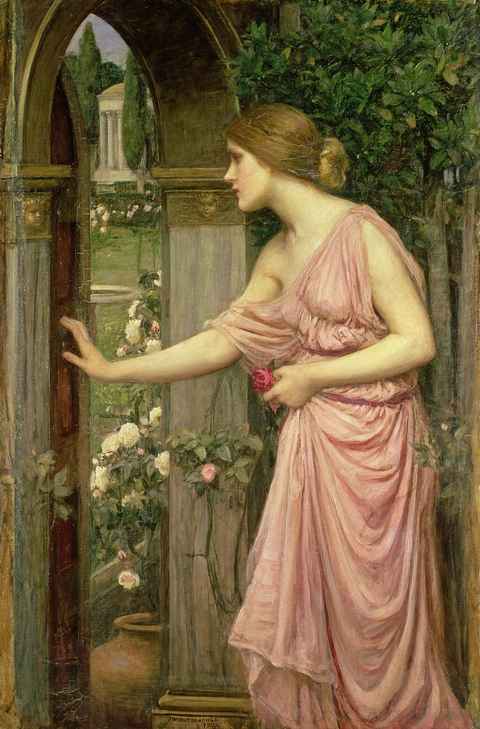
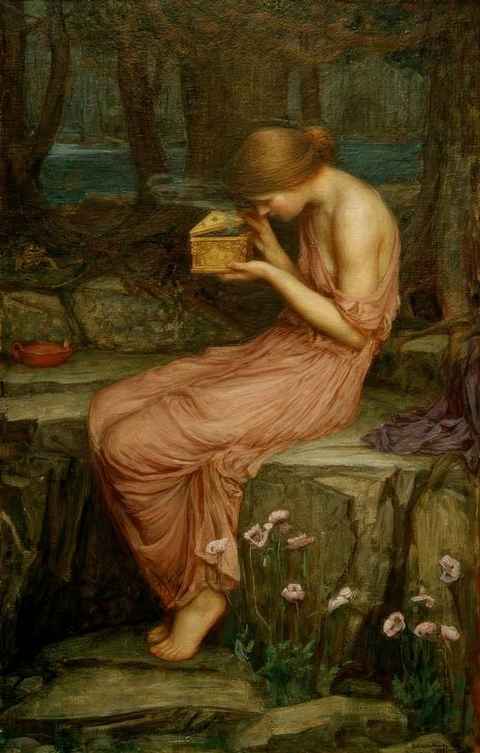
Amor and Psyche by Ernst Roeber (left), Psyche Entering Cupid’s Garden (middle), and Psyche Opening the Golden Box by John William Waterhouse (right)
5 . Oracles advise her parents that Psyche should be sacrificed to a monster with supernatural powers.
6. Psyche is taken to the mountain, where invisible hands transport her to a mysterious castle. She lives there, being served by invisible servants.
7. Somebody joins her every night, but he stays invisible, too.
8. She falls in love with the ‘monster’ (Cupid) but must promise she will never look at him.
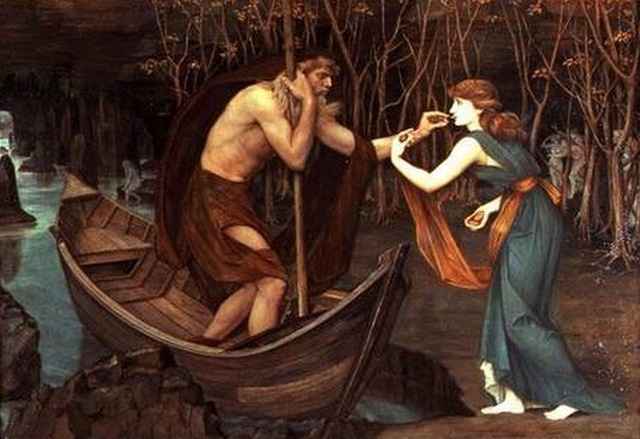
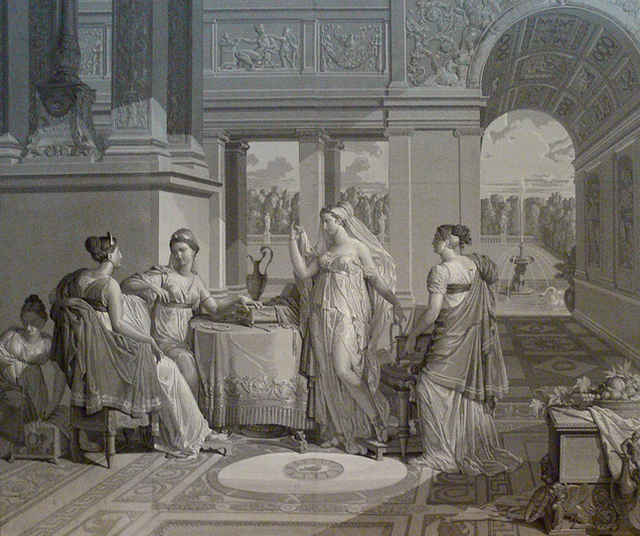
Charon and Psyche by John Roddam Spencer (left) and Psyche Showing Her Sisters Her Gifts from Cupid by Mary-Joseph Blondel (right)
9. Cupid arranges the visit of her sisters, who convince her to break her promise, and Cupid disappears.
10. After long periods of wandering (underworld included) and several trials, Psyche eventually finds Cupid, and they reunite.
In both cases, we deal with the use and abuse of power, isolation, jealousy, sacrifice, revenge, and above all – love. It is claimed that love is the best remedy for the seemingly unsolvable issues.
What About Other Myths?
Aphrodite and Hephaestus
Aphrodite (Venus), the goddess of love and beauty, is so beautiful that other gods almost start a war for her hand, so Zeus (her father) promised her to Hephaestus, the most unattractive (to put it bluntly, the ugliest) of all gods.
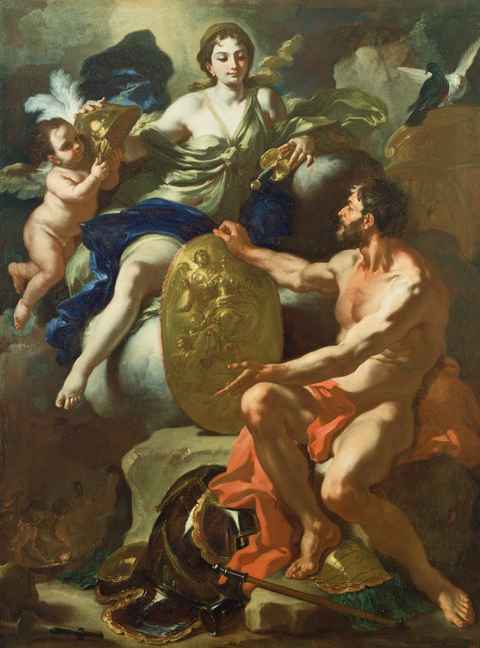
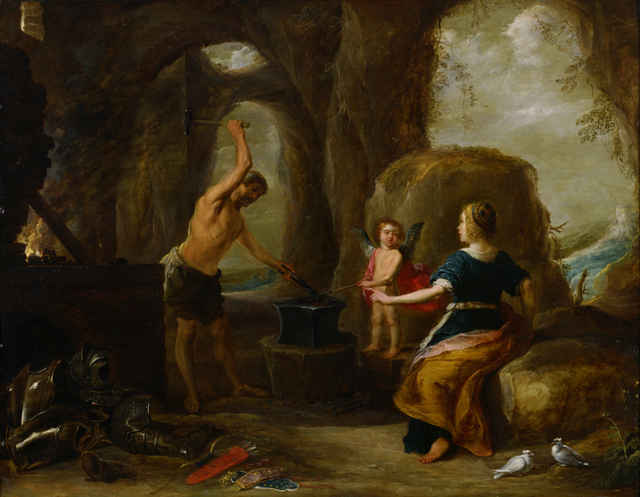
Venus at the Forge of Vulcan by Francesco Solimena (left) and Venus Visiting Vulcan by David Teniers the Elder (right)
They live in the underworld, but she finds many ways to be unfaithful. It remains uncertain whether Eros (Cupid) is their son or the outcome of her affair with Ares (Mars).
While the story doesn’t have a happy ending, it still shares several important themes with the tale of Beauty and the Beast: isolation, sacrifice, jealousy, violation of trust, and abuse of power…
Galatea and Polyphemus
She is in love with handsome Acis, but ugly Cyclops Polyphemus wants her for himself. While Polyphemus plays music, Acis and Galatea enjoy each other’s company.
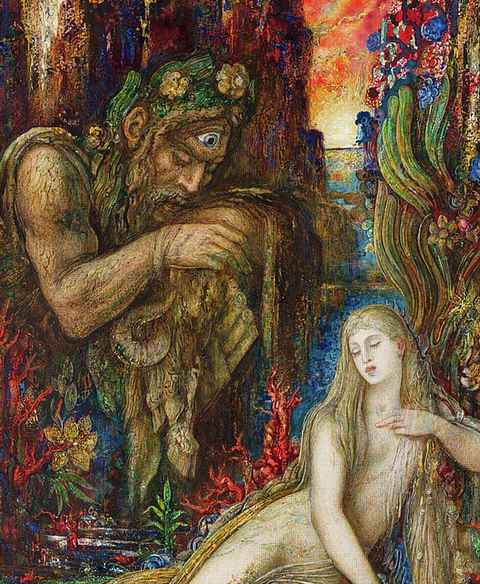
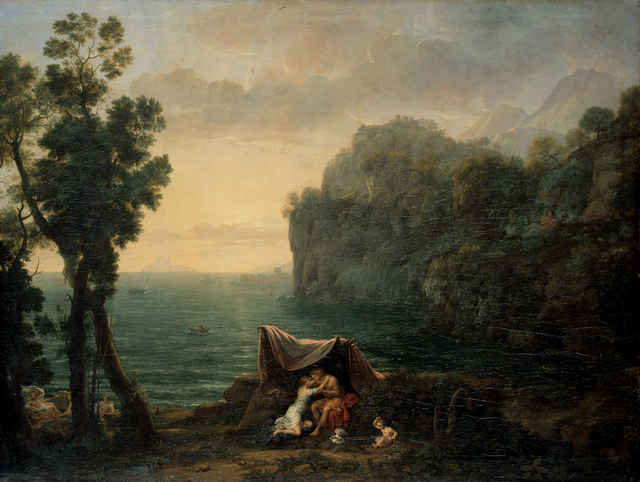
Polyphemus and Galatea by Gustave Moreau (left) and Galatea and Acis by Claude Lorrain (right)
Cyclop decides to destroy his rival with a huge rock (he can be explained as a personification of volcano Etna), and Galatea turns Acis into a river (this is a real river in Sicily).
There are versions of the story in which Galatea eventually falls in love with Polyphemus, and others in which they don’t end up together.
In any case, we have the same elements of isolation, magical transformation, jealousy, revenge, and unpredictable love.
Story of Europa
In this tale, Zeus changes himself into a bull and carries beautiful Europa (she probably belongs to the nobility) to the island of Crete.
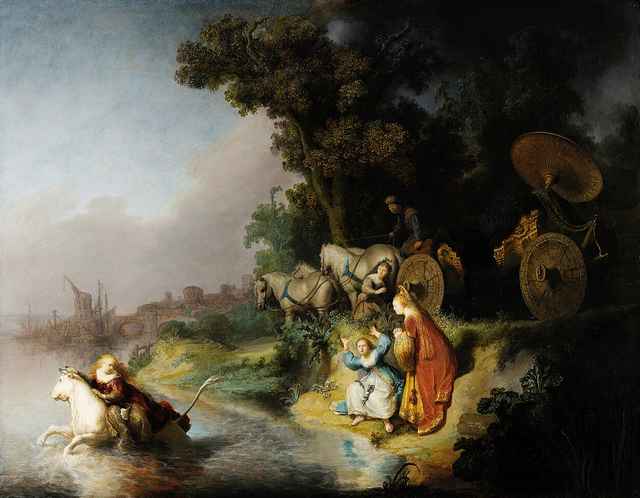
Abduction of Europa by Rembrandt Harmenszoon van Rijn
We have another tale which starts with a beast who desires a beauty, and she comes to his place (an isolated island) against her will. After a while, she becomes accustomed to him, and the legend says their relationship produced three kings. Again: love, passion, and magical number three!
Daphne and Apollo
In this myth, we meet Eros (Cupid) again.
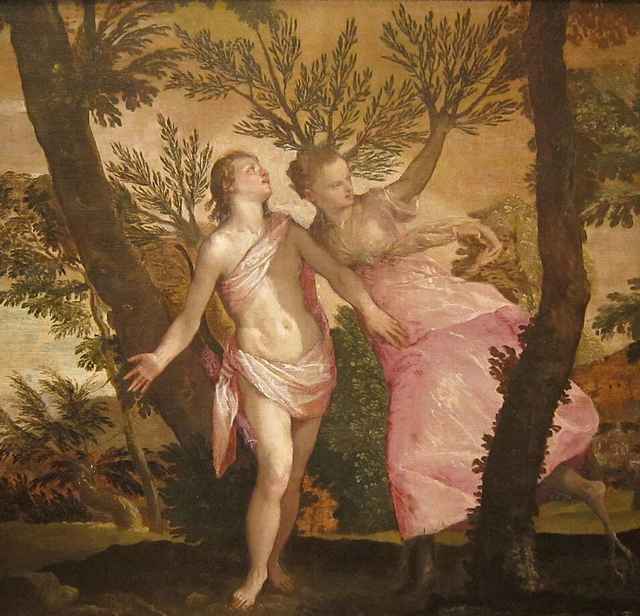
Apollo and Daphne by Paolo Varonese (Caliari)
He is in charge of love, after all … well, Apollo insulted him, and he ensures he falls in love with a nymph (Daphne) who can’t return his love. The reason? She was hit by Cupid’s arrow, too, but in her case, the arrow was made of lead!
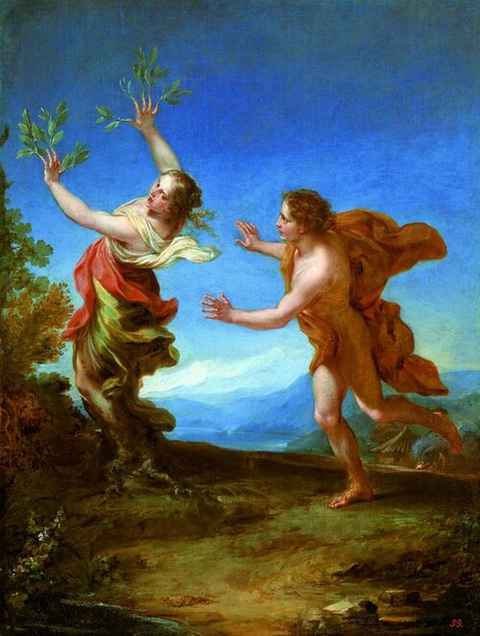
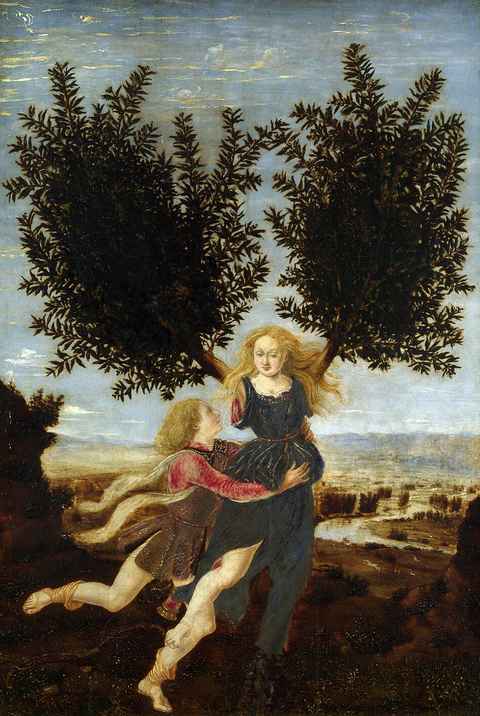
Daphne and Apollo by Benedetto Luti (left) and Piero del Pollaiolo (right)
To protect her virginity, her father, Peneus, transforms her into a laurel tree, and this is why Apollo bears laurel leaves on his head – and they are evergreen, just like his love!
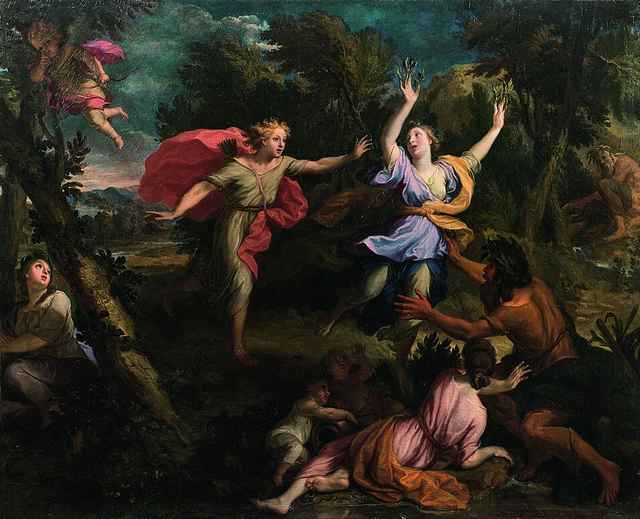
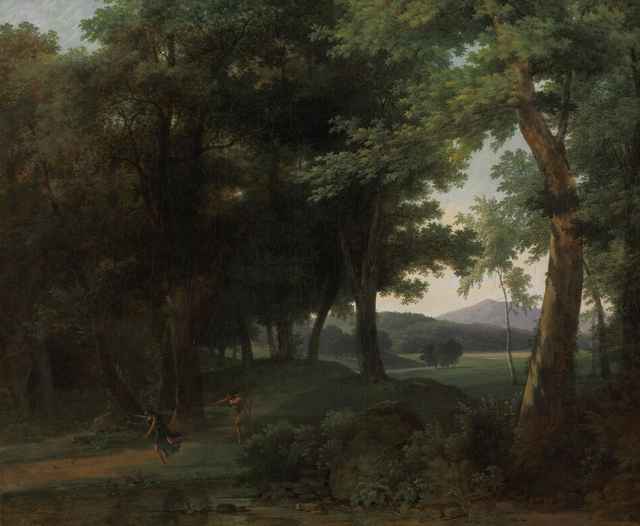
Daphne and Apollo by Louis de Boullogne left)and Victor Bertin (right)
See? Revenge, use and abuse of power, magical transformation, he wants her, she doesn’t want him, the important role of her father … ?
Persephone and Hades
Persephone is the daughter of Demeter, goddess of the harvest. Hades is not just another ugly guy from Greek mythology. He is probably the second most powerful god after Zeus, and when he wants Persephone for his wife, nothing can stop him. He kidnaps her, and she becomes his wife. Demeter cursed the earth and promised nothing would grow until her daughter was back with her.
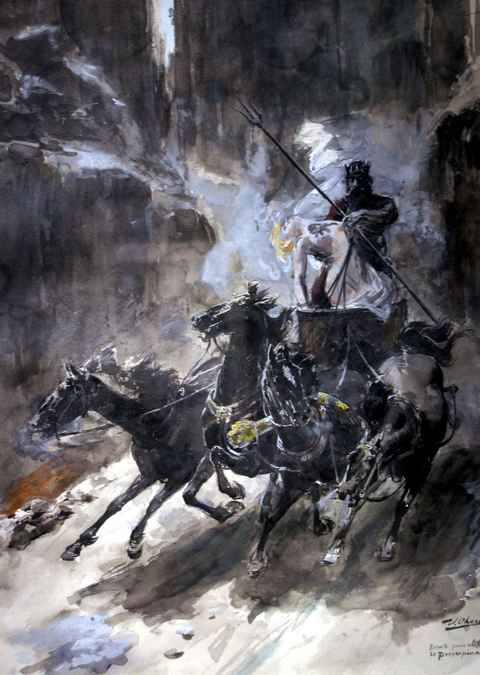
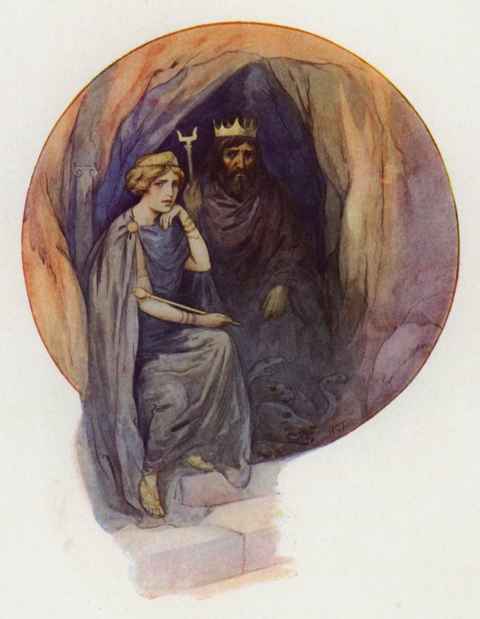
Abduction of Persephone by Ulpiano Checa (left) and Proserpine on the Throne b Harry George Theaker (right)
Zeus had to intervene. Persephone had really been sent back, but Hades had one more ace up his sleeve. The conflict was solved in an interesting way: she spent part of the time on the surface of the world and part in the underworld with Hades. Persephone’s time with Hades is called winter. We don’t know if she eventually fell in love with her husband.
In this case, identifying Beauty and the Beast is straightforward. The narrative involves a significant parental figure (typically the mother), forced isolation, abuse of power, a return to one’s roots, and various transformations.
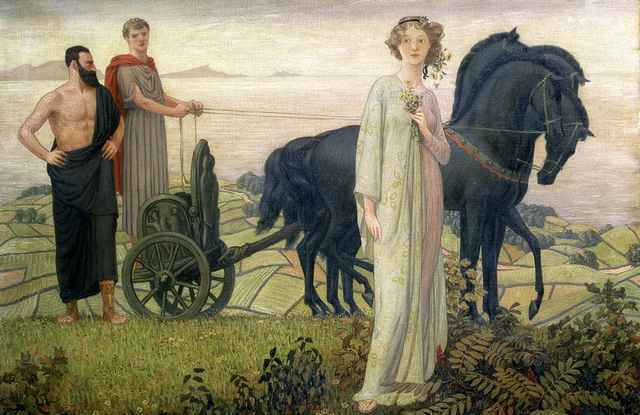
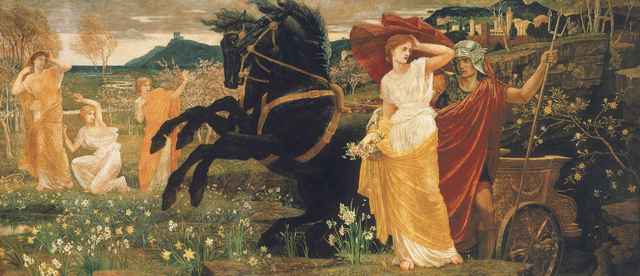
Pluto and Proserpine by Henry Bryson Burroughs (left) and Fate of Persephone (Walter Crane)
Yes, the elements of the Beauty and the Beast fairy tale can be traced in more than one classical myth!
What About Other Fairy Tales?
We can go even further. This fairy tale shares numerous similarities with other widely recognized stories.
- The jealousy part (among sisters) can be recognized in Snow White (stepmother-stepdaughter).
- Father, incapable of protecting or even endangering his daughter, is present in Cinderella, Snow White, Sleeping Beauty, Rumpelstiltskin, and other tales.
- The theme of isolation in a castle is also popular. The most similar situation is probably seen in Sleeping Beauty, where we even have invisible hands helping Beauty (older versions).
- Let’s mention one of the most powerful messages from Beauty and the Beast, which is, of course: ‘Don’t judge a book by its cover,’ which is cynically twisted in Puss in Boots, where obviously ‘clothes make the man’.
- The theme of the animal bridegroom is one of the most popular themes in the world of fairy tales, with the Frog Prince probably being the most well-known.
We could go on and on, but the point should be very clear by now – dealing with a single fairy tale, we are instantly involved with centuries of world cultural heritage. Civilization didn’t start with Walt Disney. The world of fables is as old as humankind, and every one of us has a more or less active part in it. Which myth related to Beauty and the Beast do you prefer?