The Goose Girl is a fairy tale written by Jacob and William Grimm. It tells a story of a stolen identity, tests the power of a given word, and beautifully presents how justice wins over injustice.
Summary
Like many fairy tales, The Goose Girl begins with the king’s death. His wife managed to rule alone, and when her daughter grows into a young woman, she arranges a marriage to a prince from another kingdom. The princess leaves her with a magic handkerchief, a talking horse named Falada, and a maid. Very soon, the maiden rebels against the young princess, who simply doesn’t have enough authority.
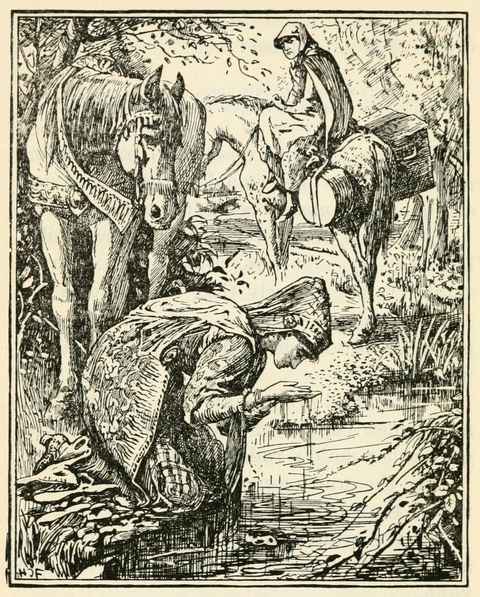
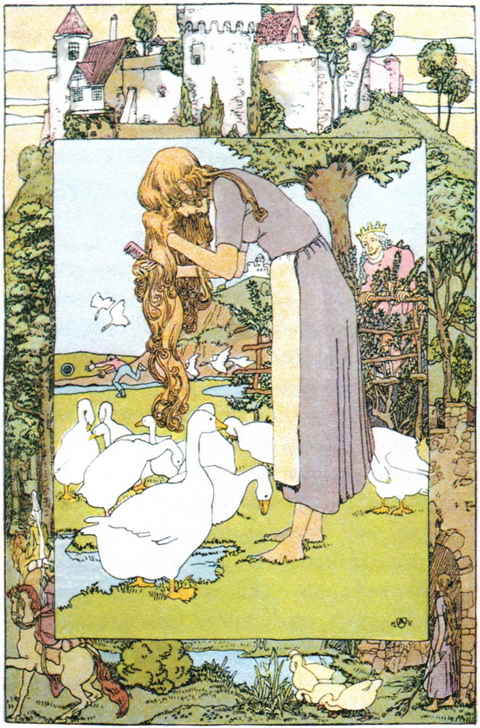
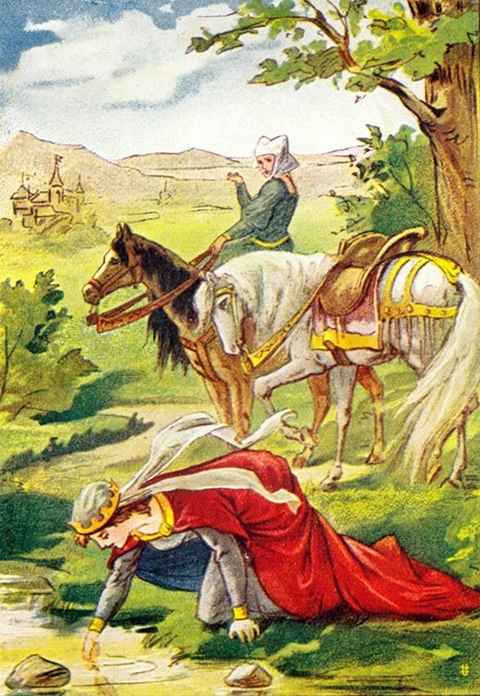
Illustrations by Henry Justice Ford (left), Heinrich Vogeler (middle), and Thekla Brauer (right)
The princess loses the handkerchief and is forced to change clothes with her maid, who decided to present herself to the prince as his future wife. The princess is also forced to give her word not to tell anybody about the true origin of both. The maid’s plan goes well at the beginning; the talking horse is slaughtered, and the real princess becomes the goose girl at the court.
While the false princess is enjoying the wedding preparations, the king, the father of her future husband, becomes suspicious. He hears about the goose girl talking with the horse’s head (she convinced the slaughterer to hang it under one of the town’s gates), her golden hair, and the strange behavior of the wind when she combs it.
The king asks the goose girl who she really is, but she doesn’t want to break her promise, even though it was enforced. But the king persuaded her to tell her story into the iron stove and secretly listened on the other side. When he finds the truth, he challenges the false bride. What would be an appropriate punishment for stolen identity?
The maid, who believed her plan was a total success, proposes a very brutal penalty and, right after that, becomes the victim of her own cruelty. The goose girl becomes the princess and the bride.
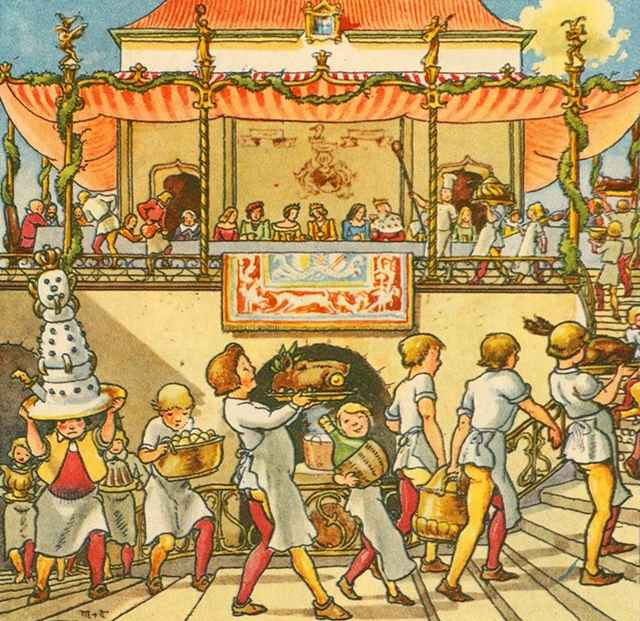
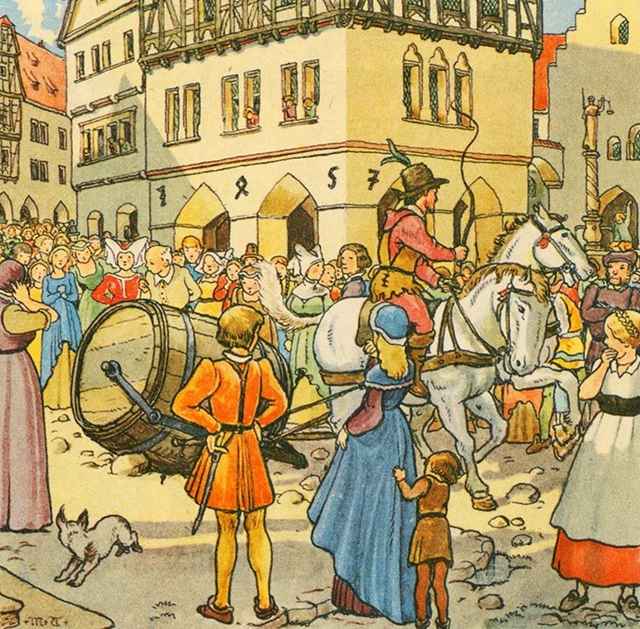
Illustrations by Max Teschmecaher
Story Structure
The Goose Girl is a classic fairy tale by the Brothers Grimm. Its plot follows the rags-to-riches pattern, similar to Cinderella’s. The majority of fairy tales follow one of two patterns:
1. Rags-to-riches, where the hero starts in poverty, has low social status, is somehow handicapped, but at the end wins the heart of the princess, defeats a giant, or becomes very rich and influential. Examples of such fairy tales are Puss in Boots, Valiant Little Tailor, or Hansel and Gretel.
2. Riches-to-rags-to-riches, where the protagonist starts in a very good position but loses everything before, through a series of events, regains the same or even better status. The patterns seen in Beauty and the Beast and Snow White are similar to those mentioned previously in Cinderella.
Unlike most popular fairy tales, The Goose Girl contains many illogical elements and connections. Her magical charms seem useless. Although understandably, she lost them due to her incompetence, she never tried to earn them back. A talking horse in the story is pretty cool (a talking head would be even better), but it doesn’t add any substance. We know much better fairy tales with talking animals having much bigger roles (think about The Frog Prince or even the harp in Jack and the Beanstalk).
Although the princess lacks the power and courage to resist her servant, she persuades the butcher to place Falada’s head on the door. Even more. Apparently, she bribes him, but we just heard she lost all her valuables!
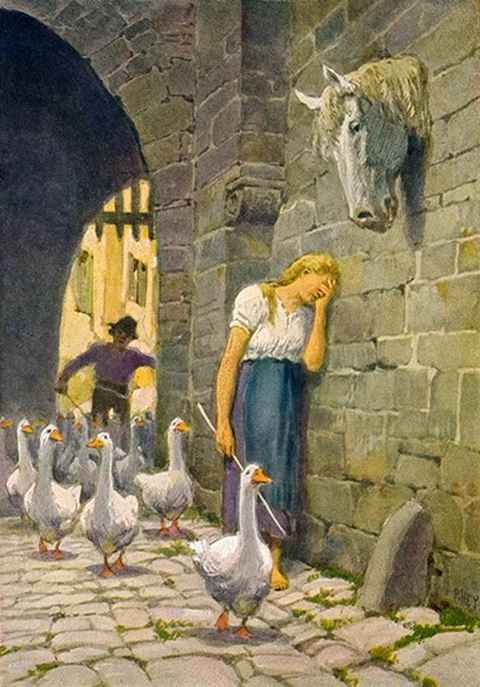
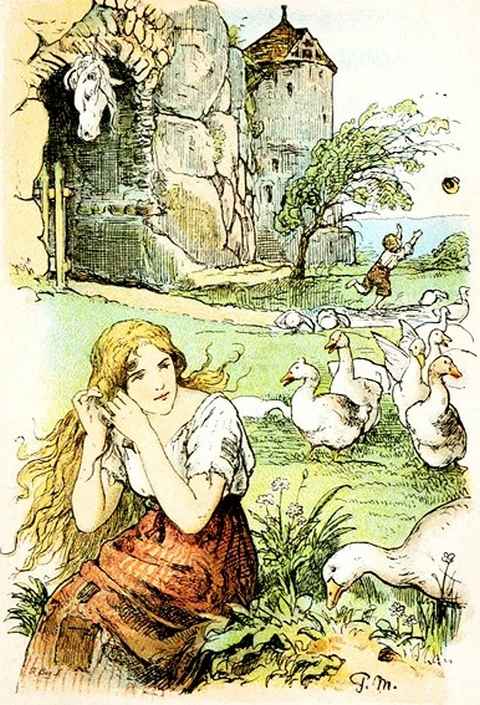
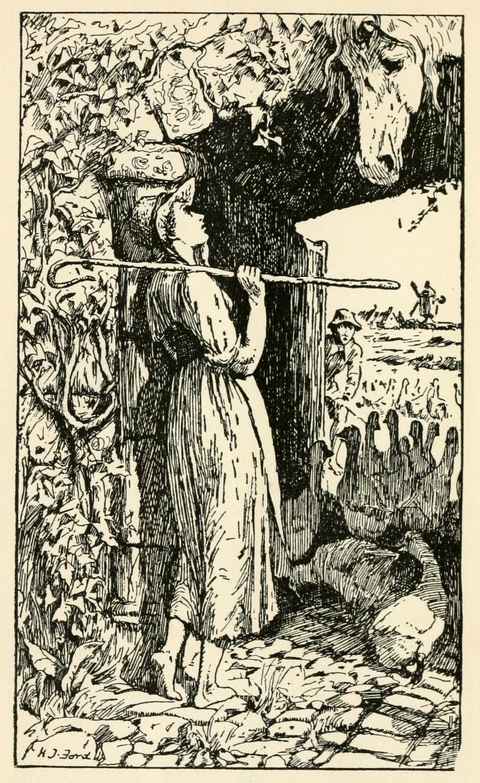
Illustrations by Paul Hey (left), Paul Friedrich Meyerheim (middle), and Henry Justice Ford (right)
She also has some magic powers over the wind. If she uses them to protect her hairstyle, why didn’t she use them to protect herself or her precious Falada? By the way, what’s the use of the talking horse if it didn’t tell the truth before the true princess lost her position, including the horse? It’s also not very believable to expect the servant playing the role of the princess without making at least a few mistakes!
Such narrative clumsiness is atypical of fairy tales, especially those by the Brothers Grimm. They revised their texts numerous times over the course of seven editions published during their lifetimes. Maybe we’ll find some answers in the section about the mythological background of this particular fairy tale.
Analysis
While the story has several magical objects (a handkerchief, a talking horse, a power over the wind), they actually don’t play very important roles. The story focuses on a princess who is too immature to manage her own servant. She is unable to protect her most precious possessions, the magic handkerchief and the horse, and is rightly ‘dethroned’ from her position.
However, she cannot escape her destiny, which is clearly represented by her golden hair. Hair is very important in several other fairy tales as well (think about Goldilocks, The Devil with the Three Golden Hairs, or Rapunzel) and can be interpreted as a sign of her royal lineage that she can’t deny, even if she wants to. Being so incompetent, does she actually deserve a happy ending? Well, frankly, no. But she still has something – the power of her word.
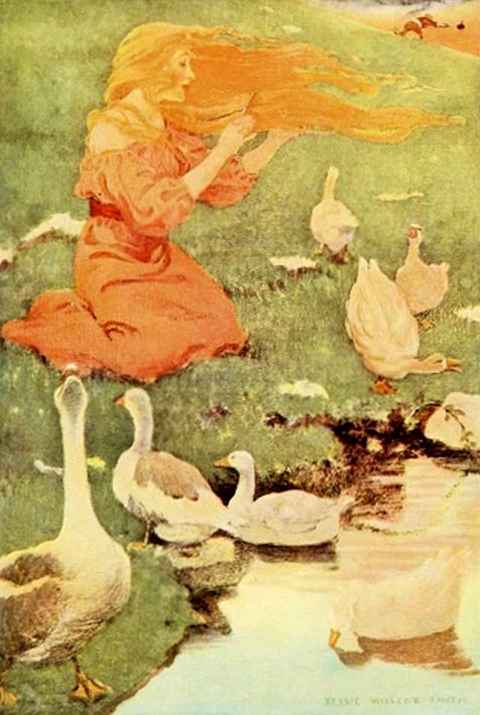
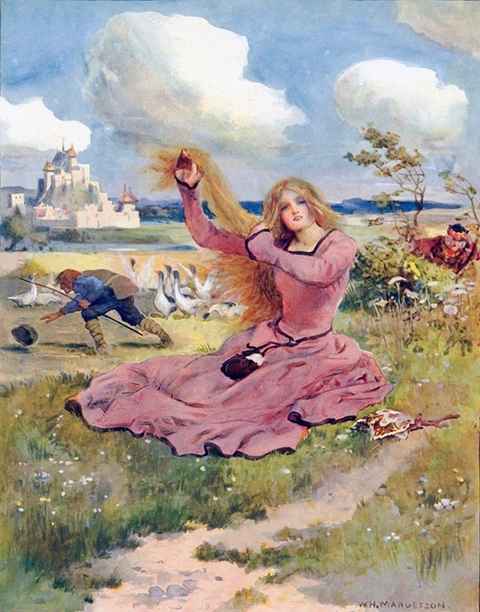
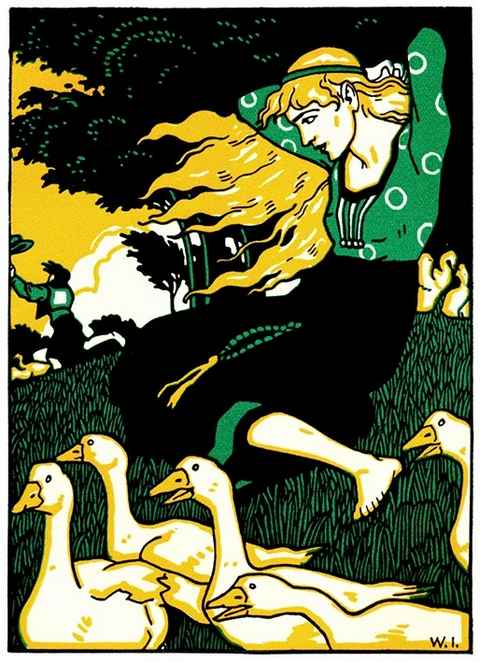
Illustrations by Jessie Willcox Smith (left), William Henry Margetson (middle), and Willy Juttner (right)
While her maid successfully overpowered her before they entered the foreign kingdom, the king had to use all his cleverness to squeeze the truth out of her. By the way, don’t forget the role of the iron stove, a symbol of the womb, in another well-known fairy tale: Hansel and Gretel.
The Mythology Behind The Goose Girl
The Brothers Grimm were almost obsessive in their attempts to find mythological roots in all fairy tales. They tried to prove the existence of a universal myth, the predecessor to all stories in the world, including fairy tales. Before finally deciding to include The Sleeping Beauty in their collection, they spent considerable time connecting it to Brynhild. The Goose Girl is no exception.
They studied the mythological character of Central Europe. She is called Perchta (Berchta, Bertha) and was an important goddess in the paganism of the Alps. Perchta is still present in old stories in the area of today’s Germany, Switzerland, Austria, Slovenia, and the Czech Republic. She is portrayed in different forms, mostly as a beautiful white lady and as an old, wrinkled granny.
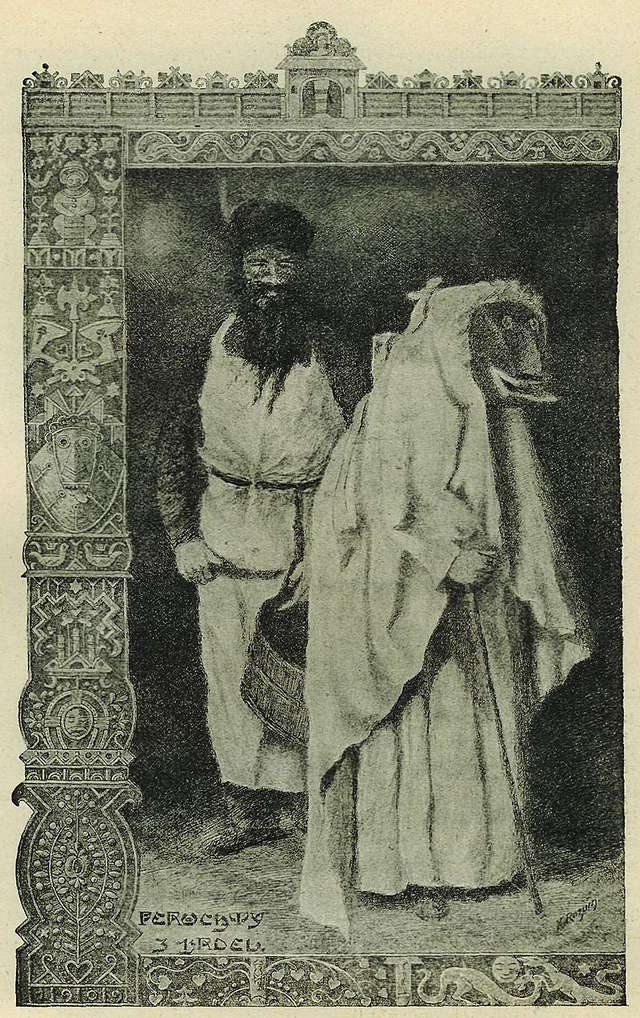
Illustration by Cenek Zibrt
Old legends about Perchta tell us that she is a master of beasts and can shapeshift. This is shown by one of her feet being unnaturally large, often called a goosefoot. Thus, the goose girl’s power over the wind and geese in the fairy tale may stem from old legends about Perchta.
The hair and attire of the two major Perchta presences can serve as indicators of the connection between the two story types. As an old woman, she wears ragged clothes and has messy hair. In her beautiful incarnation, however, her clothes are nearly royal, and her hair is as shiny as gold!
Perchta was undoubtedly a role model for the many wise women who possessed seemingly magical powers during the pagan era because they knew how to use herbs and understood the basics of medicine and physiology. All these women became a threat to the monopoly of knowledge acquired by the Christian Church, and many ended their lives accused of being witches and burned at the stake.
A few words about the characters in The Goose Girl
- The father is absent, like in many classic fairy tales.
- The mother obviously has some magical powers (represented through talking drops of blood), but can’t help her daughter anymore.
- The servant is ambitious, but also primitive and cruel. She is similar to the sisters in Cinderella and the lazy girl in Diamonds and Toads. This eventually leads to her being punished in a way similar to the wicked stepsisters in Cinderella and the lazy girl in Diamonds and Toads.
- The prince is immature and can’t spot the difference between the true and false princess. Any girl is good for him if she is willing to marry him.
- Although Conrad is loyal to his king, he actually helps the goose girl.
- The king (her future father-in-law) is the smartest person in the story and serves as a detective and a judge.
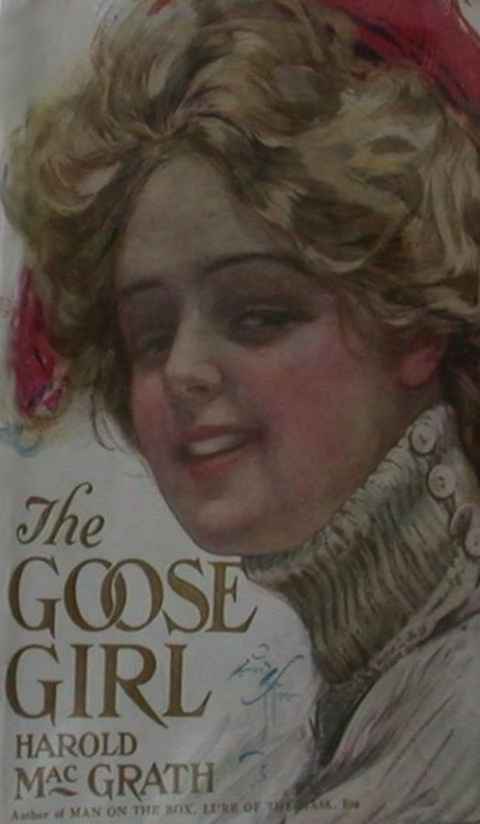
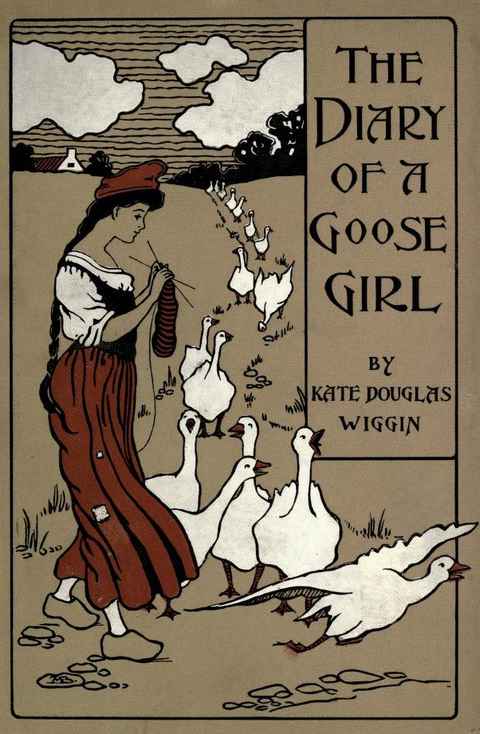
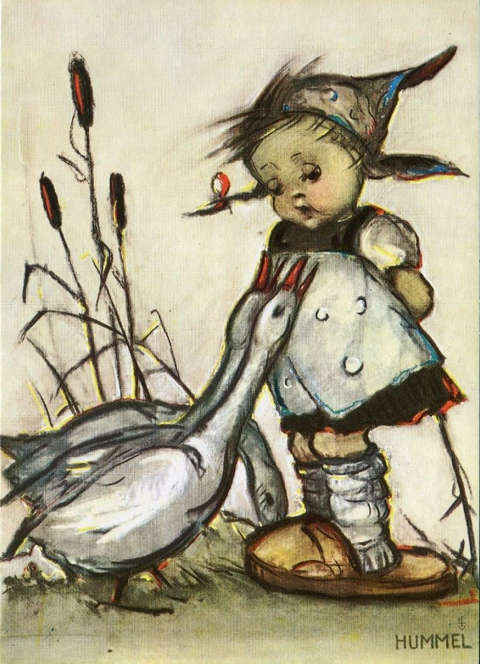
Poster by Harrison Fisher (left), book cover by Claude Allin Shepperson (middle), and postcard (Berta Hummel)
- The goose girl has royal blood, but she must lose almost everything (except the honor of keeping her promise) before she can earn her place at court.
Adaptations
The story of the false princess inspired many artists working in various media. Painters and illustrators have portrayed the goose girl in key scenes from the story. Hundreds of these works are in the public domain, and some are featured in this article.
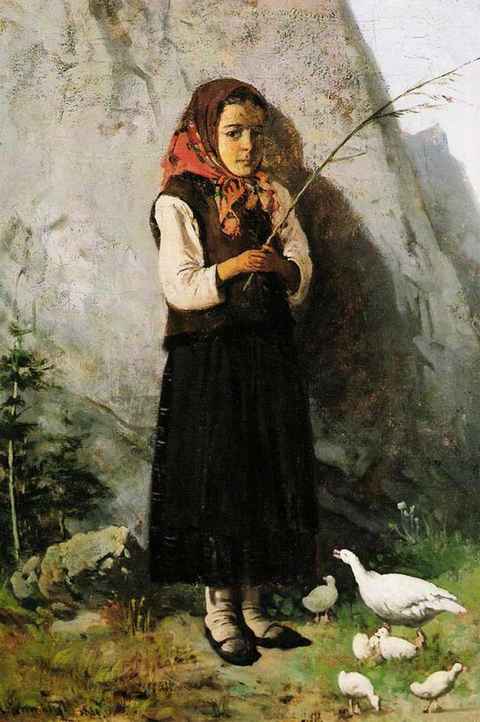
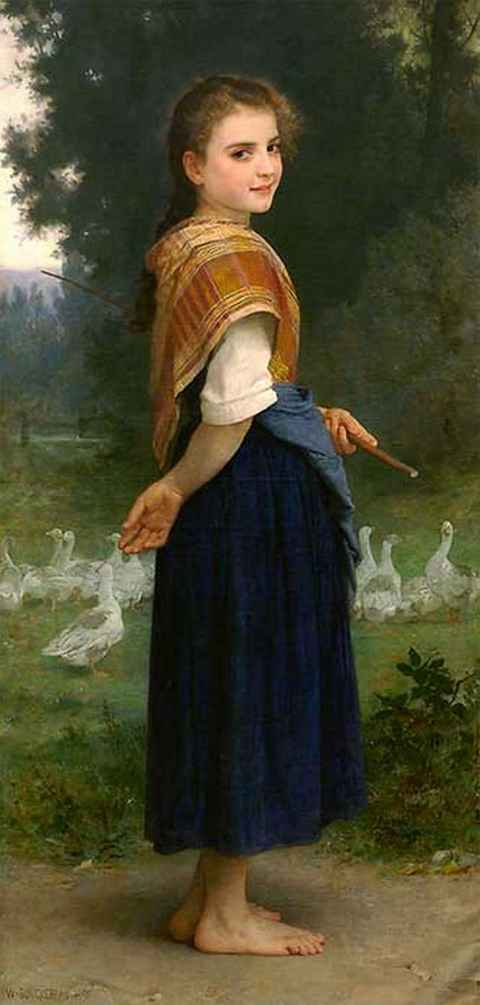
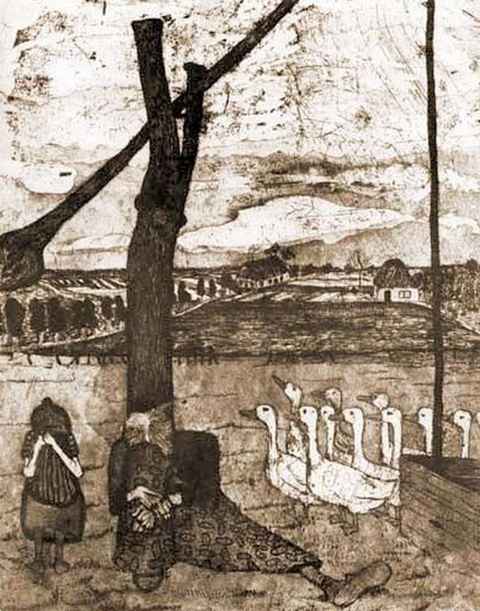
Paintings by Antoni Gramatyka (left), William-Adolphe Bouguereau (middle), and Paula Modersohn Becker (right)
This fairy tale was also adapted for television and the silver screen. We can watch it as a classic or animated movie in a silent, black-and-white version or a full-color, sound version. There are more or less loose adaptations dating from the early 20th to the 21st century. Masters of anime couldn’t resist it either.
In literature, The Goose Girl by Shannon Hale, a fantasy novel for young adults, achieved particular success with the audience. The next set of illustrations is from Harold MacGrath’s full-length novel, in which the real princess is stolen at birth. Despite not knowing about her noble origin, the prince falls in love with her. The author of the illustrations is Andre Castaigne (1861-1929).
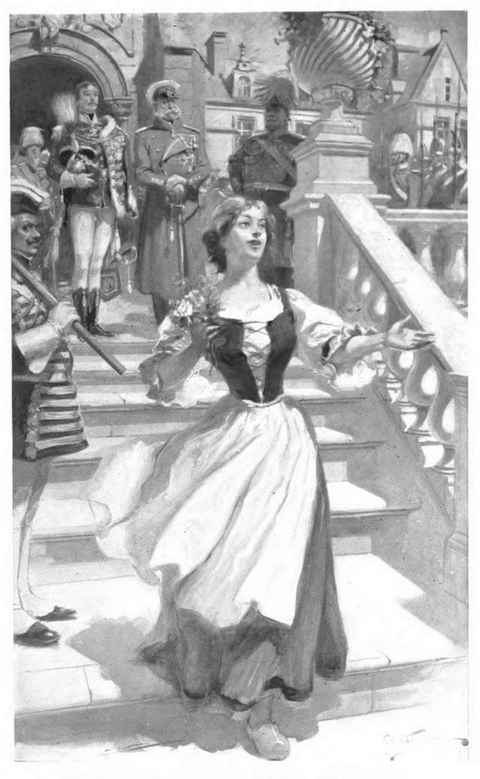
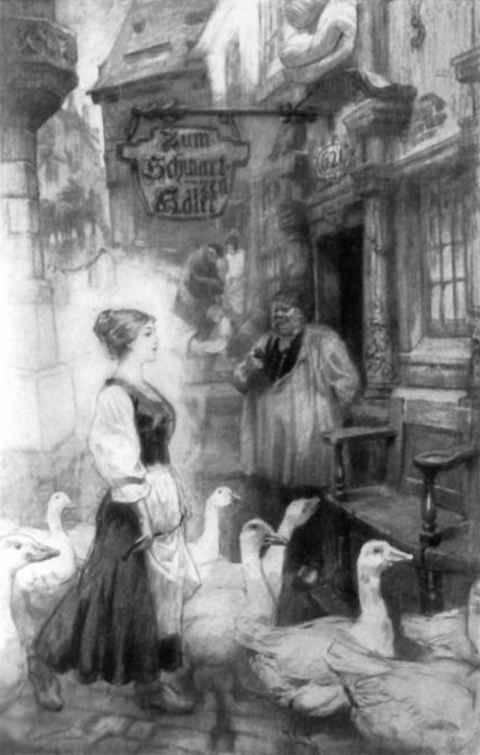
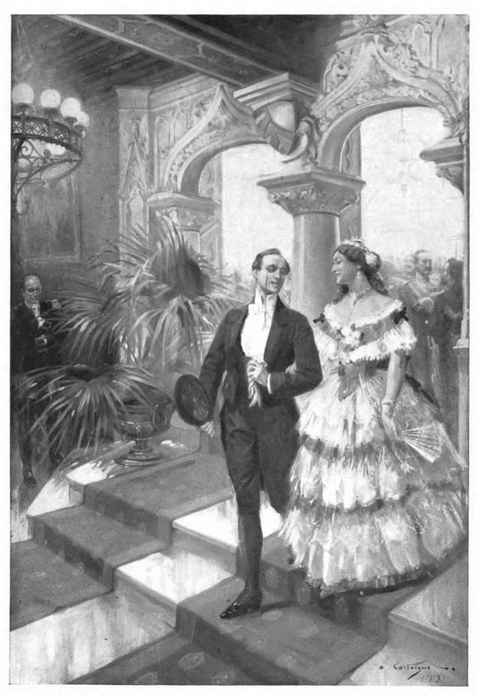
Illustrations by Andre Castaigne
Don’t forget a highly collectible series of decorative figurines by Maria Innocentia Hummel. These little porcelain masterpieces lost their value for various reasons (mostly high production), but older versions, especially larger (over 12-inch) limited figurines, can achieve several thousand dollars.
Knowing how popular some of the old fairy tales have been in recent years, we can only expect to see more adaptations in the near future.