Category: symbolism

  • Jack and the Beanstalk

    Jack and the Beanstalk

    Jack and the Beanstalk: A Fairy Tale about Growing Up

    The story about Jack and the Beanstalk can be traced to at least the first half of the 18th century, although similar tales are several centuries older. Several versions of the same fairy tale exist, depending on the writer, editor, and the publication’s intended goal. Some variations focus on fun and action, while others have an artistic, educational focus. Bursting with symbolism, they offer much more than a simple story about a boy who steals magical objects from a giant. To explore its depths, we first need to summarize it.

    Summary

    Jack is a poor country boy who lives alone with his mother. Their only possession is a cow. The cow gives them just enough milk to survive. One day the cow stops giving milk, and the mother suggests selling it. Jack takes the cow to the fair. On his way, he meets a strange man who offers him a fistful of beans in exchange for the cow. He claims that beans are magical, and Jack agrees to the deal.
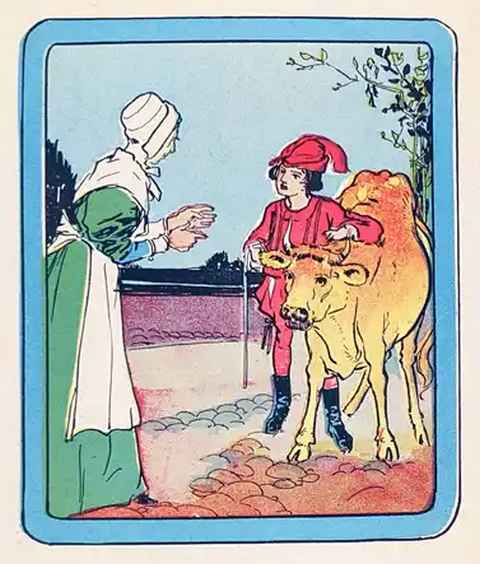
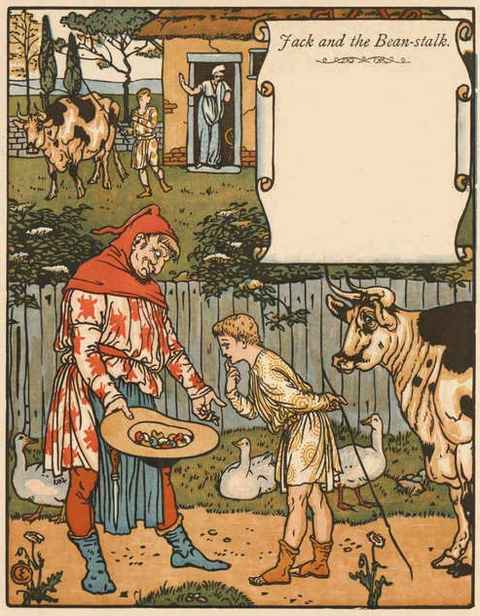
    Illustrations by John Rea Neill (left) and Walter Crane (right)

    Jack’s mother is furious when she finds out about his decision. She throws the beans on the ground and sends him to bed without supper. In the morning, Jack finds a large beanstalk right where the beans were thrown. The beanstalk is extremely tall, with its top lost in the clouds high above. Jack climbs up and finds a whole new world under the clouds.
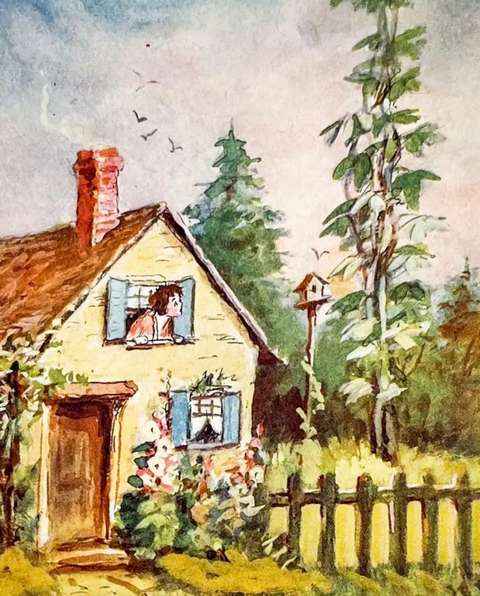
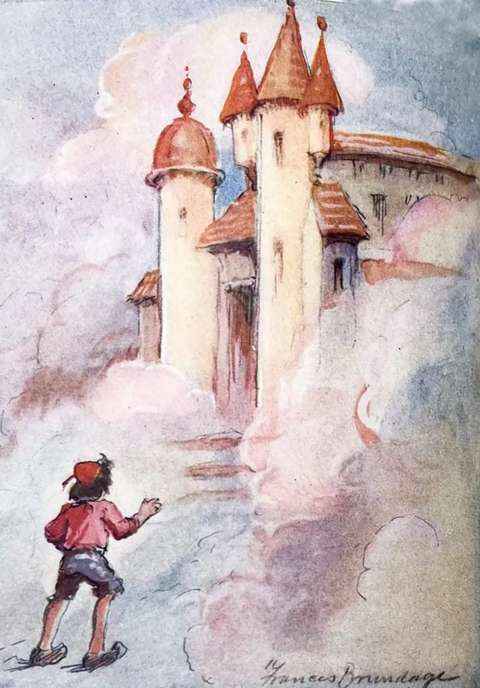
    Illustrations by Frances Brundage

    He reaches a castle where a man-eating giant lives. His wife opens the door and gives Jack some food. The giant returns and Jack hides. When the giant falls asleep, Jack steals a bag of gold coins and runs home. He and his mother live off the stolen money for a while, but eventually, it runs out.
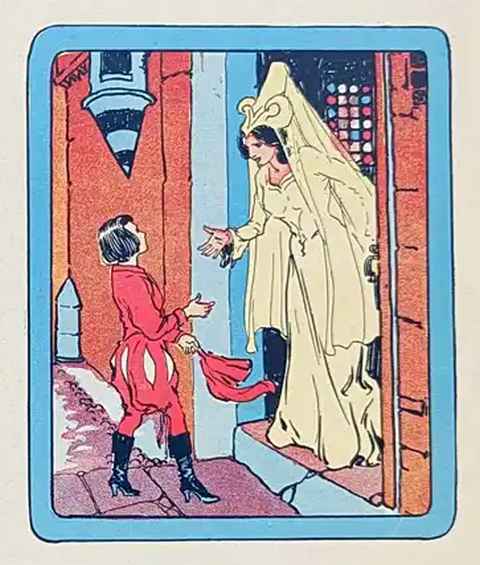
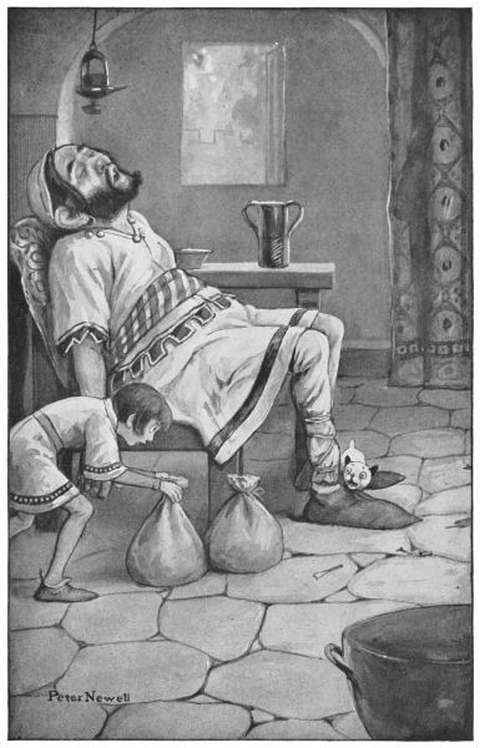
    Illustrations by John Rea Neill (left) and Peter Newell (right)

    Jack returns to the giant’s castle, his wife helps him again, and this time he steals a hen that lays golden eggs. This should meet his and his mother’s needs for the rest of their lives. The hen lays an egg every day, so they will never run out of money.
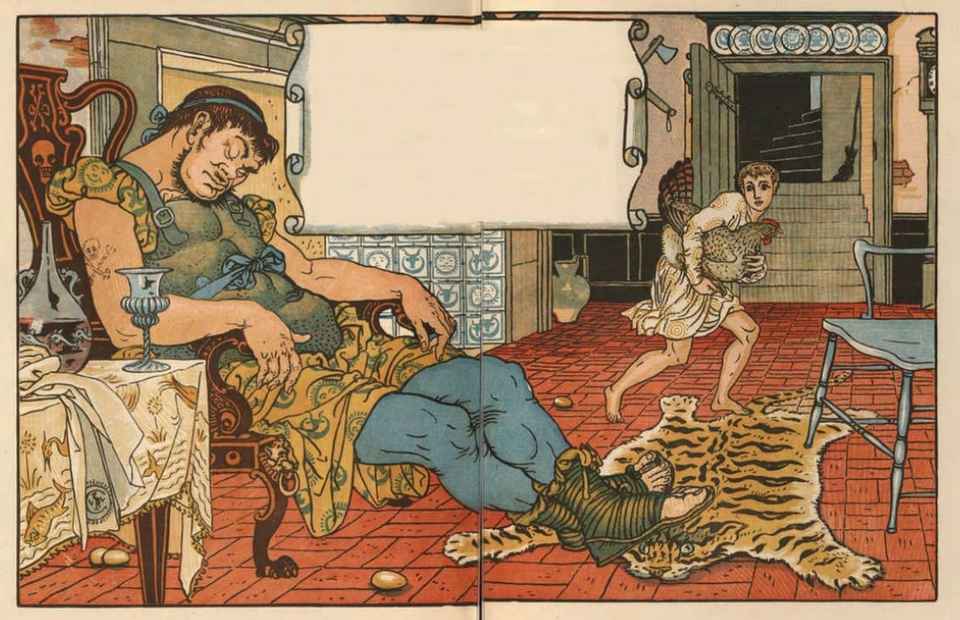
    Yet Jack wants to return to the giant’s castle one more time. He steals a singing harp, but the giant wakes up and starts chasing him.
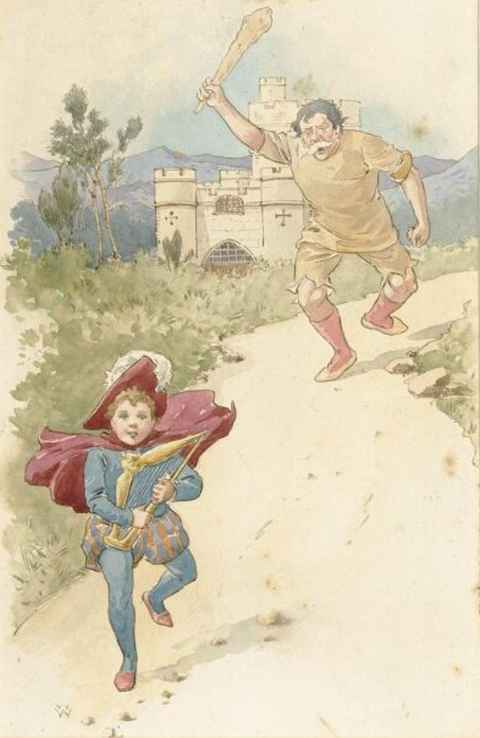
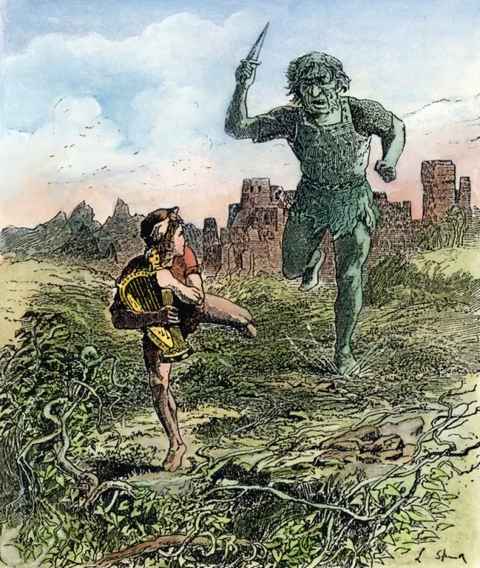
    Illustrations by Victor Venner (left) and Lancelot Speed (right)

    As Jack approaches the ground, he calls out to his mother. She gives him an axe, and he cuts down the beanstalk just in time to ensure the giant’s fatal fall. The connection with his world is broken, the enemy is dead, and Jack and his mom can live happily ever after.
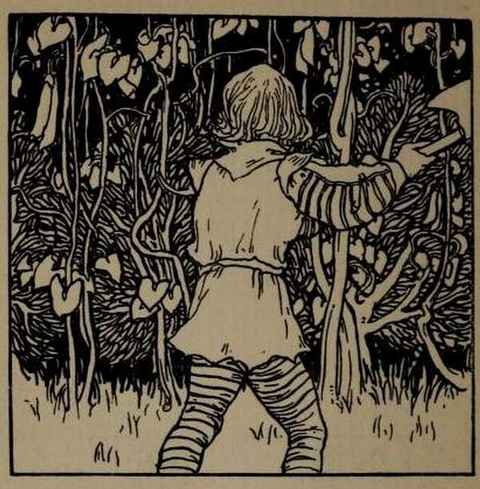
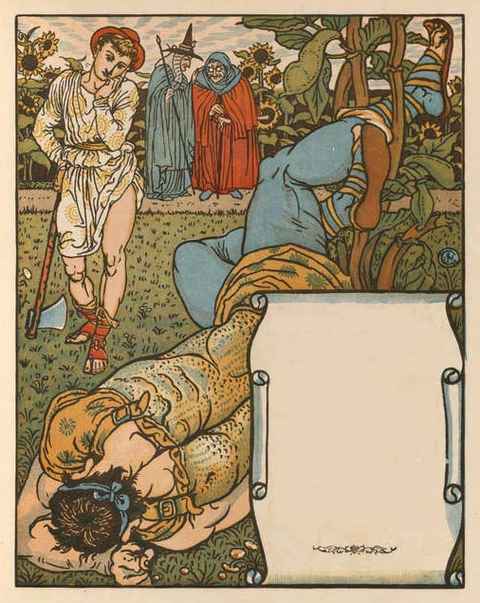
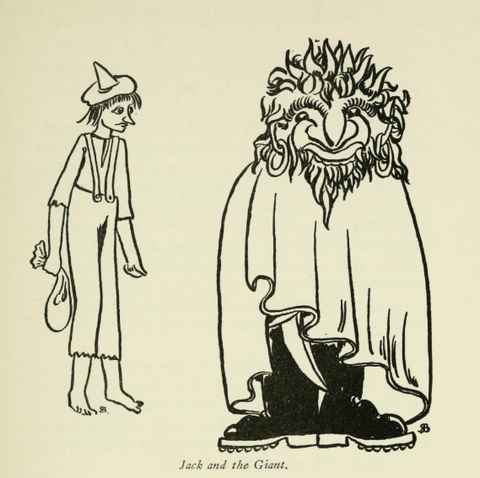
    Illustrations by Robert Anning Bell (left) and Walter Crane (right)

    Characters

    Jack is an immature and irresponsible boy, a typical child who cares only about instant pleasures. When their mother trusts him to sell a cow, he is put to the test, and he fails. At least it seems so at first. However, his decision to take a risk by planting the magical beans gives him the chance to leave his comfortable childhood behind and face the dangers of adulthood. With the giant’s mother’s support, he enjoys some initial success. However, the real test comes when he confronts the giant. When he defeats this mighty enemy, he is ready to live on his own.

    A strange man gives Jack beans for the cow. While this seems an unfair exchange, the cow is definitely part of the past. Since she no longer has any milk, Jack should no longer behave like a baby. It’s time to take some risks, and Jack accepts that. Risk always involves the possibility of winning or losing, but it also means he is ready to grow up. The mother is slowly adapting to her son’s growth. She trusts him to sell the cow, yet she punishes him for what she considers a bad bargain. She helps him with an axe, but he cuts the beanstalk himself.
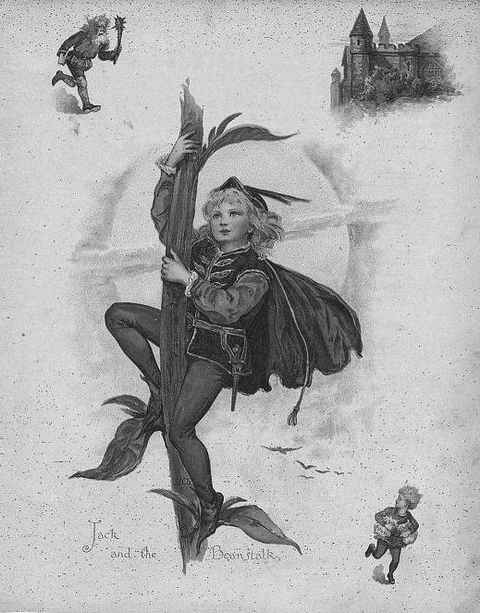
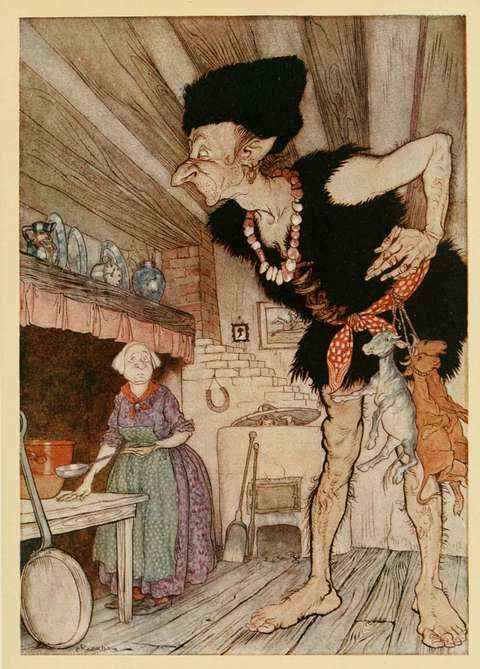
    Illustrations by John Lawson (left) and Arthur Rackham (right)

    (Please, note! Several authors, including Constance Wilde, added a fairy to the older version. The fairy tells him a story about his father being robbed and murdered by the giant. This justifies Jack’s actions.)

    Symbolically, the giant’s wife also functions as a maternal figure. She is protective and helpful, but he is the one who has to take the objects and risk his life. A similar dualism of the mother figure is present in Hansel and Gretel, where the stepmother at home wants to get rid of the children and the witch in the woods wants to eat them. When they destroy the witch, the stepmother also dies. The giant is obviously a father figure. He is absent at Jack’s home, as so many fathers were and still are, but exists in his very own world, which is hard to reach. This is the adult world. To reach his father symbolically, Jack has to fight his mom and climb into the sky. Like many fathers, the giant possesses many valuable items, at least from his children’s perspective, and stealing them is extremely dangerous. Taking one or two objects is not enough. To become equal to his “father,” Jack must beat him. In the story, this results in the giant’s death; symbolically, Jack kills his father.

    Symbolism and Simple Analysis

    We have already mentioned the cow and milk. The cow represents Jack’s immature, childish phase. His willingness to sell the cow indicates that he is ready to grow up. Swapping the cow for beans is a grown-up risk. To seize a better opportunity, he gives up what is no longer valuable. Magical beans represent opportunity. The beanstalk’s shape symbolizes Jack’s manhood, but it also serves as a symbolic umbilical cord. By cutting it, he leaves the fantasy world behind and prepares for real life.
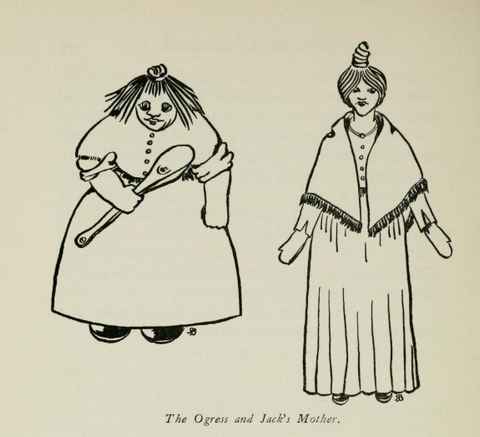
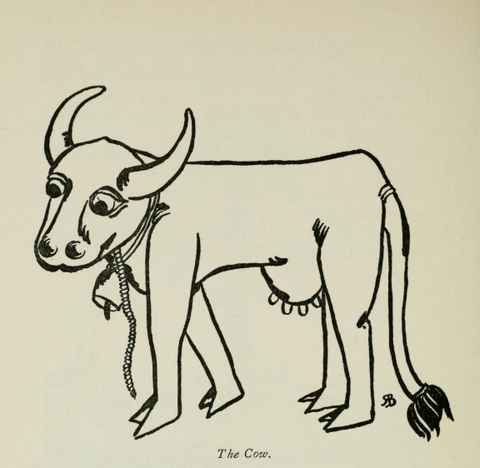
    Illustrations by Remo Buffano

    Further Explorations

    This fairy tale bears some similarities with other fairy tales which I kindly recommend visiting:

    (to be added)
    Hansel and Gretel: Symbolism
    Symbolism and Analysis of Hop o’ My Thumb

    One More Thing

    Although Jack and the Beanstalk seems like a fairy tale for boys at first, girls love it, too. The reason is simple. They are growing up as well. The two adult male characters both represent the father in different roles. The strange man with beans is a helpful dad who encourages Jack to try something new. The giant, of course, represents a possessive father who wants to protect his position and power. The two female characters should be seen as slightly different versions of Jack’s mother, each supporting him during different periods of his life. They are both protective, yet they know when to draw the line and let Jack step up. Gold coins are a means of survival. We quickly learn that money is not enough because it runs out. The hen that lays golden eggs is also a means of survival, but with additional safety. It provides a steady income and guarantees survival. The singing harp symbolizes progress beyond mere survival. Once his basic needs are met, Jack doesn’t have to risk his life by going back to the giant’s castle. Yet he needs to take this additional step to become a fully developed human being who seeks more than a full stomach.
  • Frog Symbolism

    Frog Symbolism


    Frog Symbolism: The Meaning of Frogs in Dreams and Other Areas of Life

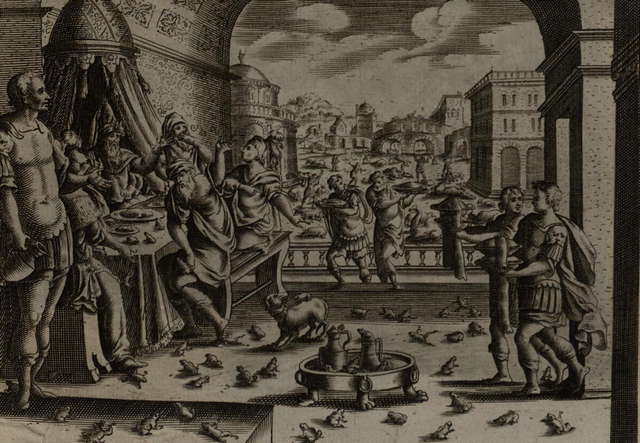
    The frog is a popular symbol in many cultures but can mean different things depending on several factors. Thanks to its close association with water, it mostly bears positive connotations but can also be linked to witchcraft, illness, and other dark areas of our lives. Frogs and toads (biologically the same species) were one of the ten plagues in Egypt. There are also countless superstitions related to these amazing amphibians. What does the frog actually symbolize? What does it mean to dream about a frog?

    frog-symbolism

    Frogs can symbolize many things

    A Symbol or a Totem?

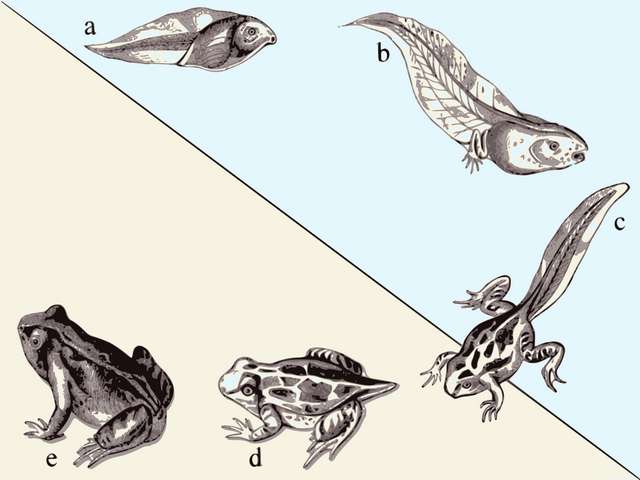
    Frogs fascinated humankind from the beginning of time. Thanks to shedding their skin and going through at least one major transformation (from egg to tadpole, from tadpole to adult frog), they became a symbol of growing up, changing, transforming, and adapting.

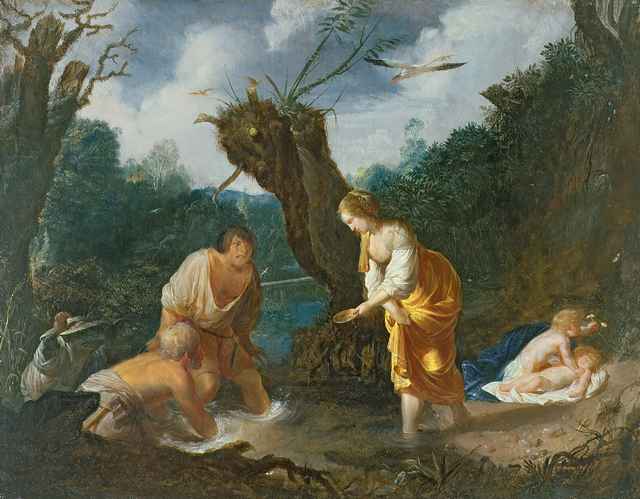
    Johann Hulsman painting Letona transforming peasants into frogs

    Latona transforming the peasants into frogs, Johann Hulsman


    Olmecs are familiar with a toad god who is constantly eating his own skin, symbolizing the life cycle, going from birth through life to death and rebirth, just like everything in nature constantly grows up, dies, and is born again. In some parts of China and Japan, the toad is considered a magical creature with the power of immortality. Many people there still carry frog-shaped amulets said to bring good luck.

    warwick goble frog prince
    arthur rackham sleeping beauty silhouette

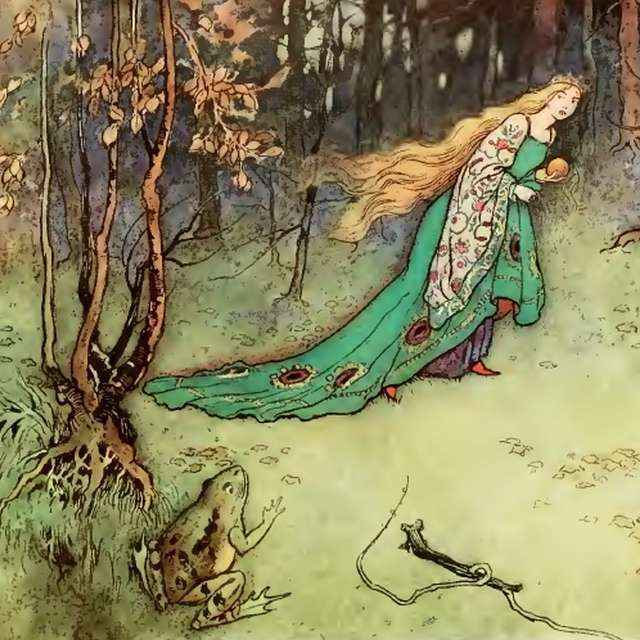
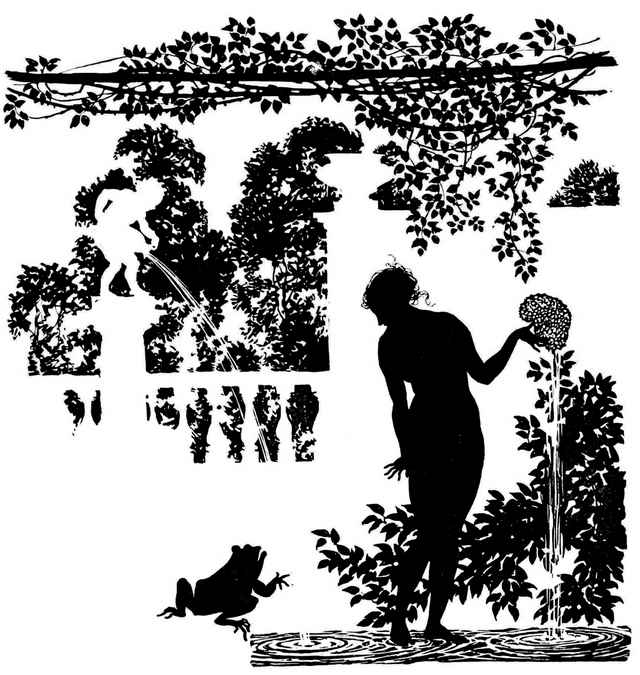
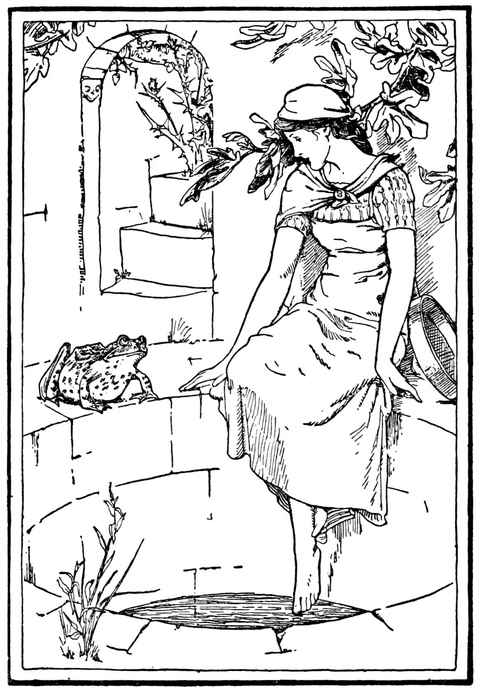
    Illustrations from The Frog King by Warwick Goble (left) and Sleeping Beauty by Arthur Rackham (right)


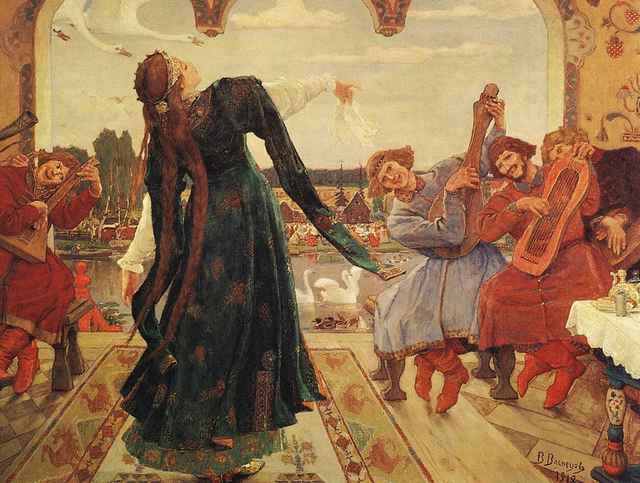
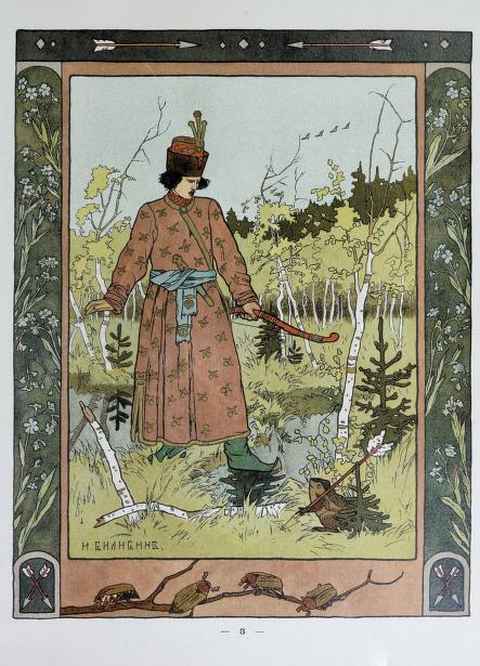
    The Frog King by the Brothers Grimm, The Tale of the Toad by Johann Gustav Gottlieb Busching, or The Frog Princess from Russian folklore feature a frog in a title role, in the Piedmont’s version of Beauty and the Beast the latter reveals himself to the world as a toad, at the beginning of The Sleeping Beauty it’s a frog who brings the message about the birth to the queen, in the old poem A Frog He Would a-Wooing Go (Frog Went a-Courtin) the title character also obviously represents fertility …

    john-dickson-batten-well-of-the-worlds-end
    george-cruikshank-tale-of-the-toad

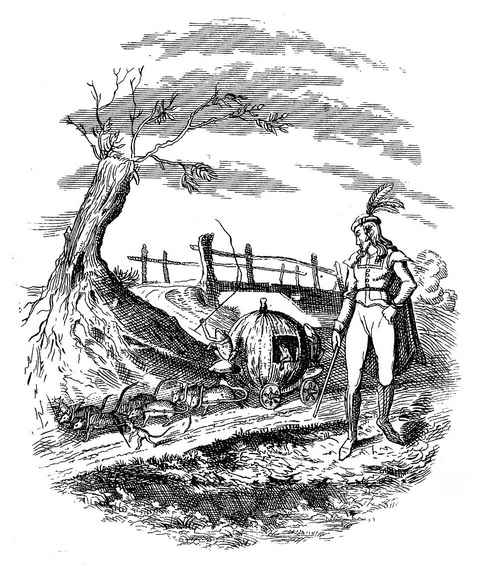
    Illustrations from The well at the World’s End by John Dickson Batten (left) and Tale of the Toad by George Cruikshank (right)

    Frogs were closely associated with the Nile’s flooding, which brought water and fertile soil and thus new life. Considering frogs to be symbols of fertility and abundance was (and still is) a logical step. In ancient Egypt, the frog is the symbol of the number hefnu, translated as ‘a huge number’.

    viktor-vasnetsov-frog-princess
    frog-princess-ivan-bilibin

    Illustrations from The Frog Princess by Viktor Vasnetsov (left) and Ivan Bilibin (right)

    In Latin America, frogs and toads are considered creatures with supernatural powers by native people. Some believe they have the power to bring or withhold rain. Others see them as protectors during childbirth, while others see them as symbols of destruction.

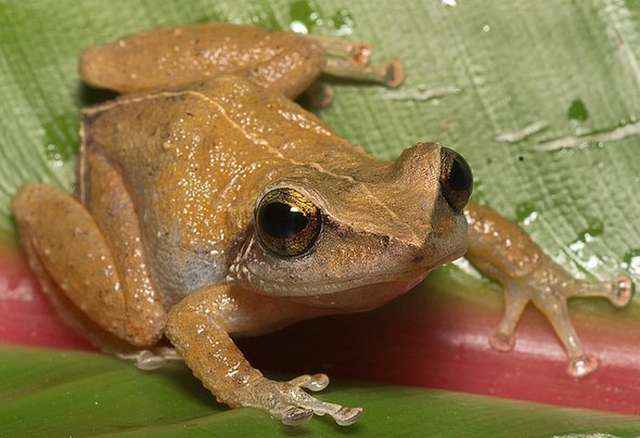
    Did you know a coqui frog is one of the symbols of Puerto Rico? The sound produced by a coquí can reach up to one hundred decibels, making it the loudest known amphibian. People see it as small but loud and proud – just like people of Puerto Rico!

    photo-of-coqui-frog

    Coqui frog, Public Domain Photo

    In general, frogs were associated with water, life, and new beginnings. They were a symbol of good luck, and talismans in the shape of frogs can still be found in virtually all parts of the world. With all the magic powers assigned to these little amphibians, it’s no wonder they were used in many rituals performed by shamans, magicians, and witches. We shouldn’t forget that most frogs are essentially nocturnal creatures. In medieval Europe, parts of frogs were used as protectors against poisoning among the nobility.

    The Plague of Frogs, engraving by Gerard Jollain

    Such beliefs were in sharp contrast to Christian beliefs, in which frogs symbolise evil. In the Bible, they were sent to destroy crops in Egypt. Frogs and toads were closely related to witchcraft. They were seen as something ominous and unwanted. Frogs are spirit or totem animals of several Native Indian tribes. A spirit animal acts as a guide, helping a person on their journey. It can serve as an advisor or protector.

    Such ambivalence about the frogs is reflected in dream dictionaries where the dreaming of the frog doesn’t have a uniform meaning.


    Dreaming about Frogs

    To put it short – a frog in your dream predicts a change. Specifically, this is an important change that could be either good or bad. Seeing a frog in the grass, for instance, suggests you’ll meet somebody new. It can be a new friend or a new business partner and this meeting will likely evolve into a long, fruitful relationship. A frog in your house is good news too. It prognoses a productive period of your life.

    On the other hand, frogs in water mean negative changes. Some serious problems may be ahead of you. Catching or stepping on a frog also brings bad news. You’ll likely get sick. Holding or even killing a frog represents negative emotions or aggressive actions, which can have long-term damaging consequences for you, no matter against whom these feelings are directed.

    life-cycle-of-the-frog-picture

    Frogs symbolize transformation

    Several characteristics of the frogs can be used in dream interpretations about toads and frogs. Their ability to regulate their body temperature by entering or exiting the water is reflected in dreams in which frogs alter their surroundings. If a frog goes into the water, your situation at the moment is likely too stressful, so you need to cool down a bit. If a frog leaves the water, you may be ready for an important life change. This is not necessarily a bad thing, but it will very likely create an additional burden for you.

    If you dream about a lot of frogs, your love life will probably improve. The color brings additional info. Black and dark colors are generally bad. They are associated with losses. If you see red, it means that you will react very passionately. Don’t overreact! White and gold frogs bring good luck.

    How About Frogs in Fables?

    Frogs are popular characters in fables. They are always associated with changes and transformations.

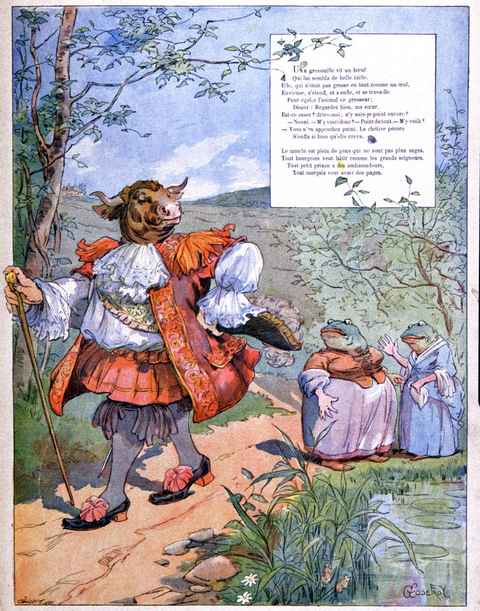
    eugene-louis-gillot-the-frog-who-aspired-to-become-as-big-as-the-oxx
    victor-wilbour-the-ox-and-the-frog

    Illustrations from The Frog Who Aspired to Become as Big as the Oxx by Eugene Louis Gillot (left) and The Ox and the Frog by Victor Wilbour (right)

    Let us remind ourselves about:

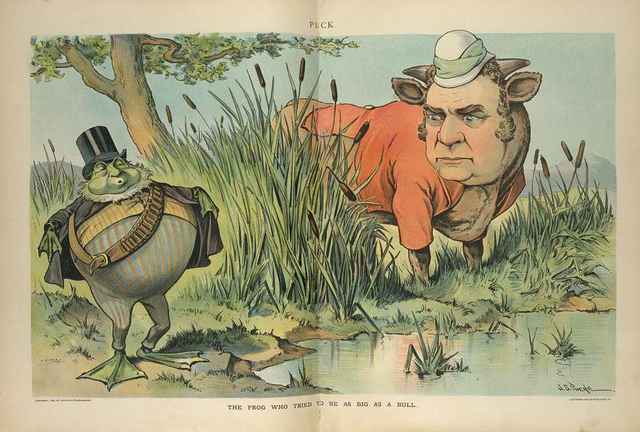
    • The Frog and the Ox (known under various titles): The frog inflates itself to become as big as the ox, but explodes.
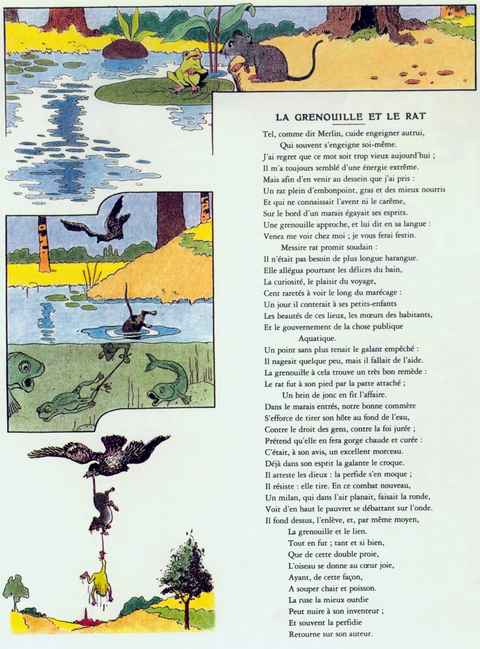
    • The Frog and The Rat: The frog tries to drown a rat by tying its leg to the rodent and dive, but ends up as a hawks pray.
    • The Scorpion and the Frog: The scorpion asks the frog to carry it across the water. While the frog initially refuses the poisonous partner, she eventually helps and is then bitten.
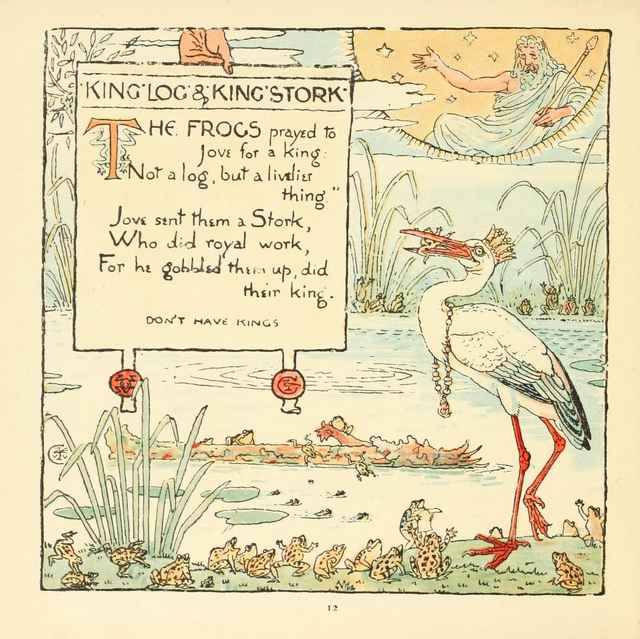
    • The Frogs Who Wished for a King: Frogs demand a king from Jupiter. He gives them a log, but they are not satisfied. Then they get a crane and their world turns much worse than ever.
    benjamin-rabier-the-frog-and-the-rat
    walter-crane-frogs-wishing-for-a-king

    Illustrations from The Frog and the Rat by Benjamin Rabier (left) and Frogs Wishing for a King by Walter Crane (right)

    In all the presented cases, the frogs tried to escape the natural rules. For that, they are always punished. While change is natural, certain cosmic rules still apply.

    john-samuel-pughe-cartoon-the-frog-who-tried-to-be-as-big-as-a-bull

    Caricature of William McKinley presented as the illustration from The Frog Who Tried to be as Big as a Bull by John Samuel Pughe

    Feng Shui

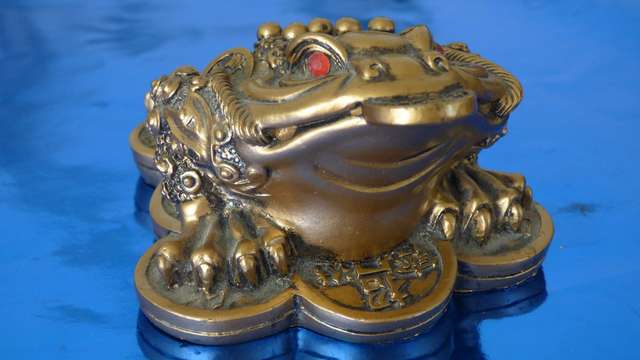
    Feng Shui is an ancient mix of science and art, one of the so-called Five Arts of Chinese Metaphysics. A frog plays an important role in it. We can find traces of a Feng Shui frog in Chinese folklore. To put it short, there were eight immortals and one of their wives secretly drank the elixir of immortality. She also became immortal, but was punished by being transformed into a toad. According to common belief, a three-legged (hind legs are fused into one) toad appears at some homes mostly on a full moon and brings good luck – what is often closely related to money.

    photo-of-money-frog

    Photo of a three-legged money frog

    Three Legged Frog and Money

    For obvious reasons, the three-legged frog from Feng Shui became one of the most popular symbols of money and wealth, not only in China, but around the world. It’s also a popular decorative element in the form of the three-legged toad with a coin in the mouth. Everybody who knows anything about Feng Shui probably knows this philosophical system deals with energy flows. Placement of objects is extremely important.

    So how to place a money frog? The science behind it suggests that you should start with relatively complex maps. However, if we follow some general guidelines, we still have a good chance of attracting positive energy and improving our financial situation. These are some common rules:

    • place it near the front door with its face inside (so the money is oriented towards the inside of the home!)
    • it should never be in a straight line from your entrance towards the living room
    • if you have more than one money toad, place others in the north and south-east parts of the living room, on the table or close to the table if possible (don’t forget the orientation – the coin in the mouth should never be oriented away from your home)
    • never put it on the floor
    • never place it in a bedroom, a room with running water, or garbage
    • if your money toad is broken, replace it immediately.
    photography-of-gold-money-frog-photo

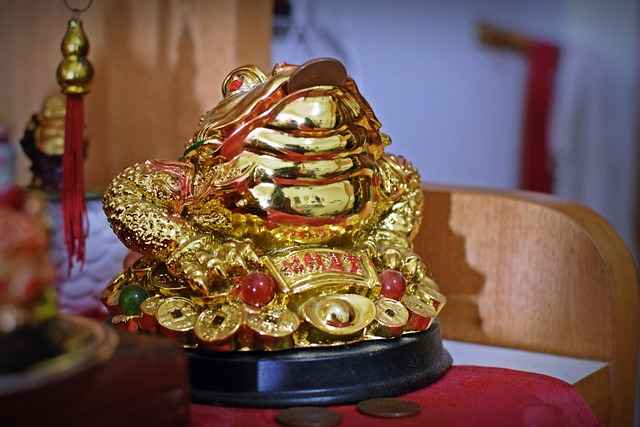
    Photo of a golden money frog

    There is another trick, not practiced by every Feng Shui master, yet worth trying. Many people believe a three-legged frog should be activated first. This can be done by placing a red ribbon around its neck or putting it on red paper.

    constance-haslewood-a-frog-he-would-a-wooing-go

    Illustration from A Frog He Would a Wooing-go by Constance Haslewood

    May the frogs in all kinds of forms bring you good luck!