Mrs Oscar
Constance Lloyd is best known as Mrs. Wilde, although many still don’t know this literary giant was actually a married man with two sons. Even less known is the fact that she was an artist too, for some time heavily involved in her husband’s work, while he was still building his reputation, helping him meet interesting people and being open to his experiments in personal life, including a deadly relationship with Bosie Douglas.
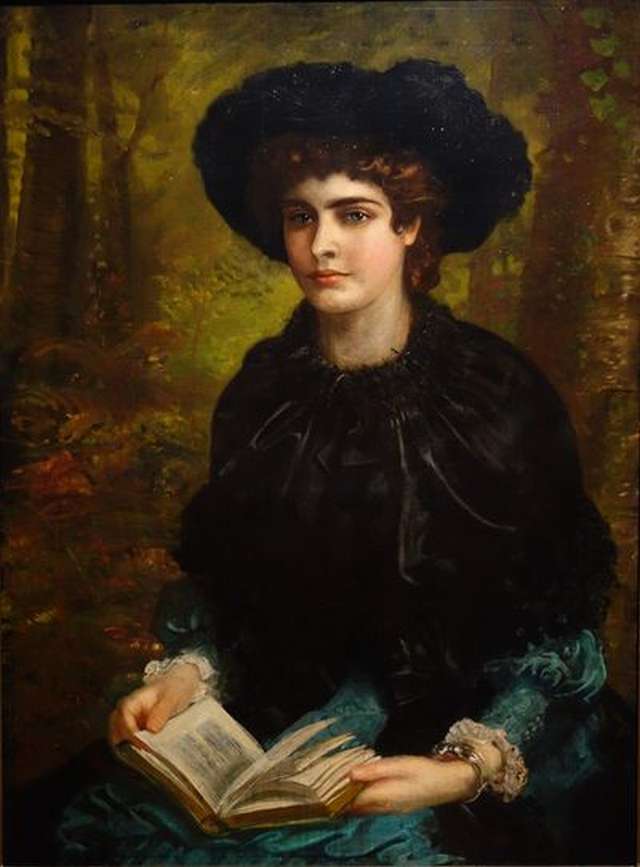
Constance Lloyd’s portrait by Louis William Designes (oil on canvas, 1882)
While she prohibited him from seeing his sons after the infamous trial, with devastating consequences, she still helped him until her premature death
at only 39 years of age.
Who was Constance Lloyd, who played such an important part in the life of one of the most notorious artists of the last century?
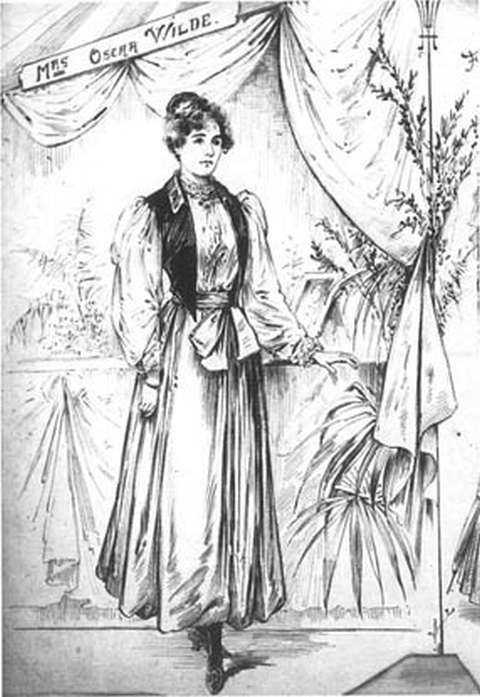
Drawing of Constance, 1884
Her Early Years
Constance Mary Lloyd was born on January 2, 1858, in London to the successful English barrister Horace Lloyd and his Irish cousin Adele (Adelaide) Atkinson. She had an older brother, Otho. The marriage of her parents was not a happy one, and soon after the birth of both kids, they started living separately, Horace spending too much on social life in London and Adele trying to spend as much time as possible in Ireland with her mother, Mary, in Dublin.
As we can read in Otho’s memoirs, Constance’s life was very unhappy, mostly due to the mental instability of her mother, leading to many cases of emotional and probably even physical abuse of Constance in her childhood and adolescent years. It seems that while her father was still alive, although mostly absent, outbursts of Adele were still somehow under control, but after his death from pulmonary infection, soon after her sixteenth birthday, she stayed completely unprotected towards her unpredictable mother’s behavior.
Otho, who was studying at Bristol and Oxford during those years, later described his sister’s life as one full of fear. After a while, he still managed to convince his grandfather, John Horatio Lloyd, to take Constance under his roof and protection. It was also Otho who introduced Constance to Oscar, whom he met in Oxford, where they were studying at the same time, but never became very close, until Speranza, Oscar’s unconventional mother, and Oscar visited the home of Lloyd’s to meet Constance’s and Otho’s aunt from Dublin.
Not Love at First Sight
The meeting between Oscar and Constance in June 1881, immediately after his Poems were published, was a meeting of two attractive young people with a great love for art and a talent for foreign languages. It was not love at first sight. While Constance, with her wavy auburn hair and purplish-brown eyes, tall, slim figure, and aesthetic taste for clothes, definitely looked charming, it was probably her distance that attracted Oscar even more.
To be honest, he was in love with several ladies and had even unsuccessfully pursued some of them before and after meeting Constance. He was also involved in several foggy relationships with young men, already being a regular target of mockery in Punch.
While he obviously made a good impression, being already pretty famous, she charmed him as well. Her intelligence, education (being fluent in five languages, among other things), good manners, and a hint of shyness only contributed to her charm. When Oscar and his mother left Lloyd’s home, he said he thinks he’ll marry that girl.
Yet it was still a surprise for the majority of their mutual friends and acquaintances when he later really proposed to her, and she said yes.
As long as I live, you shall be my lover. (Constance Mary Lloyd)
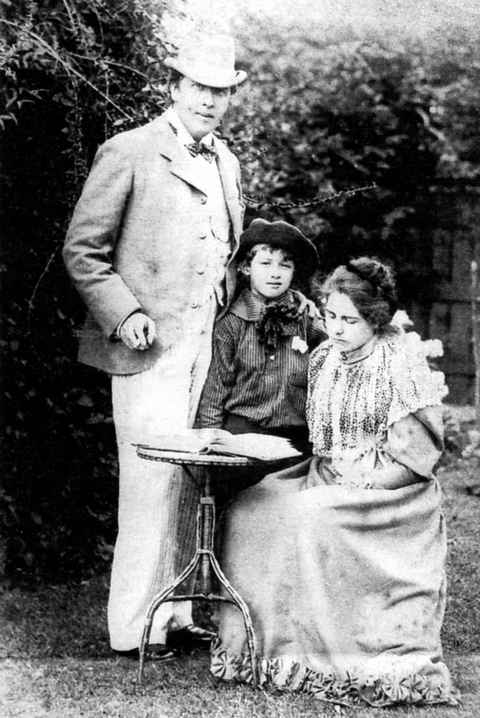
Oscar and Constance with their son Cyril, 1892
Trouble in Paradise
Despite her family not being too enthusiastic about Oscar, they married after three years of knowing each other on May 29, 1894, at St James’ Church in Paddington. It seemed for some time that both were very much in love. Oscar was apparently very happy in the first two years of marriage, praising his love life to his friends and trying to convince them to get married as well.
They had two sons (Cyril in 1885 and Vivian in 1886) in the first two years of marriage, but after the birth of the second one, the couple became estranged. One of the possible reasons was of a gynecological nature, although we’ll never know what kind of problems she had; they were very likely connected until her death before her 40th birthday.
Oscar started spending most of his nights in hotels, officially working on his literary masterpieces, and Constance increasingly participated in some of the fields where she was already active:
- liberal politics,
- feminism (she demanded the right for women to serve in Parliament), contemporary fashion (she was an advocate of more practical clothing, being a sensation showing in public in a split skirt, abandoning tight corsets),
- translating (early reviews of his work from Dutch, for instance),
- writing, still occasionally collaborating with Oscar (among her stuff, an edited version of The Happy Prince was found after her death).
They also enjoyed decorating their way-too-expensive home called House Beautiful together.
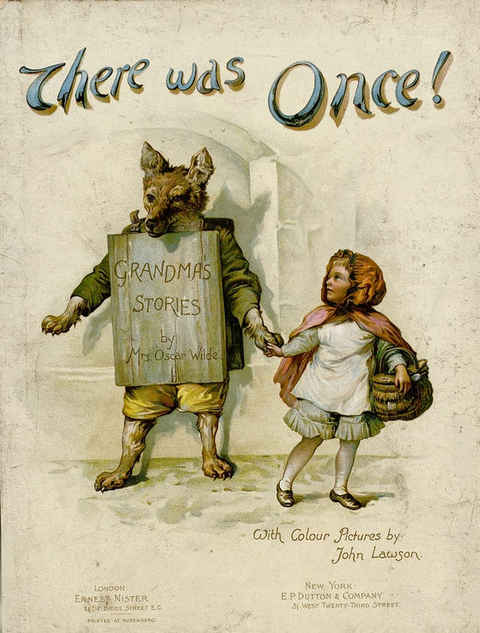
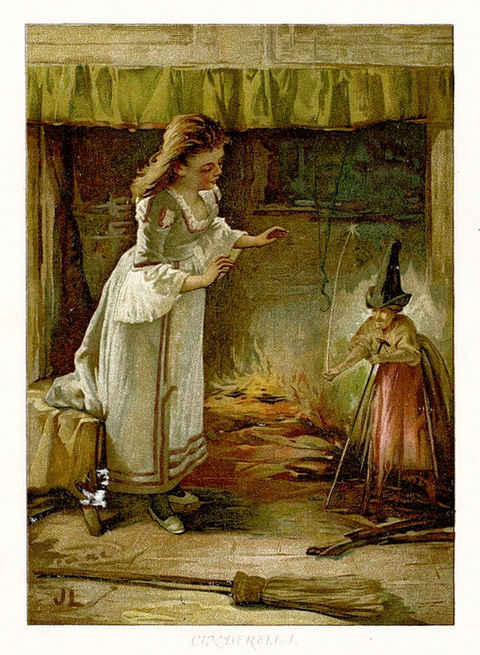
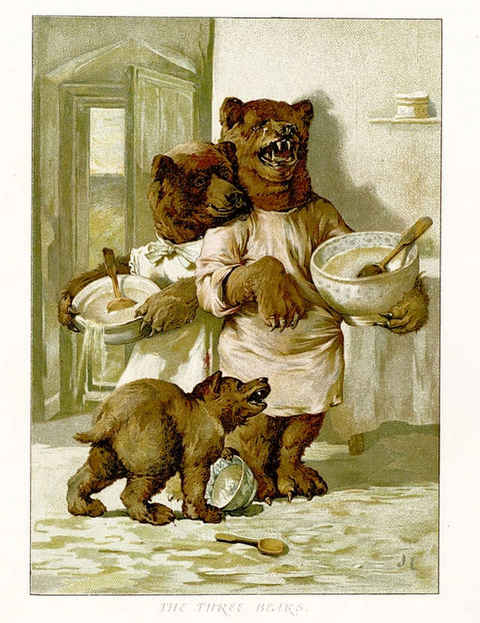
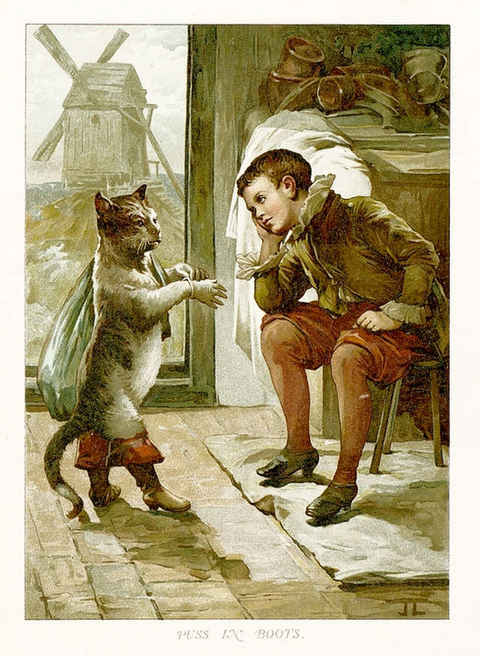
Constance was definitely involved in his first book of fairy tales, and she also wrote a book of stories for kids on her own. The title “There Was Once Grandma’s Stories” was published in 1888 by the legendary Ernest Nister and is presented here with a few illustrations by John Lawson.
Constance also became deeply involved in Theosophy, participating in the rituals of The Golden Dawn.
Her Book of Fairy Tales
After becoming parents, they both believed their boys should have access to the best possible literature for kids and obviously believed they should write some by themselves. There was Once (subtitled Grandma’s tales), which was her retelling of famous fairy tales as she remembered being told by her granny.
The collection was published at the legendary Ernest Nister publishing house and includes such fairy tales as Red Riding Hood, Cinderella, and Puss in Boots. It was illustrated by John Lawson (1865-1909).
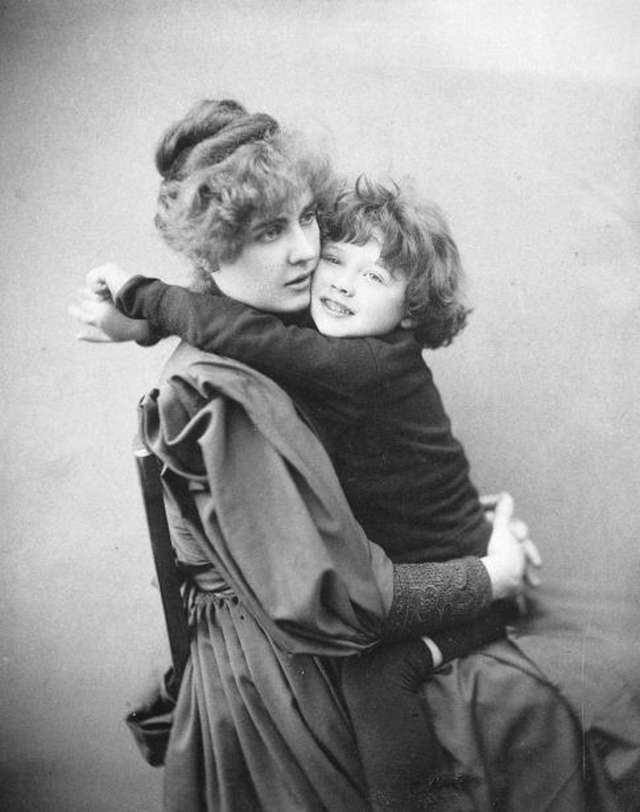
Constance and Cyril Wilde, 1889
Constance Wilde’s Death
Soon after Oscar’s inclination to men became more and more obvious, and he even started to bring his lovers to their house, which, thanks to their both exquisite taste, became one of the most tastefully decorated homes in England.
When he started an affair with Lord Alfred Douglas in 1891, their marriage was practically over. Lord Alfred ‘Bosie’ Douglas became fatal for Oscar, eventually convincing him to start a trial against Marquess Queensberry and even (unintentionally) helped his opponent to defeat Oscar at court, which led to the loss of almost all his property and sent him to prison, where he contracted a serious illness.
When Oscar returned from prison, Constance had already moved to France, changing her boys’ surnames to Holland to protect at least some of their privacy. She still loved her husband, trying to help him financially, but demanding that he stay away from his sons.
When he restored a relationship with Bosie, she also cut her financial help. Roughly at the same time, she needed surgery for no clear reason. Some people believe she had a tumor in her uterus; there’s a theory she had an unsuccessful surgical correction of her intimate parts, causing urinary problems, and some even claim she had an undiagnosed and then almost unknown multiple sclerosis.
There’s also a speculation that she died of complications from a venereal disease contracted from her husband or of spinal damage caused by her fall from the stairs (interesting fact: Oscar died after a fall a few years later, too).
Soon after surgery, an infection developed, and she started vomiting, unable to hold liquids in her body.
She died five days later, on April 7, 1898, in Genoa, where she is still buried.
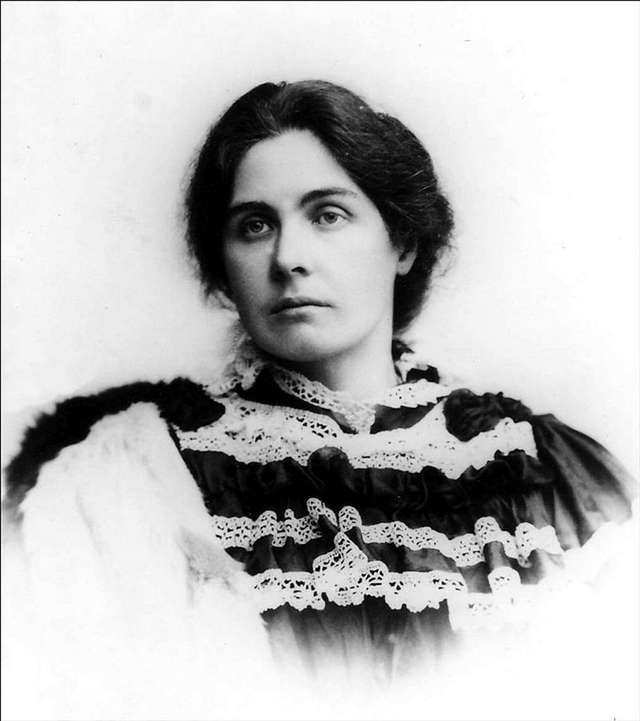
Her last known photo (1896)
Leave a Reply