Author: pravljic

  • Oscar Wilde: Fairy Tales

    Oscar Wilde: Fairy Tales

    Oscar Wilde’s fairy tales – illustrated

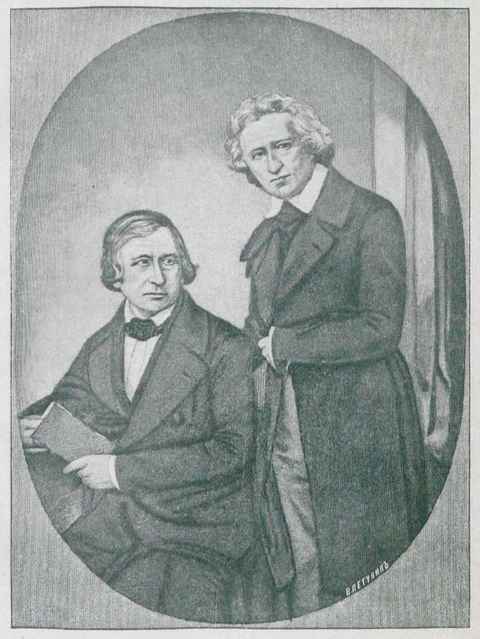
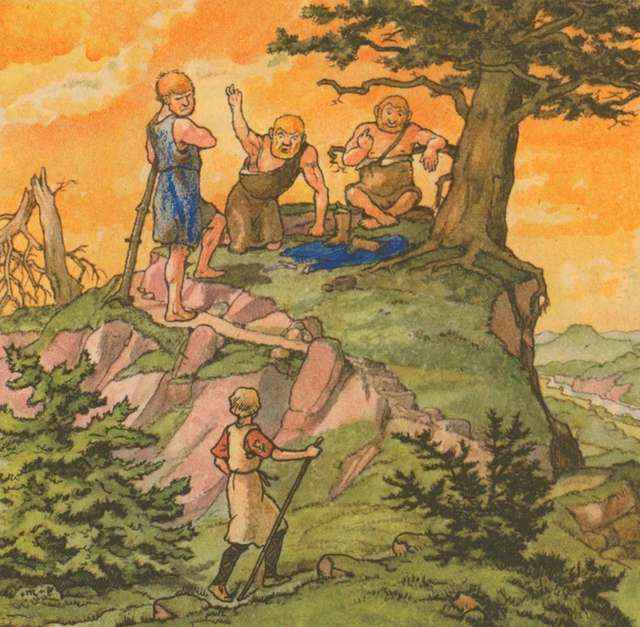
    Oscar Wilde was a world-renowned playwright, but many people are unaware of his fairy tales. He wrote two books for them, one for each of his sons. Interesting, isn’t it? Oscar Wilde believed fairy tales are essential for raising children, but he wasn’t satisfied with the existing classic works by the Grimm Brothers, Charles Perrault, Madame d’Aulnoy, and others. Still, he obviously wasn’t indifferent to fairy tales by Hans Christian Andersen. We can find many similarities between the fairy tales of both authors.

    Oscar Wilde read fairy tales to his sons, and we can also speculate that his writing was also influenced by his wife Constance, a productive editor, translator, and writer. This makes Wilde’s fairy tales a family project!
    Oscar Wilde’s list of fairy tales is short. He wrote only nine, and they were published in two separate books, which are both collectible items today. Some of these fairy tales were also published together with Wilde’s works for an adult audience, especially with The Picture of Dorian Gray. Another hint that they were not necessarily made for children is some illustrations which, by today’s standards, were ‘not suitable for work.’ Don’t worry, we didn’t include any of them. Before we delve into each story, we’ll present them with summaries of all fairy tales. Let’s first look at the tales collected in Wilde’s initial volume.

    The Happy Prince and Other Tales

    The book was first published in 1888, just before Cyril Wilde’s (who used the surname Holland for most of his life) third birthday. It includes five fairy tales, beginning with the title story.

    The Happy Prince: summary

    Illustration: Spencer Baird Nichols

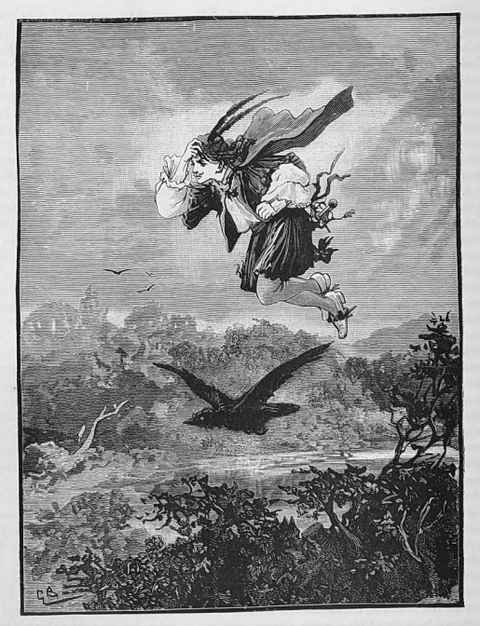
    This is one of the most well-known and popular fairy tales by Oscar Wilde. The story begins in the Palace of Sans-Souci, where the prince lived a happy but futile life of pleasures. Only after his death, when his statue was put on a pedestal, did he see all the misery, poverty, and injustice in his town.


    The Happy Prince was covered with gold leaves, there were precious stones in place of his eyes, and his sword was decorated with a ruby. With the help of a swallow, the Happy Prince then literally gives himself part by part to poor people until he is left with nothing. Because ‘he was no longer beautiful, he was no longer useful,’ councilors ordered the melting of the statue.
    The swallow, who was so eager to help the prince, didn’t fly south in time and froze to death. So councilors also decided to proclaim, ‘No bird is allowed to die here.’


    In the ending scene, God orders them to bring him the most valuable things from town, and the angels bring him a statue heart made of lead and a dead bird.


    The Nightingale and the Rose – The summary

    Illustration: Charles Robinson

    The tale of Rose and Nightingale is one of selflessness and the ridiculousness of some of the things we all do in life.


    This fairy tale starts with a student who wants to impress a princess. He discovered that she likes red roses, and he wants to give her a perfect red rose. The problem is that there are no red roses in the garden. So a nightingale makes a deal with a white rose, and they will together create the most beautiful red rose ever.


    The bird sings every day, even though the rose’s thorn slowly pierces its heart, and sings the most beautiful songs of life, even though it’s really losing its heart. They succeed, but the bird dies. The princess says, “I’m afraid it won’t go with my dress.”


    All the sacrifices didn’t help, and the student concludes that love is too impractical, so he shall study Philosophy.

    The Selfish Giant by Oscar Wilde

    Illustration: Charles Robinson

    The story of the Selfish Giant is a story about altruism. Here is a summary:


    Giant has a beautiful garden with all sorts of flowers and fruits growing in it, and while he was on a visit (for several years), children from the neighborhood started to play in this garden. When he returned, he kicked the kids out. But!

    Winter came into the garden, and it stays in for the full year. Only when the giant let the children back in did the garden begin to look like a garden again. The crucial part is meeting with one child who was too small to reach up to the tree, and the giant helps him to get there.


    Children once again visited the garden, and the trees were in full bloom. But the little child didn’t come back until the very end of the giant’s life. That’s when we learned that the child was Jesus.

    The Devoted Friend by Oscar Wilde

    Illustration: Jacomb Hood

    This fairy tale bears a slight resemblance to Andersen’s “Little Claus and Big Claus.” Here we have a rich man and a poor man, too, but the poor one doesn’t win in the end. In fact, he dies after exploitation and a series of misfortunes.


    A rich miller and a poor gardener are friends, or at least they are supposed to be. Miller visits the gardener every day and picks his most beautiful flowers.


    He never gives him any money. After a long winter, the gardener was almost starved to death (the miller didn’t want to bother inviting him into his warm house full of stuff because he didn’t want to spoil him).


    Then the miller promised to give the gardener his old wheelbarrow in exchange for more services.


    Ultimately, the gardener passed away during one of his “missions” before he could acquire a wheelbarrow, which was rendered useless and inoperable. The miller realizes that he is only concerned with his wheelbarrow and will never provide any assistance to anyone.

    The Remarkable Rocket

    Illustration: Charles Robinson

    There are many ways in which Remarkable Rocket is like Oscar Wilde’s life. It is a story about a rocket waiting to explode in its full glitter and beauty, like Wilde, most of whose life promised much more than it actually showed.


    In the end, the rocket explodes when nobody sees or hears her, like Wilde died lonely and almost forgotten.

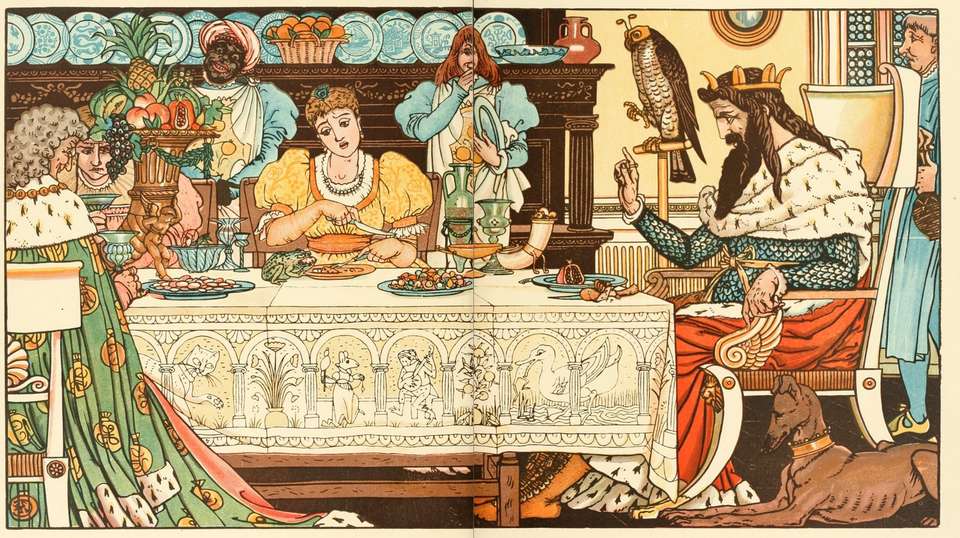
    Illustration: Walter Crane

    A House of Pomegranates

    The book came out in 1891, when Oscar Wilde’s second son, Vyvyan (like his older brother, he used the surname Holland for most of his life), was almost five years old. There are only four fairy tales in this book. We’ll present them in the order they were published.

    The Birthday of the Infanta

    Illustration: Jessie Marion King

    This is the only Wilde’s fairy tale with a woman in the title (a rocket is not considered a human being). But she, the female equivalent of the Happy Prince (when he was still alive), a spoiled child, as Oscar Wilde himself was in many ways, is not the main character.

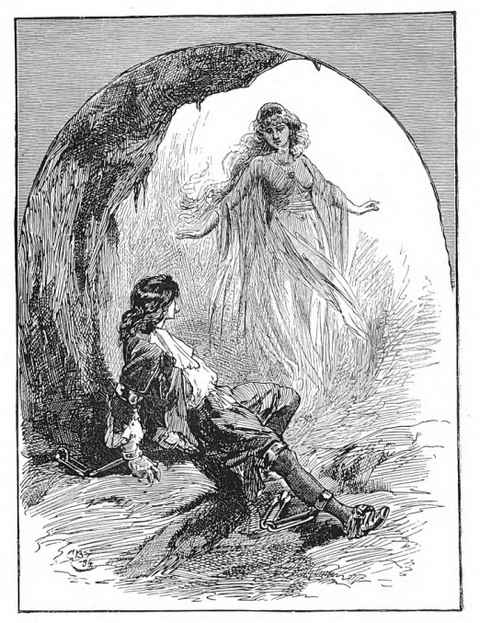
    The protagonist of the narrative is a crippled, unattractive boy who was discovered in the forest and purchased from his father solely for the purpose of entertaining the princess through dancing (the term “infantas” refers to the daughters of Spanish and Portuguese kings, and “infant” means child). She was delighted with his appearance, and he, naïve as he was, believed she really liked him.


    When he hears that he will dance again after the break, he starts dreaming about how they will become friends. Then he strayed into the palace and, for the first time, saw his unattractive image in the mirror. Boy realizes the unpleasant truth. Princess never liked him. She was only laughing at him.


    This literally breaks his heart, and he dies just when the princess enters. Her statement? “Those who come to play with must not have hearts!”

    The Star-Child

    Illustration: Spencer Baird Nichols

    Of all of Wilde’s works, the Star-Child story most closely resembles traditional fairy tales. It tells us about a boy found in the woods who denies his mother when he is found because he is beautiful and she is not.


    After a series of tests and a lot of repentance, we got the classic transformation and happy ending, but Wilde would not be Wilde without an addition: Star-Child becomes a king (good one) only for a few years. Then he died, and the next king was evil.

    The Young King

    Illustration: Spencer Baird Nichols

    In this Oscar Wilde fairy tale, a young man is born into the king’s only daughter’s covert marriage. There were all sorts of rumors about the boy’s father and what happened to him and the princess who vanished soon after the birth. The boy was raised by commoners, and the king, who was dying, wanted his grandson back.


    The story starts when the young prince waits for his coronation. He is supposed to dress in the most precious clothes, but in his dreams, he sees so much suffering caused in the search for perfect fabric, perfect pearls, and so on, he decides he will go to church dressed like a shepherd. In the church, a miracle happens.
    This child made the selfish giant change his mind.

    The Fisherman and His Soul

    Illustration: Jessie Marion King

    Wilde’s fairy tale, The Fisherman and His Soul, is a story about a man who falls in love with a mermaid. If he wants to join her, he should get rid of his soul.


    He asks a witch for help, and after some delay, she tells him what to do. The problem is that his soul doesn’t want to leave. And when it does, they agreed the fisherman will return to the seaside every year just in case he changes his mind.


    In many ways, this fairy tale resembles Andersen’s Little Mermaid, but is written from a different point of view and with a different message. While in Andersen’s story the soul was the ultimate goal, Wilde presents it as useless and corrupted. His sympathies are clearly on the side of the soulless creatures of the ocean.

    Reflecting on these stories, we are led to consider: do the fairy tales of Oscar Wilde echo Andersen’s stories?


    Some experts say the fairy tales in both books he wrote are maybe the best example of Wilde’s mastery of the language. His vivid landscape descriptions, emotional portrayals, flawless dialogues, and critiques of the social system are united to form captivating narratives that leave a profound and enduring impression on the minds of readers, despite the absence of explicit moral messages.


    Wilde’s fairy tales present his view on life, not how it should be, but how it is, with a lot of pathos but also a lot of hope, which can probably be compared with only one fairy tale author: Hans Christian Andersen, whose language was much simpler and down-to-earth. If we can easily find folk stories that inspired Andersen, with Wilde, things are more complicated.


    His tales contain traditional themes (a prince on a quest, the children in the forest, a conflict between good and evil), but there are also clear references to other works. The Faustian deal, perfectly written in Picture of Dorian Gray, is also present in The Fisherman and His Soul, a brilliant rewriting of Little Mermaid, one of the saddest fairy tales by H. C. Andersen, but in even darker tones.


    Andersen’s fairy tales are reflected in all of Wilde’s fairy tales; sometimes this is less obvious and sometimes more so. Both writers are very religious and use a lot of humor and emotion in their writing.


    In Wilde’s fairy tales, Andersen’s melancholy is replaced with cynicism, and Andersen’s irony at Wilde’s works turns into sarcasm. If we can still find a search for the place in the society in Andersen’s tales, Wilde’s tales are extremely individualistic.
    It is certainly no coincidence that The Happy Prince and Other Tales (1888) and House of Pomegranates (1891) were written and published right after the births of his sons. Cyril was born in 1885, and Vyvyan in 1886, but they were not written with these kids specifically in mind. They talk to every child in the world, and the adults can benefit from them, too. Maybe even more.
    Because everybody should, just like the Happy Prince, sooner or later get out of the palace ‘where sorrow is not allowed to enter.’

    Some similarities between Oscar Wilde’s and Hans Christian Andersen’s lives and works
    they both:

    • preferred talking to writing,
    • preferred theater to books,
    • wrote fairy tales with a lot of emotions, criticism of society, and without happy endings,
    • achieved high popularity in the highest circles, but were essentially unhappy in private life,
    • wrote with a lot of irony, bitterness, and sarcasm in their works,
    • wrote their works for children with their parents in mind,
    • died due to the consequences of their falls a few years before.

    So, share the article online, pin the images, read the fairy tales, and help keep Oscar Wilde’s legacy alive.

  • Oscar Wilde: His Life and Works

    Oscar Wilde: His Life and Works

    Oscar Wilde: master of quotes and artist of the scandal

    Oscar Wilde wrote many books and plays; his personal life, marked by both acclaim and controversy, remains as notable as his literary works. The intersection between Wilde’s creative achievements and personal affairs ultimately led to his early and tragic death, setting the stage for a life both brilliant and turbulent.

    Less commonly recognized but important to Oscar Wilde’s public image is his role as a husband and devoted father of two. Beyond his flamboyant persona, he shared fairy tales with his children and even wrote several himself.

    In this review, we will explore some of his most notable quotes on love and life, highlight key moments from his biography and the decisions that led to his premature death, and present a few of his notable works.

    In a separate article, we’ll also present both books of Oscar Wilde’s fairy tales: The Happy Prince and The House of the Pomegranates.


    We can learn even more about Oscar Wilde from his fairy tales (which you can find for free on the internet) than from his official biographies.


    However, a word of caution: Oscar Wilde’s fairy tales are astonishingly beautiful, yet they never (!!!) end with happily ever after!

    I got nothing to declare but my genius. (Oscar Wilde)

    Privileged child

    Oscar Wilde always looks the same in photos.

    Oscar Wilde was born on 16 October 1854 as the second son of William and Jane Wilde. He was surrounded by intellectuals from his birth, had private tutors and governesses from France and Germany. He learned foreign languages as other kids played with the ball, and this marked him for the rest of his life.


    The same is true for the lifestyle of his parents, who were celebrities, regularly organizing parties for other important members of society. Glamour was Wilde’s most loyal friend throughout most of his life.

    To live is the rarest thing in the world. Most people exist, that is all. (Oscar Wilde)

    Oscar Wilde’s father

    Sir William, Oscar Wilde’s father

    Oscar Wilde’s father’s profession was a respectful one. He was a successful doctor, a surgeon specializing in eyes and ears, but also a philanthropist, and a writer who contributed many works to the fields of medicine, archaeology, folklore, and poetry. His success eventually brought him the title of a knight, so he became Sir William in 1864.


    He was running his own hospital and once performed a surgery on the father of another famous Irishman: George Bernard Shaw. His private life was not so perfect. He had three illegitimate children with different women before he married.


    Sir William Wilde acknowledged his fatherhood and paid for the education of his illegitimate children; however, they were raised by his relatives rather than by him. Nevertheless, his eldest son, Henry, later became his assistant in the hospital.


    His illegitimate daughters Emily and Mary died young in a bizarre accident with fire.


    Sir William’s reputation suffered badly soon after his knighthood when one of his patients claimed he drugged her with chloroform and abused her. The case came to court, and Sir William’s name was stained for the rest of his life.

    Women are meant to be loved, not to be understood. (Oscar Wilde)

    Oscar Wilde’s mother

    Oscar Wilde’ mother and her book of poems

    Oscar’s mother, Jane Francesca Elgee, was a very special lady long before she earned the title Lady Wilde. She was a poet, translator, patriot, and pretty snobbish.


    Most of her life, she was lying about her age (she claimed she was born in 1826, even though her father died two years before, and her birth certificate stated she was born in 1821) and her ancestors.


    She claimed to be a descendant of Dante Alighieri because her original surname was supposed to be Algiati, after Italian immigrants to Ireland; however, her family actually came from northeast England.


    For her artistic work, which often carried strong patriotic notes, she used different pseudonyms, including male names; however, the most well-known was Speranza. Maybe inspired by her imaginary ancestor Dante’s quote from Inferno? Speranza, of course, means ‘hope’.


    These were not the only eccentricities in her life, which was full of ups and downs. She steadfastly supported her husband during his trial, even at great cost, and later encouraged Oscar, even as his fate became clear, to remain in London and face adversity, a decision that shaped his life’s outcome.


    After her husband’s death, Speranza moved to London to live with her older son, Willie, who also had financial difficulties, and when she died, the family was practically broke, so she was buried in a common ground without a headstone.

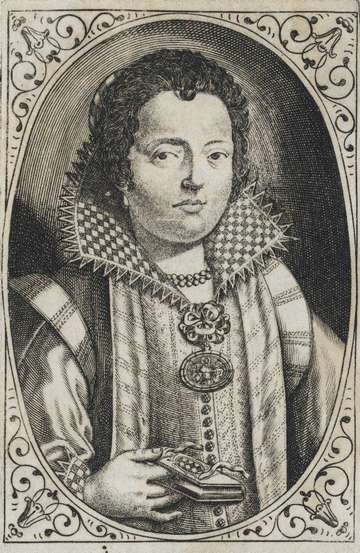
    Speranza

    (The image above is a reproduction of a sketch supposedly made by George Morosini)

    Oscar and his mother were described as snobs in many different sources, but this was not their only common feature.

    They were both very superstitious. Oscar Wilde was afraid of ‘evil eyes’ throughout his life, and he always wore scarab rings on both little fingers.

    Superstition, ingrained in local folklore, inherited from the mother, is only one of Wilde’s common features with another great author: Hans Christian Andersen.

    I am so clever that sometimes I don’t understand a single word of what I am saying. (Oscar Wilde)


    Brilliant student

    Oxford Coat of Arms

    Oscar Wilde began his formal education at the age of nine when he enrolled in Portora Royal School, where Samuel Beckett, another important Irish writer, later started his own.


    Wilde was a brilliant student, but was also remembered as lazy. He won numerous awards and, eight years later, continued his studies at Trinity College, where he won the prestigious Berkeley Gold Medal and ultimately landed a place at Oxford.


    He was also a top student in Oxford, and among his other achievements, one of his poems earned him another greatly appreciated award: the Newdigate Prize. Even more important was his friendship with two influential intellectuals: John Ruskin (photo on the left) and Walter Pater (sketch on the right). Especially the latter introduced him to the principles of the Aesthetic movement, where art is created ‘for art’s sake’, not for some moral or educational purpose.

    Oxford was also the place where Wilde discovered his affection for young men, which caused him all sorts of problems in the Victorian era, when such feelings were considered a criminal offense.

    Never love anyone who treats you like you’re ordinary. (Oscar Wilde)

    Florence Balcombe, sketch by Oscar Wilde


    Oscar Wilde and Girls

    Oscar Wilde’s first sweetheart was Florence Balcombe (picture on the right), and he probably had serious plans with her when he returned to Dublin after graduation. But in the meantime, she had already found another boyfriend.


    He wasn’t just anybody. He was also a long-time Wilde family friend. His name was Bram Stoker, and he later wrote one of the most popular horror novels of all time: Dracula. Her connection with vampires was a long-lasting: in 1925, she successfuly won a battle on copyright infringement. As an executor of her late husband’s literary works she sued the makers of Nosferatu, a movie from 1922, for unathorized adaptation. All copies of the movie were destroyed.


    Although Wilde didn’t mourn too long over her decision for another man, this loss obviously hurt him. In his farewell letter, he wrote that he is returning to England, this time for good. After that, he really came back to Ireland only on two occasions and for a very limited time.


    On the other hand, he wasn’t lacking in ladies’ attention either. He was flirting with Lillie Langtry, who was already married and who greatly inspired his most successful work ever: Salome. Lillie Langtry was a famous model and actress who became one of the most popular socialites of her time.

    Photos of Lillie Langtry (left) and Violet Hunt (right)


    Wilde was also, for some time, the lover of Violet Hunt. But who wasn’t? This energetic lady, who was also a writer, is now much more known for her scandalous private life. She hosted literary meetings where she started and ended many relationships with now famous writers like Henry James, Arnold Bennett, and D. H. Lawrence, who were only some of her close friends (if not more), and Somerset Maugham, H. G. Wells, and Ford Madox Ford were certainly her lovers, and being affected mostly by married men, she ruined many marriages.


    Wilde proposed to her in 1879, and she refused him. In Wilde’s life, there were also many ladies of questionable virtues, and from one of them he contracted a disease which can ultimately culminate in cerebral meningitis, the official cause of his death.


    Considering his lifestyle, it was quite surprising when he married Constance Lloyd in 1884, with whom he had two sons in the next two consecutive years.

    You can never be overdressed or overeducated. (Oscar Wilde)

    Need for Attention

    (Wilde did just about everything to be noticed!)

    Example of Aestheticism

    (The picture above, a work of William Powell Frith, presents Wilde at his best: surrounded by his admirers.)

    There is a short story with some truth and some fiction, as every story should have. When Wilde wrote his first collection of poems, he offered it to several publishers. All of them refused to publish his work without even looking at it.


    Wilde got the impression that they were not really looking for well-written poems. They wanted an impressive author. Somebody who would draw attention by his name and appearance. They wanted a celebrity, and he was not famous enough.


    So he decided to draw attention whenever and wherever he could. His excessive behavior, the way he dressed, and his company all seemed like a constant need for attention. He entered the restaurant in such a striking dress that the guests started throwing food at him.


    He was walking up and down the Pall Mall with a lily or sunflower in his hand. He was often given food when entering certain restaurants. He was escorted by police when driving in a coach because he needed protection. Not exactly the image of a contemplative thinker and peaceful artist… After all, he was the one who had said there is only one thing worse than being talked about: not being talked about!


    When newspapers were full of his name, he took the manuscript to the publisher. He accepted it without even looking at the poems. Wilde’s name guaranteed sales.


    His desire for attention was probably one of the main reasons for starting a fight with Queensberry, which finally led him to prison. He had many chances to move abroad and live his life and write more plays, but this would certainly not satisfy Wilde’s constant need for attention.

    The truth behind The Picture of Dorian Gray

    Was Dorian Gray a real person?

    His only novel, and besides Salome, Oscar Wilde’s most popular work, has a very interesting background. Man, who inspired the character of Dorian Gray, was a real person, and for some time, a very close friend of Wilde.


    His name was John Gray, and he was a poet coming from the working class. As we can find from various sources, some people stopped what they were doing to stare at him because he was so handsome. He looked much younger than he actually was, and even at an older age, kept the look of a young boy.

    It is not known how close was the relationship between Wilde and Gray, but it is obvious that Gray for some time, enjoyed his role of being Dorian (he even signed at least one letter to Wilde with this name) and later (after Wilde started hanging out with Lord Alfred Douglas) strongly fought against everything what suggested he was the real Dorian Gray.

    John Gray even hired a lawyer when the trial against Wilde started. Just to be prepared in case somebody wanted to involve him in the mess. He later studied priesthood and became a canon of the Roman Catholic Church in Scotland.


    Wilde was for some time mocking him because of his new friend (who was supposedly so ugly even his own mother didn’t want to see him anymore), but it seems Oscar, not John, was the one who couldn’t get over their mutual past.


    In De Profundis, Oscar Wilde compared his friendships with Lord Alfred Douglas and John Gray as incomparable. His feelings for John were much more sincere than his feelings for Bosie (the nickname of Lord Alfred). Knowing all this, we have another special undertone when we read The Picture of Dorian Gray.

    Controversial (and Influential!) Salome

    Salome is a biblical character, the daughter or step-daughter of King Herod. On his birthday, she performed a beautiful dance he (Herod) promised her anything as a reward. (This dance is sometimes called the dance of the seven veils.)
    She asked for the head of John the Baptist on a silver plate, and she got it.

    Aubrey Beardsley: Salome

    Oscar Wilde used the plot from this story for his play Salome, where the title character is portrayed as a seductive woman with mysterious motifs. This play was first written in French and translated into English (partly by Wilde and partly by Lord Alfred Douglas), and it is not clear who did what part. It seems Oscar Wilde was not happy with Douglas’ translation (his French was incomparably inferior to Wilde’s), and he rewrote most of it.
    The English edition of Salome was illustrated by another great and extravagant artist, Aubrey Beardsley (image above). Wilde didn’t want to give credit for the translation to his friend and lover, Lord Alfred Douglas, so he instead dedicated the work to him, which caused some controversy. Anyway, the play was banned before it even premiered because at that time it was understood as the illegal use of biblical characters on stage.


    Salome first premiered privately in 1896, when Wilde was imprisoned, and later, it was performed only for a private audience. The official premiere of Salome was much later (1931), three decades after Wilde’s death. This superbly constructed play (Al Pacino played the character of Herod twice on the stage and in 2011 on the big screen) inspired many works, like Richard Strauss’ opera, Nick Cave’s play, many movies (Ken Russel’s is most notorious of all), Pete Doherty’s lyrics on the album Grace / Wastelands, and so on.

    Did you know?

    • Real Salome, the woman who ordered a head on the plate, later became a queen and a mother, but more interesting is the way she died.
    • She was passing a frozen lake, ice cracked, she fell and was beheaded by the hit against the sharp edge of ice – beheaded her!

    Boys

    Oscar Wilde’s Greatest Love

    Although Wilde had many affairs with men, only two of his lovers are really important.

    First is certainly Robert (Robbie) Ross, a Canadian of noble origin, who moved to England when he was only two years old. He had met Oscar when Wilde’s wife Constance was pregnant for the second time, and his boyish look immediately charmed the already successful writer.


    They started living together soon after, and Robbie was the man who stayed by Oscar Wilde to the very end of his life. He was with him at the deathbed, and he also edited and published several of Wilde’s works after Wilde’s death. But another man played an even more important role.


    Lord Alfred Douglas (called Bosie, short for Boysie, as his mother called him) met Wilde in 1891 and was everything Wilde ever dreamed of: a charming, imaginative, spoiled, extravagant, and lazy aristocrat who lived for pleasure and nothing else. On one occasion, when Wilde was sick, he said to Wilde that he is so boring he will leave him immediately if he falls ill again.


    Actually, he did that; he moved to the hotel and sent the bill to Wilde. He was also giving Wilde’s clothes to males of questionable virtue, with whom he was having fun, and on one of these occasions, he lost love letters, which were later used as incriminating material in a fatal trial, where Oscar Wilde lost virtually everything he had gained in his life.

    (In the photo above, we can see Oscar with Bosie)

    Marquess of Queensberry

    Wilde vs. Queensberry

    The Marquess of Queensberry was the father of Alfred Douglas. He belonged to an old and very conservative family and had a military background with a long tradition of hunting, gambling, and suicides.

    (Lord John, Marquess of Queensberry)


    Lord John, Alfred’s father, also had a son named Francis, who was in a relationship with a man. Not just anybody, but Lord Rosebery, who became a Prime Minister in 1894. Queensberry blamed Rosebery for the death of Francis, which happened in very suspicious circumstances.


    When Queensberry heard about his son Alfred’s partying with the infamous Wilde, he pretty much freaked out. He was trying to stop their relationship no matter what, and on one occasion, publicly insulted Wilde, addressing him as somdomite (not a typo).

    Cocky Oscar Wilde, backed by always temperamental Bosie, began a libel suit which very quickly turned against him.

    Queensberry had skillful lawyers who presented Wilde as a man obsessed with boys.


    For some time, Wilde quite enjoyed the show, providing witty answers and eliciting many laughs from the audience. However, in the end, he was sentenced to prison and was required to pay all the expenses, which financially ruined him.

    (Wilde and Douglas)

    Who was Vyvyan Holland?

    Son of Oscar Wilde

    Wilde’s family after his imprisonment…

    When Oscar Wilde was sentenced to prison, his wife Constance decided to change her and their two sons’ surnames to Holland. All three moved to Switzerland. She died in 1898, and her relatives didn’t allow Oscar to see his kids again. Robert Ross later became a good friend of both Wilde’s sons.

    The older son, Cyril, was killed in WW1 by a German sniper, but the younger, Vyvyan (in photo), who also fought in World War I, later became a pretty successful writer and translator. He was an editor at the BBC for some time, and he had one son: Merlin Holland, who also became a writer and editor (among other occupations). He is married and has a son, so Wilde’s descendants are still alive and creative.

    Oscar Wilde: De Profundis

    Some trivia about De Profundis

    • It is actually a really long letter to Lord Alfred Douglas,
    • Wilde was not allowed to send it, but he could take it out when he was released,
    • he was given only one sheet of paper a day, and this was taken away in the evening,
    • Robert Ross titled the letter ‘De Profundis’ years after Wilde died.

    The Artist is the creator of beautiful things. (Oscar Wilde)


    Recommended works by Oscar Wilde

    Here is the list of the most well-known and influential works written by Oscar Wilde. They are all in the Public Domain, but if you want to use them in your projects, please check for other details, such as copyright on translations, graphic material, and so on. These works can be read online or downloaded in different formats, depending on your preferences and gadgets.

    The Picture of Dorian Gray by Oscar Wilde

    It’s a well-known story resembling Faust, a classic German legend based on a real person. And like Faust was based on Johannes Georg Faust, Wilde’s Dorian Gray was partly based on John Gray, a young poet who looked not only beautiful, but also way too young.

    The Importance of Being Earnest by Oscar Wilde

    Wordplay on earnest and Ernest is just a start of this comedy, now considered one of Wilde’s masterpieces.

    Salome by Oscar Wilde

    If we have to choose only one work from Wilde’s opus, this play would be the winner. This is the English translation published in 1906, without a foreword.

    De Profundis by Oscar Wilde


    De Profundis is a 50 thousand words long letter addressed to Lord Alfred Douglas. It was written at the beginning of 1897 in prison. Wilde was weak and ill, and he was not allowed to send the letter; however, he was permitted to take it with him upon release. It was copied after prison.

    Most people are other people. Their thoughts are someone else’s opinions, their lives a mimicry, their passions a quotation. (Oscar Wilde)

    (Henry Bushnell, the Wilde’s lover in prison?)

    After Prison

    There’s some indication through Wilde’s letters that he had a lover referred to as ‘a dark-eyed little chap’ in prison as well. His name was Henry Bushnell, and he was sentenced for theft. His record was quite remarkable: between 1892 and 1911, he was sentenced twenty-one times! Some historians believe that after being released, Wilde occasionally sent him money. It’s not clear how physical their relationship could be. Victorian prisons were designed for maximum isolation, with a chapel having partitions between seats, inmates wearing so-called scotch caps, preventing eye contact, and strictly forbidden to talk with each other. On the other hand, Wilde was also sentenced to hard labour, where some kind of communication seemed more viable.

    My existence is a scandal. (Oscar Wilde)

    When Oscar Wilde was released from the penitentiary in 1897, he was without money and friends. It is known that Aubrey Beardsley, who illustrated Salome, crossed the road just to avoid meeting him on the street. Constance was sending some money to Oscar, but did not allow him to see his sons.


    He moved to France and spent most of his time, money, and energy on alcohol. One of the rare friends who didn’t turn back on him was Robert Ross.


    Oscar Wilde was still able to write; he corrected a couple of plays, but as he said, ‘lost the joy of writing’, so he never created anything new. Only three years later, his health deteriorated so badly that he died. Only one day before his death, he managed to do what he intended for decades: he converted from protestant to the catholic religion.


    Oscar Wilde died on 30 November 1900 in Paris. This was the end of one of the most brilliant minds in literary history. If he were not such a lazy writer and so obsessed with so many eccentricities, his legacy would certainly be much bigger, probably in the range of Shakespeare or Dickens.

    If this is the way Queen Victoria treats her prisoners, she doesn’t deserve to have any. (Oscar Wilde)

    The grave of Oscar Wilde is a popular spot for tourists in Paris.

    Wilde is dead, long live Wilde!


    The official cause of Wilde’s death was cerebral meningitis, but it is not known what caused it. It seems the rupture of his ear from prison contributed to the development of illness, although there are also speculations about other reasons.

    His tomb was constructed under the guidance of Robert Ross, whose ashes are also in an urn in the tomb. There is an angel on the tomb, and an epitaph from ‘The Ballad of Reading Gaol’.


    Wilde’s grave is one of the primary tourist attractions, and the cemetery where his remains are interred is the most populous in the world. However, it is not the only one.


    Cemetery as a tourist attraction – Hundreds of thousands of visitors every year

    The most popular cemetery in the world

    Many famous artists are buried at Père Lachaise Cemetery. Let’s take a look at the short list :
    Guillaume Apollinaire
    Honore de Balzac
    Vincenzo Bellini
    Georges Bizet
    Frederic Chopin
    Gustave Dore
    Isadora Duncan
    Max Ernst
    Jean de La Fontaine
    Moliere
    Yves Montand
    Jim Morrison
    Edith Piaf
    Marcel Proust
    Simone Signoret
    Oscar Wilde
    and many, many others who were not necessarily from France but were somehow connected to France and Paris. Many people would like to have their remains in this company, but there are strict rules (you have to live in Paris or die there, and there is also a waiting list). Anyway, there are also historical monuments, and Pere Lachaise can be a really interesting place to visit when you are in France.

  • Constance Lloyd, Mrs. Wilde

    Constance Lloyd, Mrs. Wilde

    Mrs Oscar

    Constance Lloyd is best known as Mrs. Wilde, although many still don’t know this literary giant was actually a married man with two sons. Even less known is the fact that she was an artist too, for some time heavily involved in her husband’s work, while he was still building his reputation, helping him meet interesting people and being open to his experiments in personal life, including a deadly relationship with Bosie Douglas.

    constance wilde portrait

    Constance Lloyd’s portrait by Louis William Designes (oil on canvas, 1882)

    While she prohibited him from seeing his sons after the infamous trial, with devastating consequences, she still helped him until her premature death
    at only 39 years of age.

    Who was Constance Lloyd, who played such an important part in the life of one of the most notorious artists of the last century?

    Drawing of Constance, 1884

    Her Early Years

    Constance Mary Lloyd was born on January 2, 1858, in London to the successful English barrister Horace Lloyd and his Irish cousin Adele (Adelaide) Atkinson. She had an older brother, Otho. The marriage of her parents was not a happy one, and soon after the birth of both kids, they started living separately, Horace spending too much on social life in London and Adele trying to spend as much time as possible in Ireland with her mother, Mary, in Dublin.

    As we can read in Otho’s memoirs, Constance’s life was very unhappy, mostly due to the mental instability of her mother, leading to many cases of emotional and probably even physical abuse of Constance in her childhood and adolescent years. It seems that while her father was still alive, although mostly absent, outbursts of Adele were still somehow under control, but after his death from pulmonary infection, soon after her sixteenth birthday, she stayed completely unprotected towards her unpredictable mother’s behavior.

    Otho, who was studying at Bristol and Oxford during those years, later described his sister’s life as one full of fear. After a while, he still managed to convince his grandfather, John Horatio Lloyd, to take Constance under his roof and protection. It was also Otho who introduced Constance to Oscar, whom he met in Oxford, where they were studying at the same time, but never became very close, until Speranza, Oscar’s unconventional mother, and Oscar visited the home of Lloyd’s to meet Constance’s and Otho’s aunt from Dublin.

    Not Love at First Sight

    The meeting between Oscar and Constance in June 1881, immediately after his Poems were published, was a meeting of two attractive young people with a great love for art and a talent for foreign languages. It was not love at first sight. While Constance, with her wavy auburn hair and purplish-brown eyes, tall, slim figure, and aesthetic taste for clothes, definitely looked charming, it was probably her distance that attracted Oscar even more.

    To be honest, he was in love with several ladies and had even unsuccessfully pursued some of them before and after meeting Constance. He was also involved in several foggy relationships with young men, already being a regular target of mockery in Punch.

    While he obviously made a good impression, being already pretty famous, she charmed him as well. Her intelligence, education (being fluent in five languages, among other things), good manners, and a hint of shyness only contributed to her charm. When Oscar and his mother left Lloyd’s home, he said he thinks he’ll marry that girl.

    Yet it was still a surprise for the majority of their mutual friends and acquaintances when he later really proposed to her, and she said yes.

    As long as I live, you shall be my lover. (Constance Mary Lloyd)

    Oscar and Constance with their son Cyril, 1892

    Trouble in Paradise

    Despite her family not being too enthusiastic about Oscar, they married after three years of knowing each other on May 29, 1894, at St James’ Church in Paddington. It seemed for some time that both were very much in love. Oscar was apparently very happy in the first two years of marriage, praising his love life to his friends and trying to convince them to get married as well.

    They had two sons (Cyril in 1885 and Vivian in 1886) in the first two years of marriage, but after the birth of the second one, the couple became estranged. One of the possible reasons was of a gynecological nature, although we’ll never know what kind of problems she had; they were very likely connected until her death before her 40th birthday.

    Oscar started spending most of his nights in hotels, officially working on his literary masterpieces, and Constance increasingly participated in some of the fields where she was already active:

    • liberal politics,
    • feminism (she demanded the right for women to serve in Parliament), contemporary fashion (she was an advocate of more practical clothing, being a sensation showing in public in a split skirt, abandoning tight corsets),
    • translating (early reviews of his work from Dutch, for instance),
    • writing, still occasionally collaborating with Oscar (among her stuff, an edited version of The Happy Prince was found after her death).

    They also enjoyed decorating their way-too-expensive home called House Beautiful together.

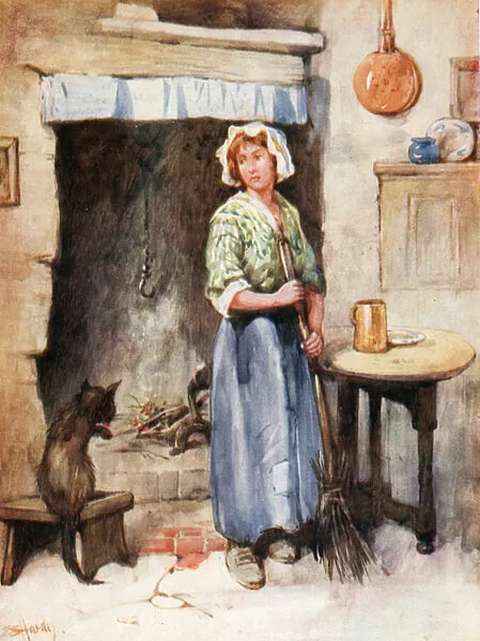
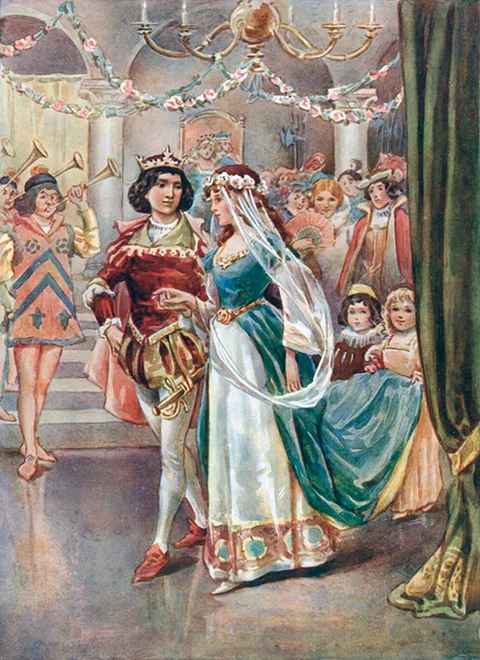
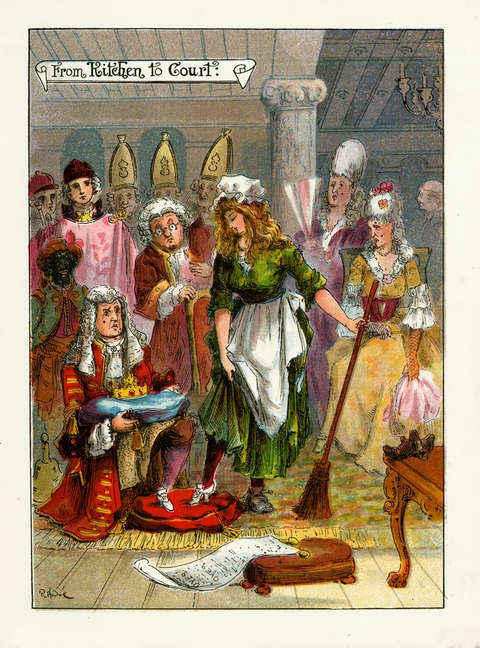
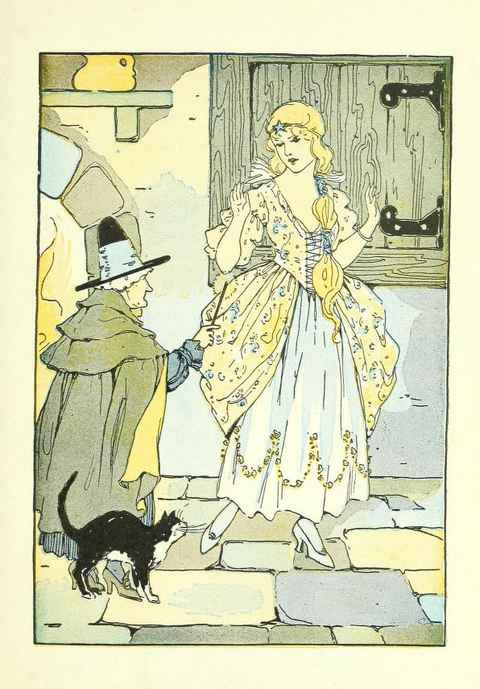
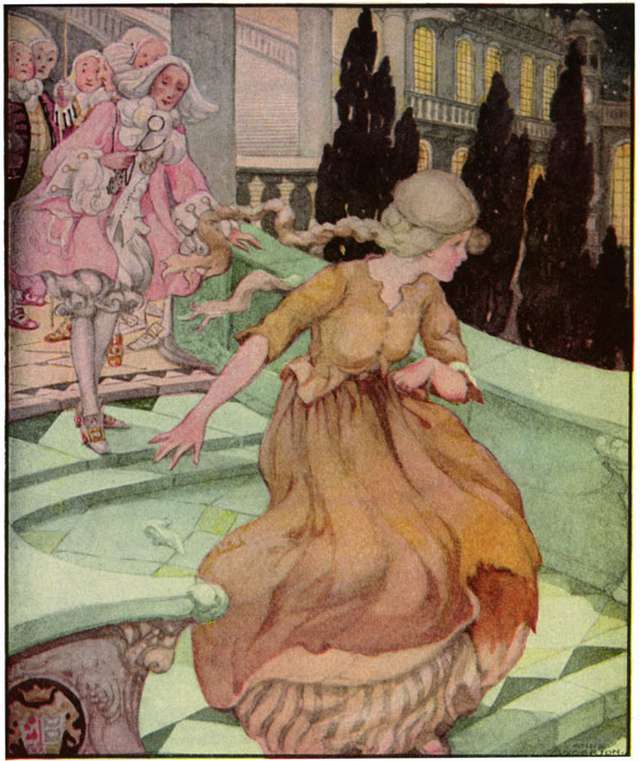
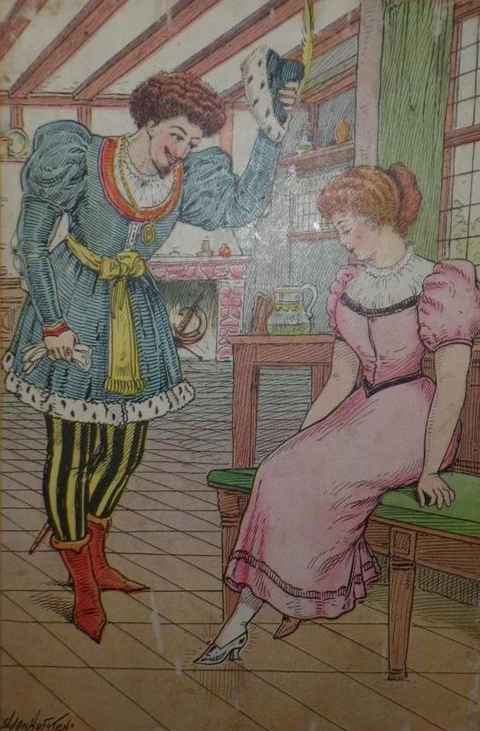
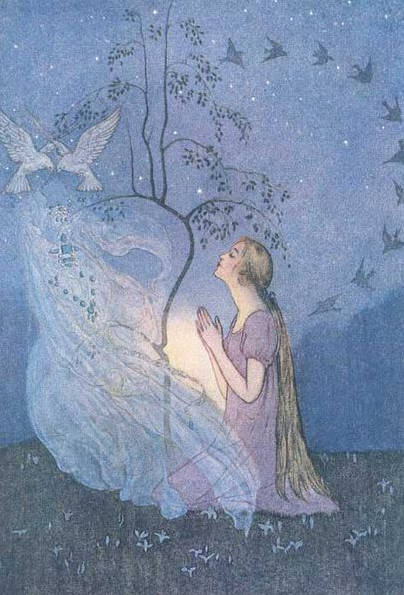
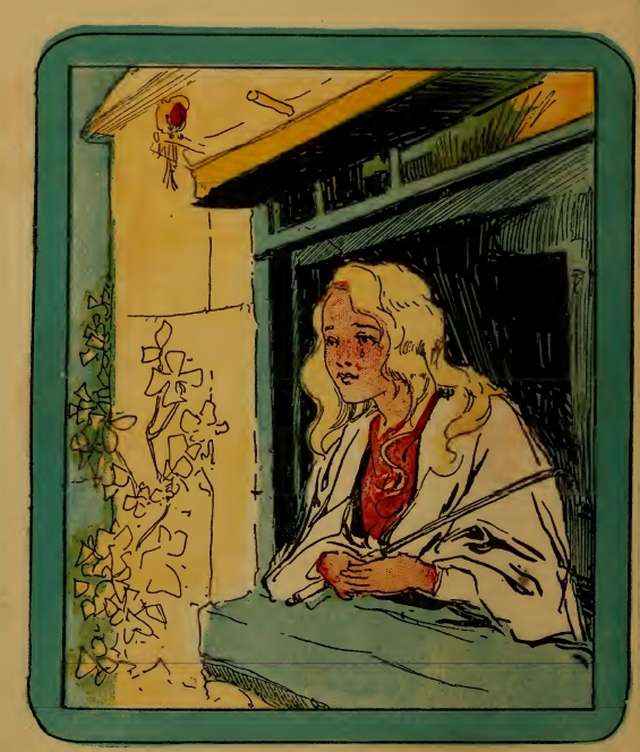
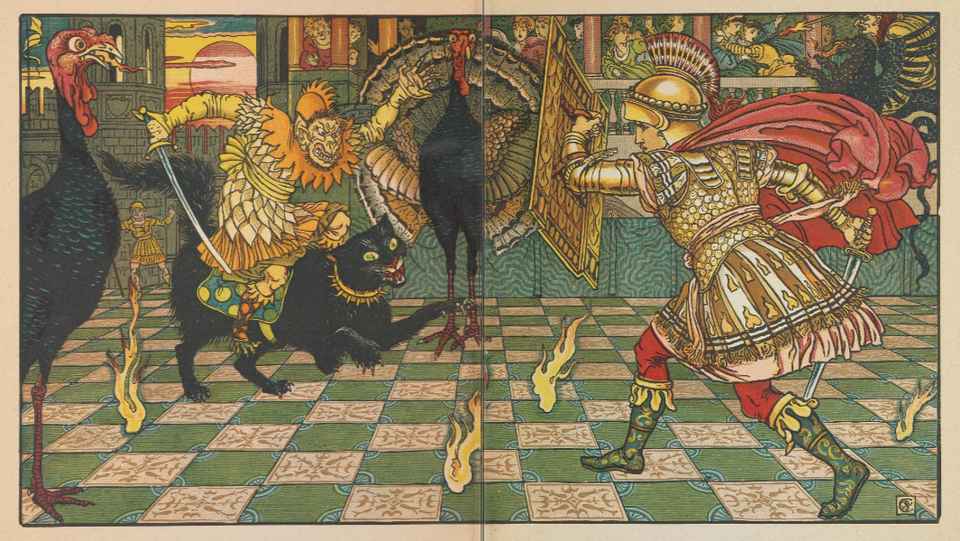
    Constance was definitely involved in his first book of fairy tales, and she also wrote a book of stories for kids on her own. The title “There Was Once Grandma’s Stories” was published in 1888 by the legendary Ernest Nister and is presented here with a few illustrations by John Lawson.

    Constance also became deeply involved in Theosophy, participating in the rituals of The Golden Dawn.

    Her Book of Fairy Tales

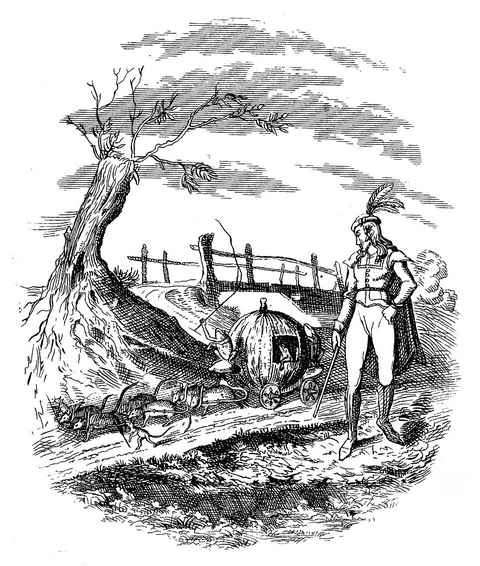
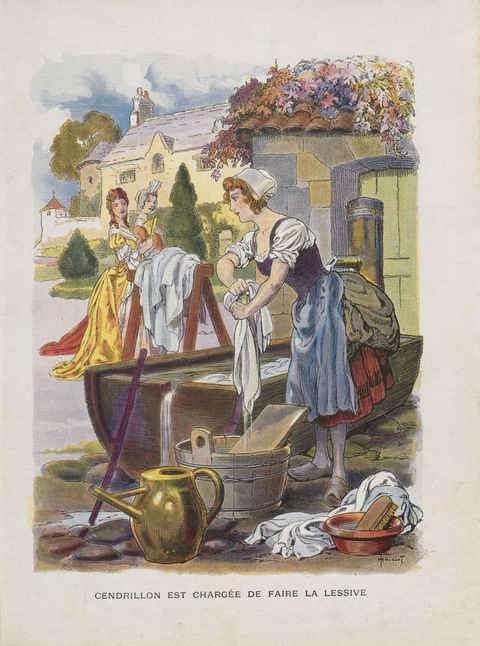
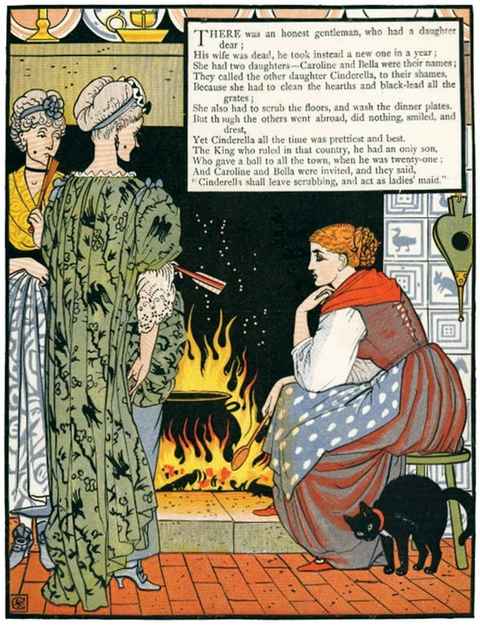
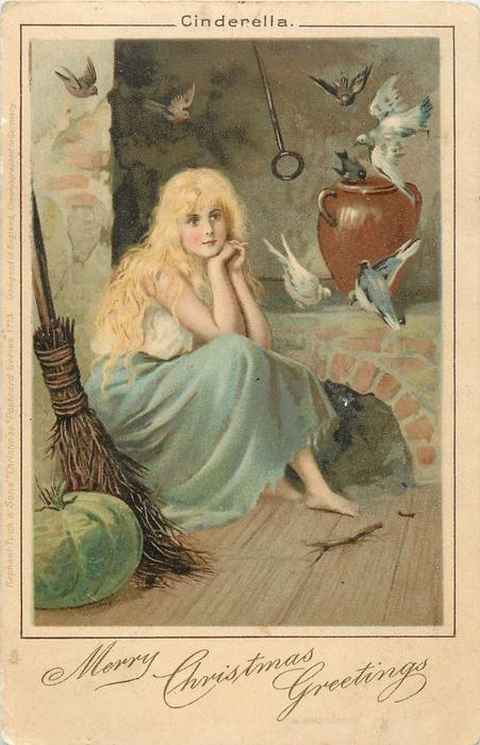
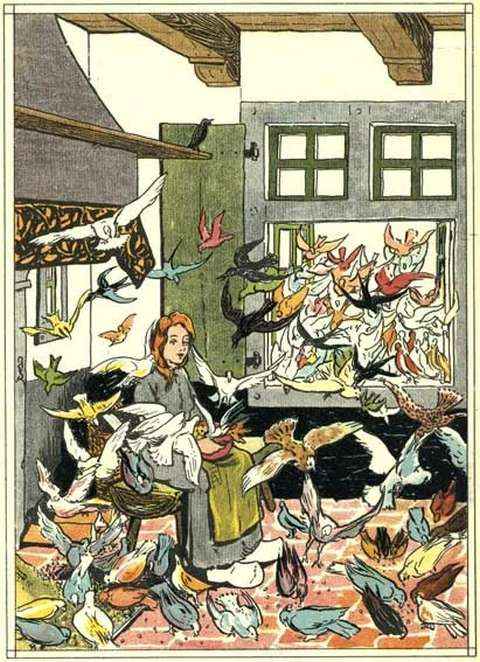
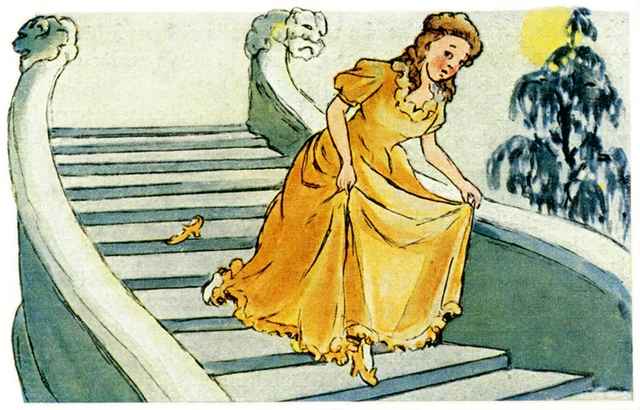
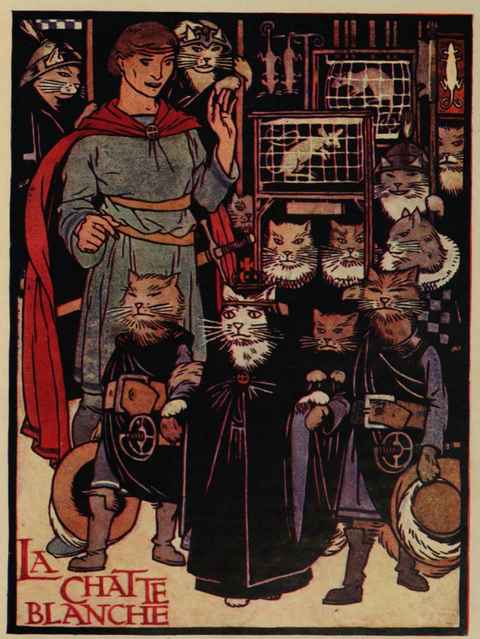
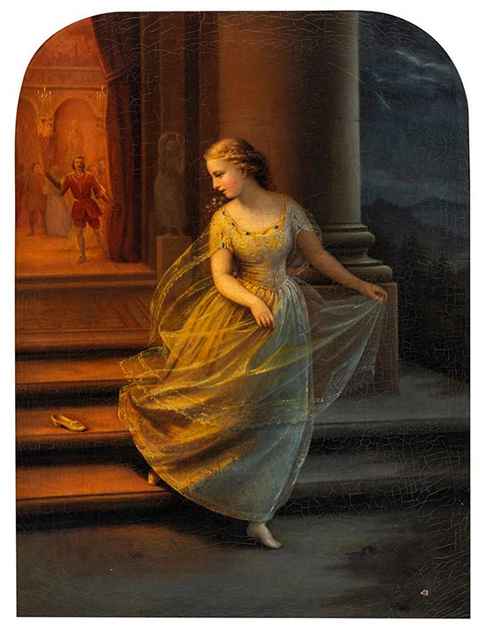
    After becoming parents, they both believed their boys should have access to the best possible literature for kids and obviously believed they should write some by themselves. There was Once (subtitled Grandma’s tales), which was her retelling of famous fairy tales as she remembered being told by her granny.

    The collection was published at the legendary Ernest Nister publishing house and includes such fairy tales as Red Riding Hood, Cinderella, and Puss in Boots. It was illustrated by John Lawson (1865-1909).

    Constance and Cyril Wilde, 1889

    Constance Wilde’s Death

    Soon after Oscar’s inclination to men became more and more obvious, and he even started to bring his lovers to their house, which, thanks to their both exquisite taste, became one of the most tastefully decorated homes in England.

    When he started an affair with Lord Alfred Douglas in 1891, their marriage was practically over. Lord Alfred ‘Bosie’ Douglas became fatal for Oscar, eventually convincing him to start a trial against Marquess Queensberry and even (unintentionally) helped his opponent to defeat Oscar at court, which led to the loss of almost all his property and sent him to prison, where he contracted a serious illness.

    When Oscar returned from prison, Constance had already moved to France, changing her boys’ surnames to Holland to protect at least some of their privacy. She still loved her husband, trying to help him financially, but demanding that he stay away from his sons.

    When he restored a relationship with Bosie, she also cut her financial help. Roughly at the same time, she needed surgery for no clear reason. Some people believe she had a tumor in her uterus; there’s a theory she had an unsuccessful surgical correction of her intimate parts, causing urinary problems, and some even claim she had an undiagnosed and then almost unknown multiple sclerosis.

    There’s also a speculation that she died of complications from a venereal disease contracted from her husband or of spinal damage caused by her fall from the stairs (interesting fact: Oscar died after a fall a few years later, too).

    Soon after surgery, an infection developed, and she started vomiting, unable to hold liquids in her body.

    She died five days later, on April 7, 1898, in Genoa, where she is still buried.

    Her last known photo (1896)

  • Welcome to the Fairy World!

    This website is dedicated to everything related to fairy tales. Expect articles about fairy tales (including fables, stories for children, and nursery rhymes), their authors, and illustrators.

    Most of all, expect a lot of magic!

    This post will stay at the top of the blog as ‘sticky’. In time, it will transform into a comprehensive table of contents.

    Start with our first post!

    Here is the second one:)

    The third one is a charm.

    This menu will change, of course, and (hopefully) expand in next months.