The Princess and the Frog from Arranged Marriages to Kissing Frogs
Over numerous editions, the classic fairy tale The Frog King was adapted to reflect changing societal norms and the writers’ beliefs.
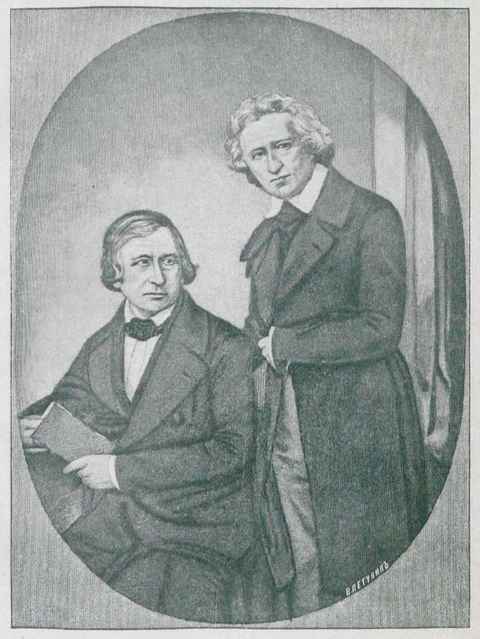
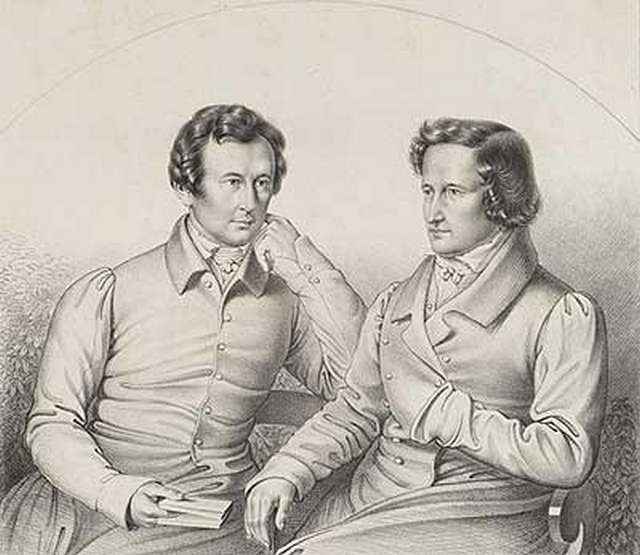
The Brothers Grimm wrote more than two hundred fairy tales, and about a dozen of them became classics, known all over the world. The Frog King, also known as The Frog Prince, is one of them. They considered it particularly important because they placed it at the top of their collection, where it remained in all seven editions published during their lifetime.
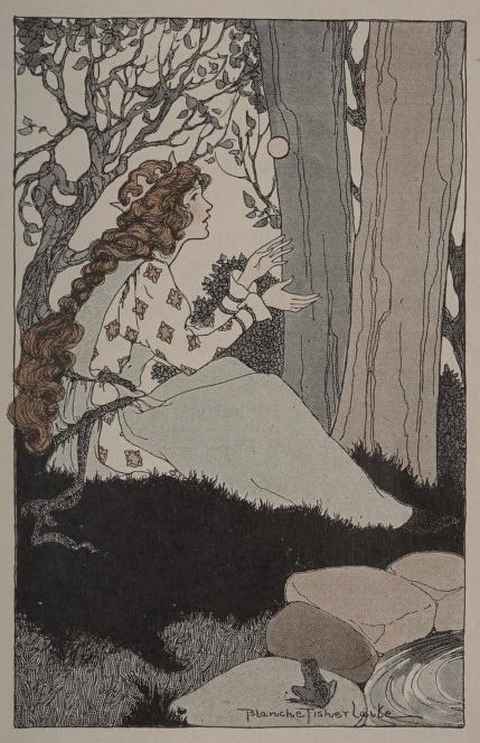
The Princess from The Frog King plays with the golden ball, ilustration by Blanche Fisher Wright
This story has also entered popular culture, thanks to its well-known quote about kissing frogs to find a prince. With a history spanning over five hundred years and many variations, it provides us with valuable material for studying important changes in society. Our focus will be on the three main characters and the story’s central theme of the marriage between the princess and the frog.
Brief Summary
The princess lost a golden ball, and the frog helped her in exchange for her word. She promised to be his friend only to get her toy back and then ran away. However, her father insisted that she keep her promise, which ultimately resulted in the frog transforming into a handsome prince.
There are many ways to interpret this tale, and you are welcome to explore them through further readings at the end of the article. We will only investigate the powers and conflicts of the characters involved in relation to the marriage here.
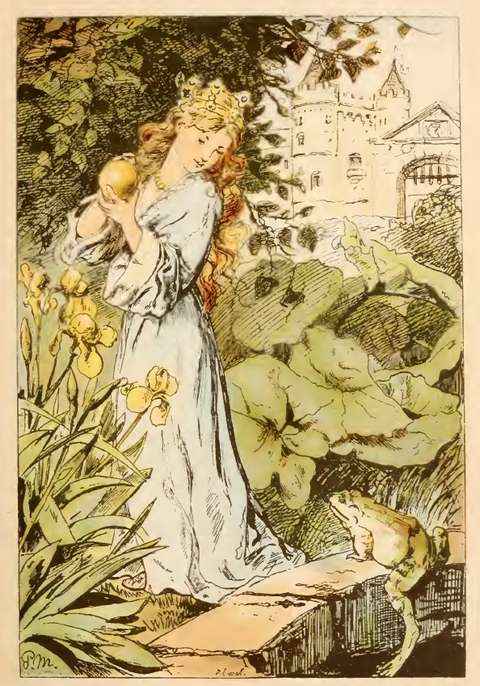
The Princess and the frog makes a deal, illustration by Paul Meyerheim
The Princess
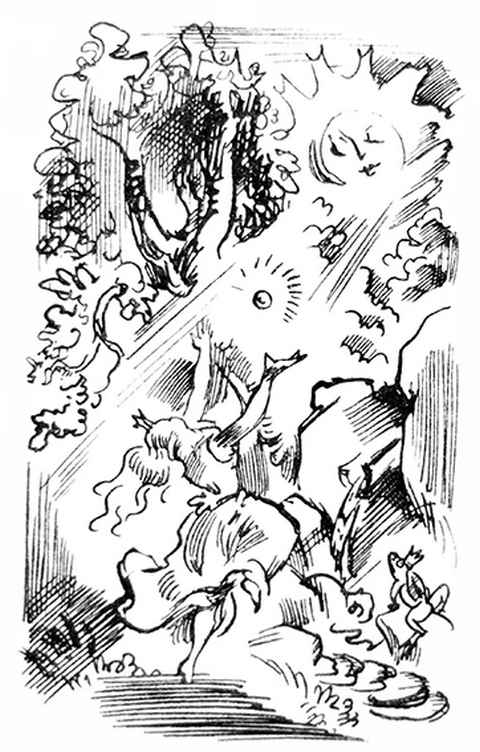
She is young and beautiful. (Even the sun admires her.) Her immaturity is shown on several occasions. It looks like playing is all she does in her life. Losing a ball is not a sign of responsibility either. Keeping her word? No, thanks! Even when her father gave clear directions, she still tries to avoid the responsibility. The grand finale is the scene in her bedroom. She drops the annoying frog against the wall so hard it transforms!
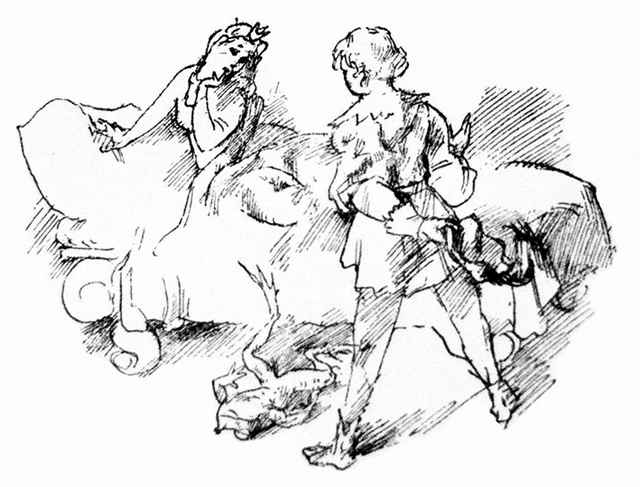
While the princess is desirable as a possible wife from the physical point of view, she is incompetent and obviously needs guidance. This is provided by the highest authority – her father.
The Frog
He is the ultimate suitor. When the frog notices her problem, he is willing to help but only if she promises to start a relationship with him. Being ugly, even repulsive, he doesn’t care about his physical appearance. All his actions are directed in one way only: he wants to get in her bed. He uses everything he can to achieve his goal. If this is not enough, he capitalizes on her father’s authority. Her feelings are never his slightest concern.
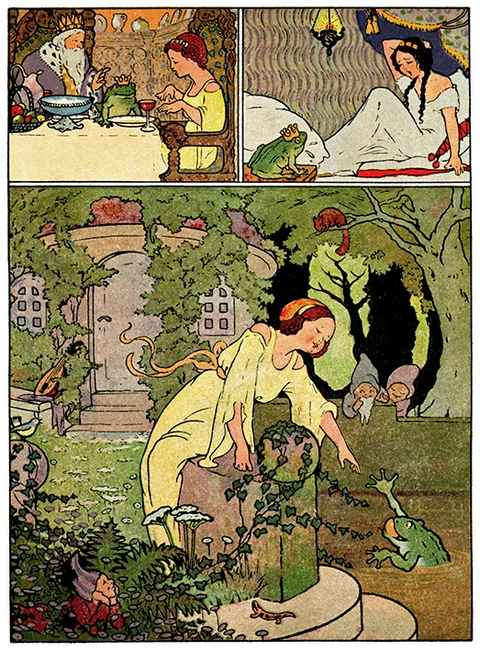
It is only after his transformation into a prince that we discover he was under the spell of a witch. None of the dozens of known variations of the story explains why it happened. Perhaps every man is a frog by default until he finds a woman willing to help him become a true human?
The King
It’s hard to read anything from Carl Jung without immediately connecting a king with a figure of the father, and we all know what the father’s role is: to protect and guide his offspring. He does exactly that in The Frog King. Although he is not violent, his authority is indisputable. His word is a command.
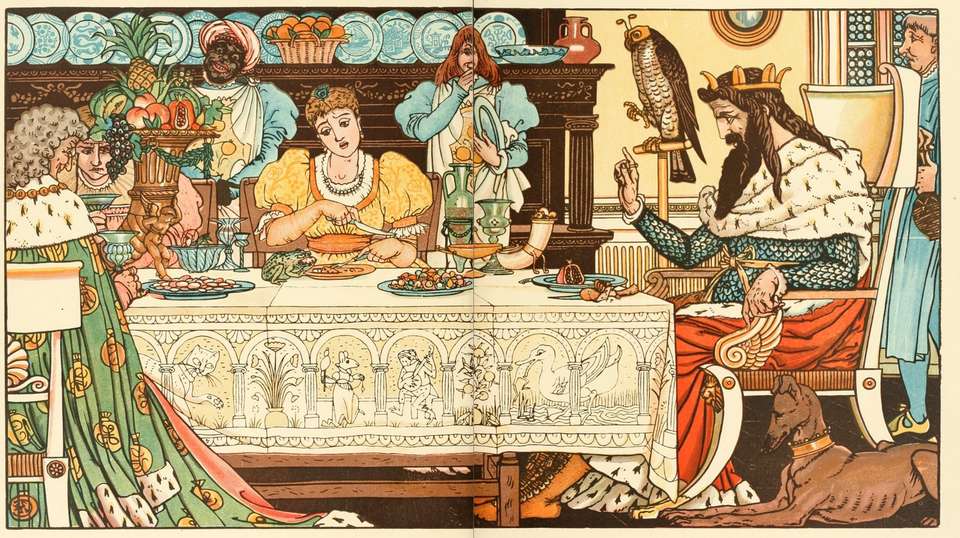
The princess is a teenager. Like every teenager, she tests the boundaries. Father’s job is to keep her in the safety zone until she settles up with another competent person: her husband. Please note: there is no mother in this fairy tale.
Apperance
One of the most obvious messages in The Frog Prince is not to judge others by appearance. The same is true in The Beauty and the Beast. But if we stay at this statement, we would be hypocritical. In both cases, the brides’ beauty is described in superlatives. After the grooms’ transformations, we are also told that they are handsome. Appearance matters in most fairy tales, as is most clearly demonstrated in The Puss in Boots.
Marriage
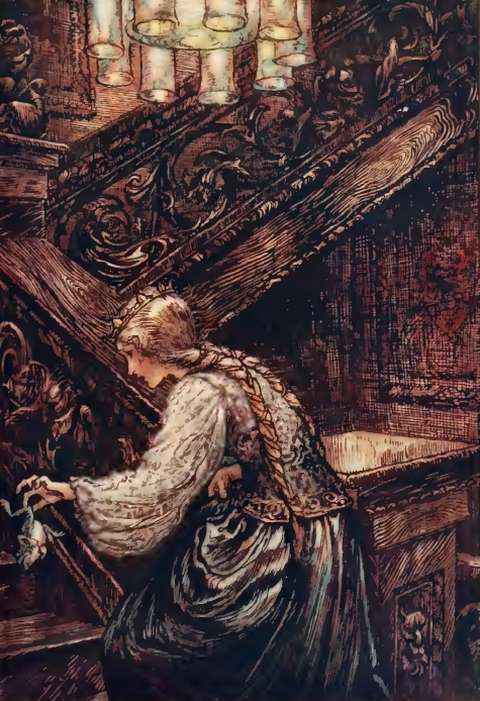
The fairy tale of the princess and the frog is very stereotypical. It’s all about male dominance and female submission, but it actually faithfully reflects the situation in society. Everyone has to play the role they were born into. The frog has to conquer her. She plays hard to get. Her father leads their actions to the successful ending.
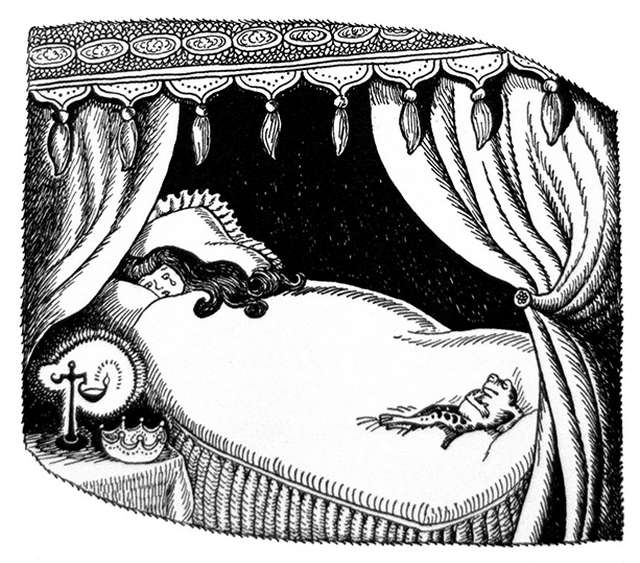
From a biological perspective, success is defined as procreation. Marriage is not necessary for that, and in early versions young couples actually sleep in bed before the marriage is even mentioned. But in their later versions, marriage becomes more important. That’s why the Brothers Grimm systematically removed all references to extramarital activities from their later editions of fairy tales. They even deleted the mere mention of the bed!
Many old fairy tales follow the same story pattern. He has to prove his abilities before he ‘earns’ her. We can easily find hundreds of examples of the same behaviour in the animal kingdom as well. While it looks like she is considered only as a sort of trophy, biology never cared about emancipation. The male should carry on the best possible genes (fast, strong, courageous), so he has to be tested.
Children are the reward for all his risks. While the mother always knows her children really carry her genes, the male never knows, so he is trying to be as sure as possible. This is the reason why brides in fairy tales are always very young and isolated from the rest of society. This is the reason why they are passed directly from fathers to husbands.
Originals and improvements
The numerous rewritings by the Brothers Grimm are probably what make this particular fairy tale stand out from the crowd. Not only were they collectors of old tales and guardians of folklore, but they were also active chroniclers of their time. They lived in the 19th century when new states were formed, traditional centres of power vanished, and many time-tested patterns were lost.
One of the biggest changes was a breakdown of the traditional family as a basic social unit. Thanks to many societal changes, young people suddenly gained a lot of freedom, and with freedom comes risk. We could also say it is a synonym for responsibility. The Brothers Grimm were probably aware of the danger posed by the thousands of marriages based on impulse rather than careful consideration.
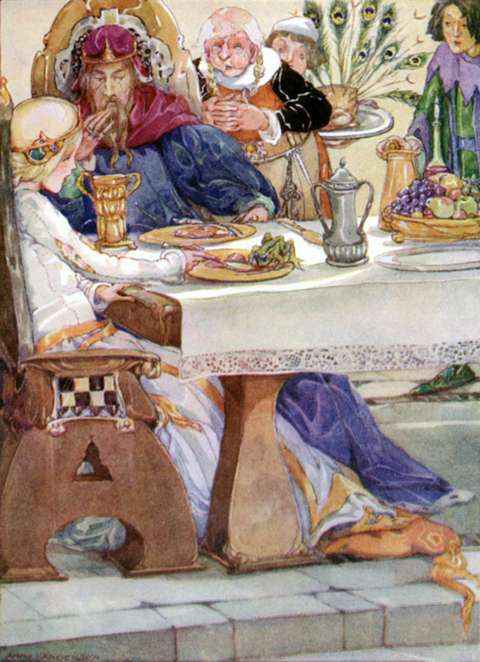
This is where the king is irreplaceable. He not only shows authority, but he also upholds traditional values and guides young people who are passionate about what they do. Brothers Grimm believed traditional marriage was the best possible environment for raising children (they had plenty of opportunities to see how hard a life can be for a child without one or both parents; they lost their father at an early age, too), and in traditional marriage, the love of two young people wasn’t enough.
Love is only one part of the winning equation. In fairy tales, fathers’ opinions are important too. Were they conservatives? Yes, of course. Did they try to preserve the status quo in society? Not really. It’s better to say that they wanted to maintain some order amidst chaotic changes with unpredictable results.
Revolution
We can look at fairy tales from a different perspective as well. ‘Living happily ever after’ is a cliché, but for a young audience it probably has a much better (and comforting) effect than ‘they lived until they divorced’. While it may seem monotonous to adhere to her father’s directives, intergenerational strife is a recurring theme in fairy tales. Yet, in most cases, the young characters gain independence in the end.
This is probably the most important message of fairy tales. Kids grow up. They make mistakes, but in the end they become responsible citizens. As in the story of the Frog King, they could benefit from the wisdom of the older generation; they can succeed despite the mistakes of their parents (like in The Sleeping Beauty), or they can even find happiness thanks to the mistakes of their parents (like in The Beauty and the Beast).
And the most subversive message? Despite all the archetypes, everything is possible!
Do you want more?
If you would like to learn more about The Frog King (The Frog Prince), you can check the article, which deals with frog symbolysm, found in this and other fairy tales and fables!