Oscar Wilde: master of quotes and artist of the scandal
Oscar Wilde wrote many books and plays; his personal life, marked by both acclaim and controversy, remains as notable as his literary works. The intersection between Wilde’s creative achievements and personal affairs ultimately led to his early and tragic death, setting the stage for a life both brilliant and turbulent.
Less commonly recognized but important to Oscar Wilde’s public image is his role as a husband and devoted father of two. Beyond his flamboyant persona, he shared fairy tales with his children and even wrote several himself.
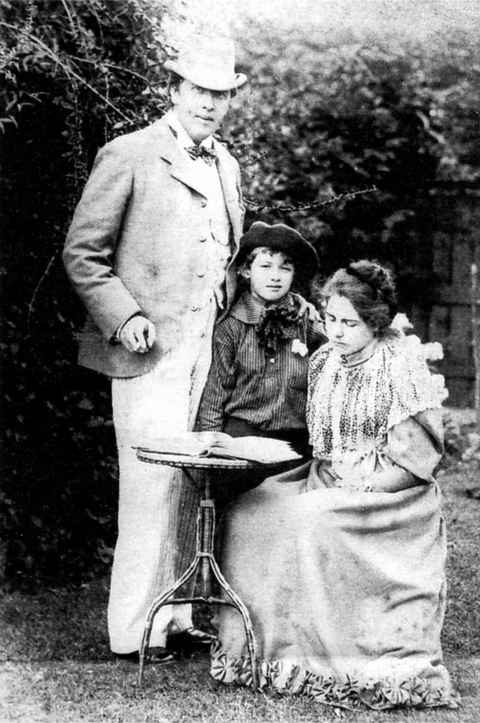
In this review, we will explore some of his most notable quotes on love and life, highlight key moments from his biography and the decisions that led to his premature death, and present a few of his notable works.
In a separate article, we’ll also present both books of Oscar Wilde’s fairy tales: The Happy Prince and The House of the Pomegranates.
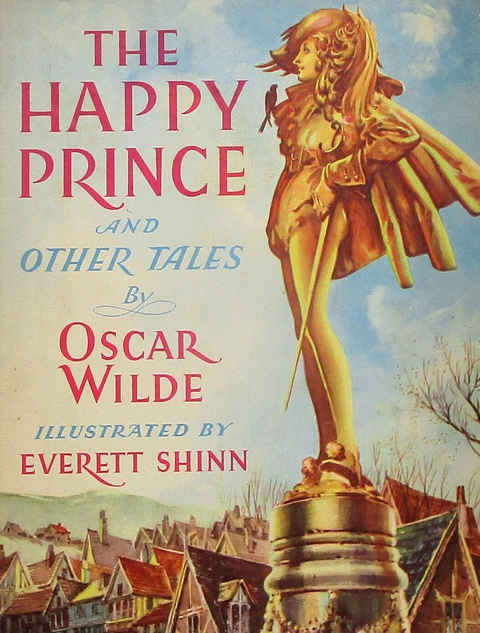
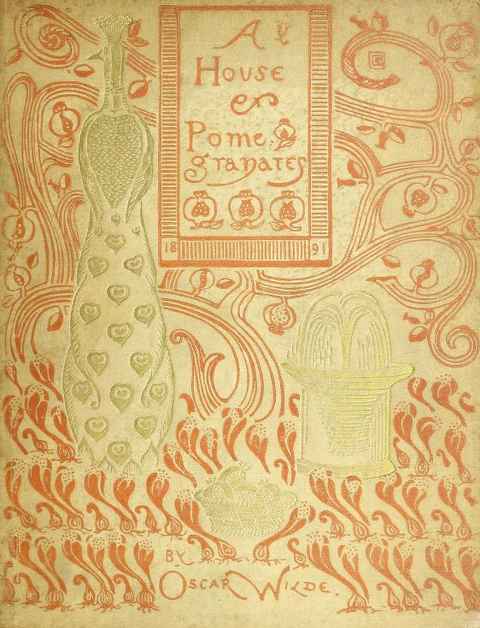
We can learn even more about Oscar Wilde from his fairy tales (which you can find for free on the internet) than from his official biographies.
However, a word of caution: Oscar Wilde’s fairy tales are astonishingly beautiful, yet they never (!!!) end with happily ever after!
I got nothing to declare but my genius. (Oscar Wilde)
Privileged child
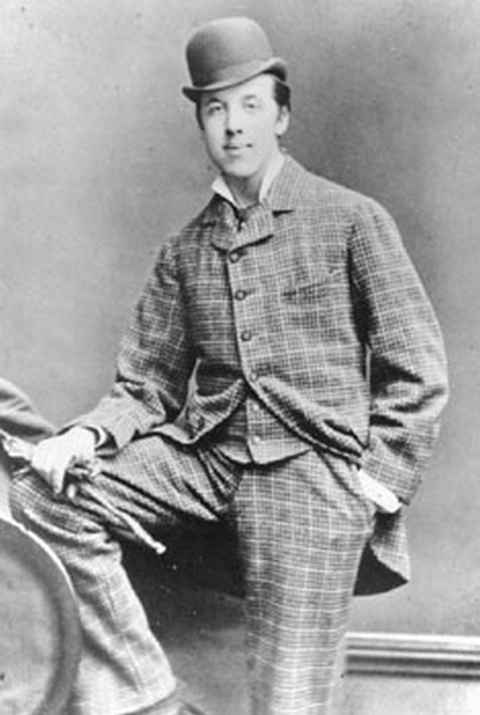
Oscar Wilde always looks the same in photos.
Oscar Wilde was born on 16 October 1854 as the second son of William and Jane Wilde. He was surrounded by intellectuals from his birth, had private tutors and governesses from France and Germany. He learned foreign languages as other kids played with the ball, and this marked him for the rest of his life.
The same is true for the lifestyle of his parents, who were celebrities, regularly organizing parties for other important members of society. Glamour was Wilde’s most loyal friend throughout most of his life.
To live is the rarest thing in the world. Most people exist, that is all. (Oscar Wilde)
Oscar Wilde’s father
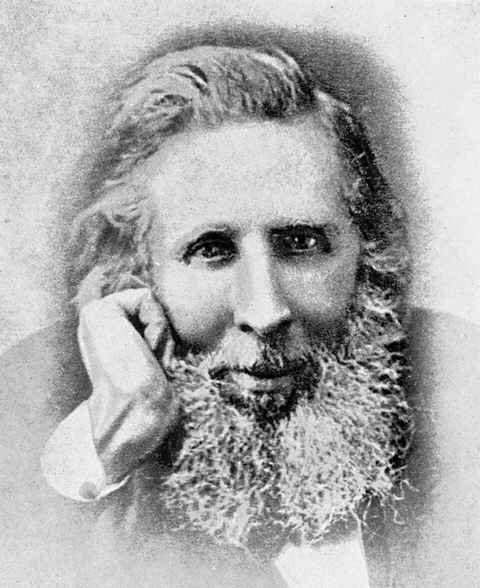
Sir William, Oscar Wilde’s father
Oscar Wilde’s father’s profession was a respectful one. He was a successful doctor, a surgeon specializing in eyes and ears, but also a philanthropist, and a writer who contributed many works to the fields of medicine, archaeology, folklore, and poetry. His success eventually brought him the title of a knight, so he became Sir William in 1864.
He was running his own hospital and once performed a surgery on the father of another famous Irishman: George Bernard Shaw. His private life was not so perfect. He had three illegitimate children with different women before he married.
Sir William Wilde acknowledged his fatherhood and paid for the education of his illegitimate children; however, they were raised by his relatives rather than by him. Nevertheless, his eldest son, Henry, later became his assistant in the hospital.
His illegitimate daughters Emily and Mary died young in a bizarre accident with fire.
Sir William’s reputation suffered badly soon after his knighthood when one of his patients claimed he drugged her with chloroform and abused her. The case came to court, and Sir William’s name was stained for the rest of his life.
Women are meant to be loved, not to be understood. (Oscar Wilde)
Oscar Wilde’s mother
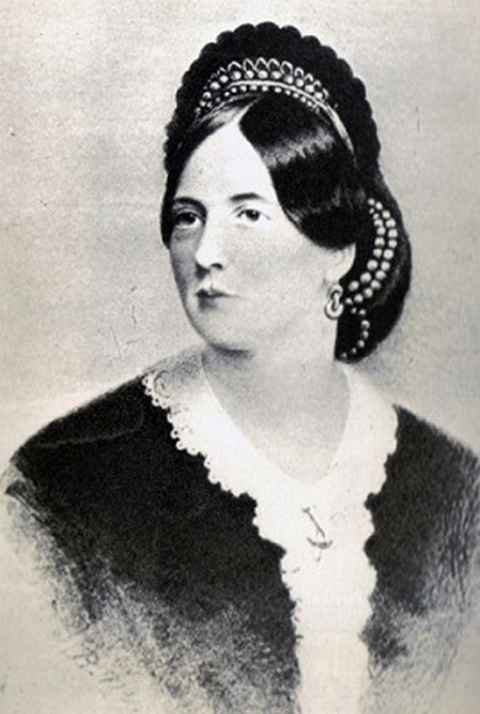
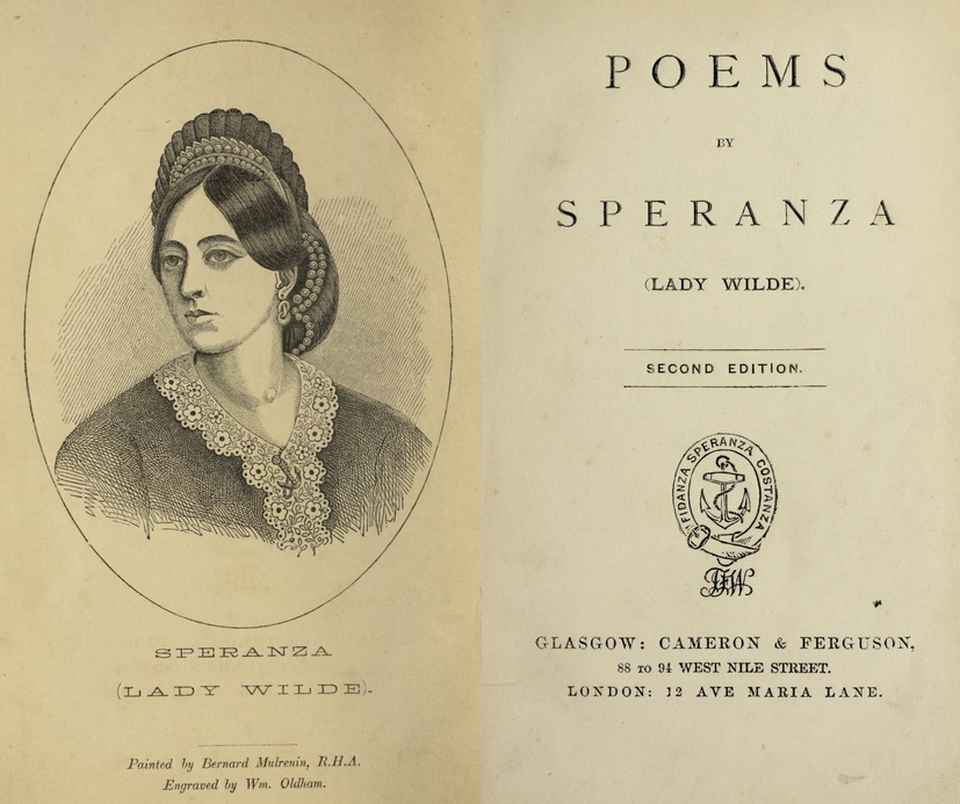
Oscar Wilde’ mother and her book of poems
Oscar’s mother, Jane Francesca Elgee, was a very special lady long before she earned the title Lady Wilde. She was a poet, translator, patriot, and pretty snobbish.
Most of her life, she was lying about her age (she claimed she was born in 1826, even though her father died two years before, and her birth certificate stated she was born in 1821) and her ancestors.
She claimed to be a descendant of Dante Alighieri because her original surname was supposed to be Algiati, after Italian immigrants to Ireland; however, her family actually came from northeast England.
For her artistic work, which often carried strong patriotic notes, she used different pseudonyms, including male names; however, the most well-known was Speranza. Maybe inspired by her imaginary ancestor Dante’s quote from Inferno? Speranza, of course, means ‘hope’.
These were not the only eccentricities in her life, which was full of ups and downs. She steadfastly supported her husband during his trial, even at great cost, and later encouraged Oscar, even as his fate became clear, to remain in London and face adversity, a decision that shaped his life’s outcome.
After her husband’s death, Speranza moved to London to live with her older son, Willie, who also had financial difficulties, and when she died, the family was practically broke, so she was buried in a common ground without a headstone.
Speranza
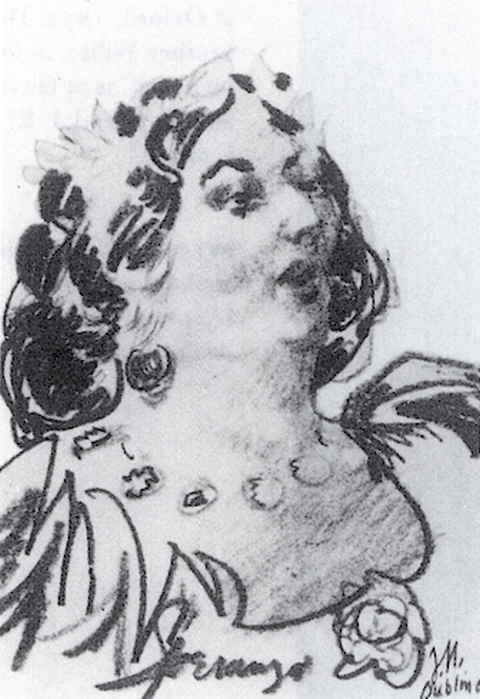
(The image above is a reproduction of a sketch supposedly made by George Morosini)
Oscar and his mother were described as snobs in many different sources, but this was not their only common feature.
They were both very superstitious. Oscar Wilde was afraid of ‘evil eyes’ throughout his life, and he always wore scarab rings on both little fingers.
Superstition, ingrained in local folklore, inherited from the mother, is only one of Wilde’s common features with another great author: Hans Christian Andersen.
I am so clever that sometimes I don’t understand a single word of what I am saying. (Oscar Wilde)
Brilliant student
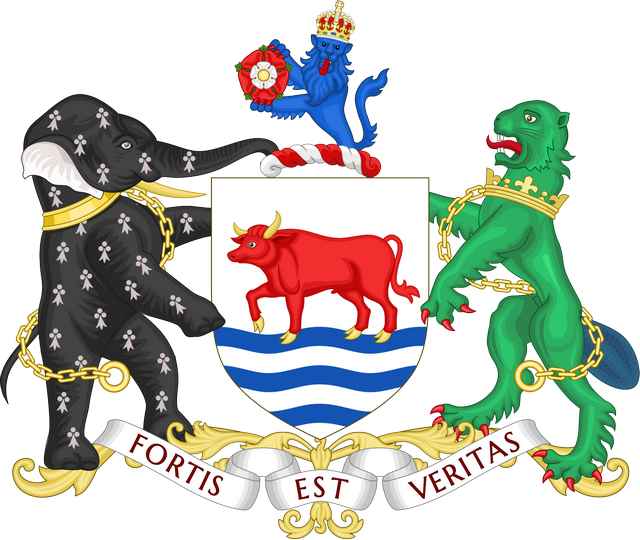
Oxford Coat of Arms
Oscar Wilde began his formal education at the age of nine when he enrolled in Portora Royal School, where Samuel Beckett, another important Irish writer, later started his own.
Wilde was a brilliant student, but was also remembered as lazy. He won numerous awards and, eight years later, continued his studies at Trinity College, where he won the prestigious Berkeley Gold Medal and ultimately landed a place at Oxford.
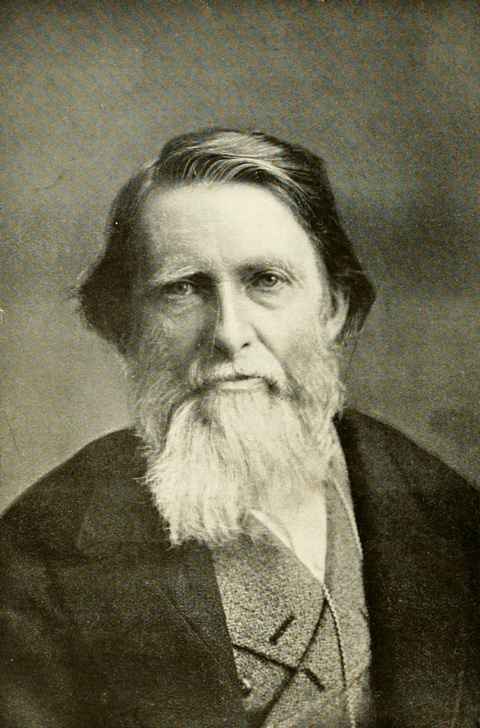
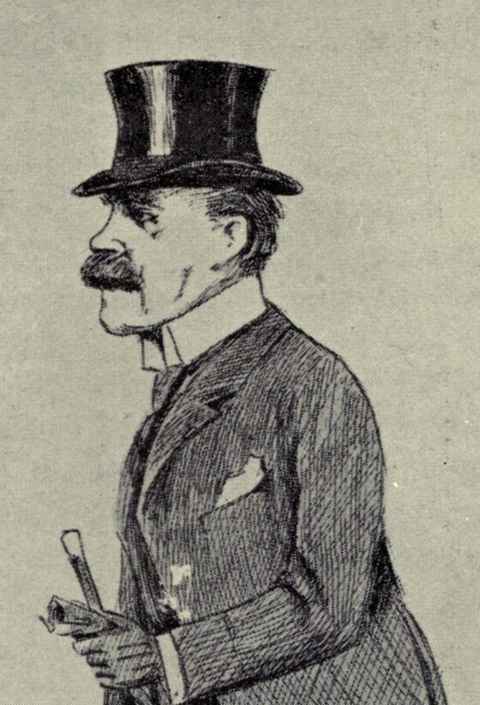
He was also a top student in Oxford, and among his other achievements, one of his poems earned him another greatly appreciated award: the Newdigate Prize. Even more important was his friendship with two influential intellectuals: John Ruskin (photo on the left) and Walter Pater (sketch on the right). Especially the latter introduced him to the principles of the Aesthetic movement, where art is created ‘for art’s sake’, not for some moral or educational purpose.
Oxford was also the place where Wilde discovered his affection for young men, which caused him all sorts of problems in the Victorian era, when such feelings were considered a criminal offense.
Never love anyone who treats you like you’re ordinary. (Oscar Wilde)
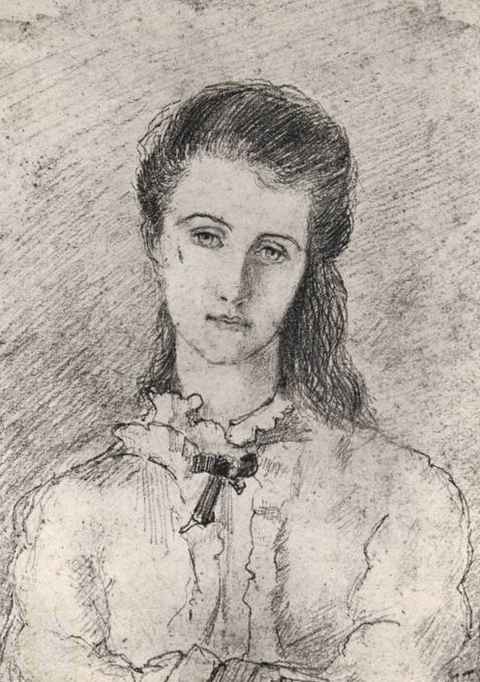
Florence Balcombe, sketch by Oscar Wilde
Oscar Wilde and Girls
Oscar Wilde’s first sweetheart was Florence Balcombe (picture on the right), and he probably had serious plans with her when he returned to Dublin after graduation. But in the meantime, she had already found another boyfriend.
He wasn’t just anybody. He was also a long-time Wilde family friend. His name was Bram Stoker, and he later wrote one of the most popular horror novels of all time: Dracula. Her connection with vampires was a long-lasting: in 1925, she successfuly won a battle on copyright infringement. As an executor of her late husband’s literary works she sued the makers of Nosferatu, a movie from 1922, for unathorized adaptation. All copies of the movie were destroyed.
Although Wilde didn’t mourn too long over her decision for another man, this loss obviously hurt him. In his farewell letter, he wrote that he is returning to England, this time for good. After that, he really came back to Ireland only on two occasions and for a very limited time.
On the other hand, he wasn’t lacking in ladies’ attention either. He was flirting with Lillie Langtry, who was already married and who greatly inspired his most successful work ever: Salome. Lillie Langtry was a famous model and actress who became one of the most popular socialites of her time.
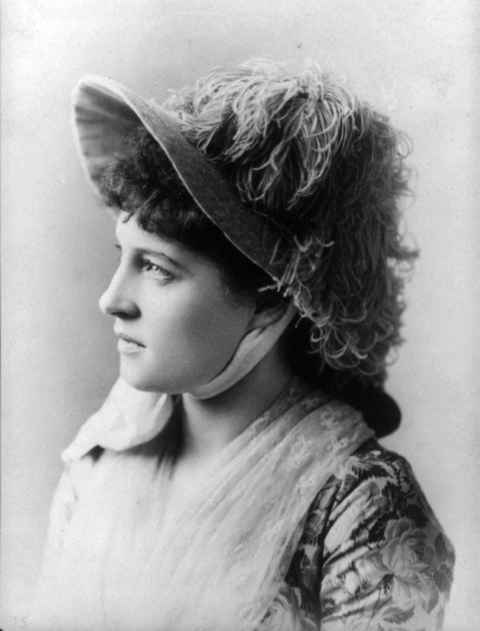
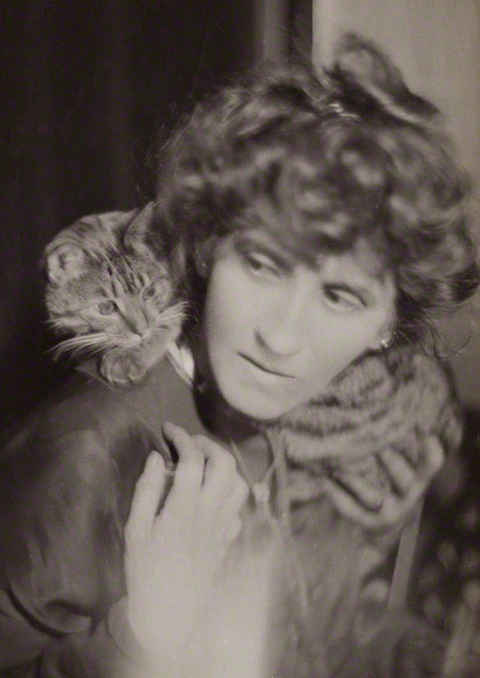
Photos of Lillie Langtry (left) and Violet Hunt (right)
Wilde was also, for some time, the lover of Violet Hunt. But who wasn’t? This energetic lady, who was also a writer, is now much more known for her scandalous private life. She hosted literary meetings where she started and ended many relationships with now famous writers like Henry James, Arnold Bennett, and D. H. Lawrence, who were only some of her close friends (if not more), and Somerset Maugham, H. G. Wells, and Ford Madox Ford were certainly her lovers, and being affected mostly by married men, she ruined many marriages.
Wilde proposed to her in 1879, and she refused him. In Wilde’s life, there were also many ladies of questionable virtues, and from one of them he contracted a disease which can ultimately culminate in cerebral meningitis, the official cause of his death.
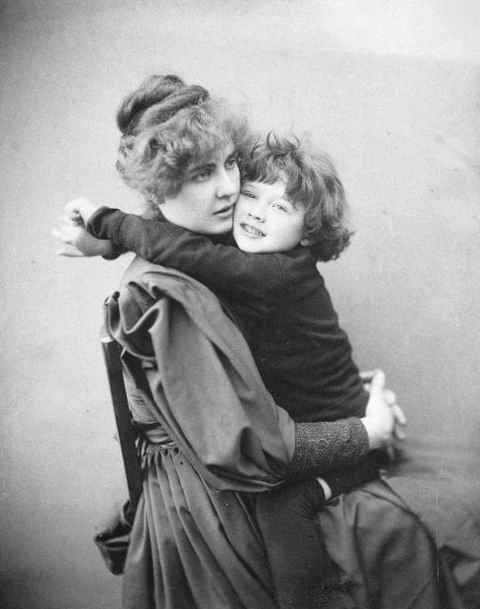
Considering his lifestyle, it was quite surprising when he married Constance Lloyd in 1884, with whom he had two sons in the next two consecutive years.
You can never be overdressed or overeducated. (Oscar Wilde)
Need for Attention
(Wilde did just about everything to be noticed!)
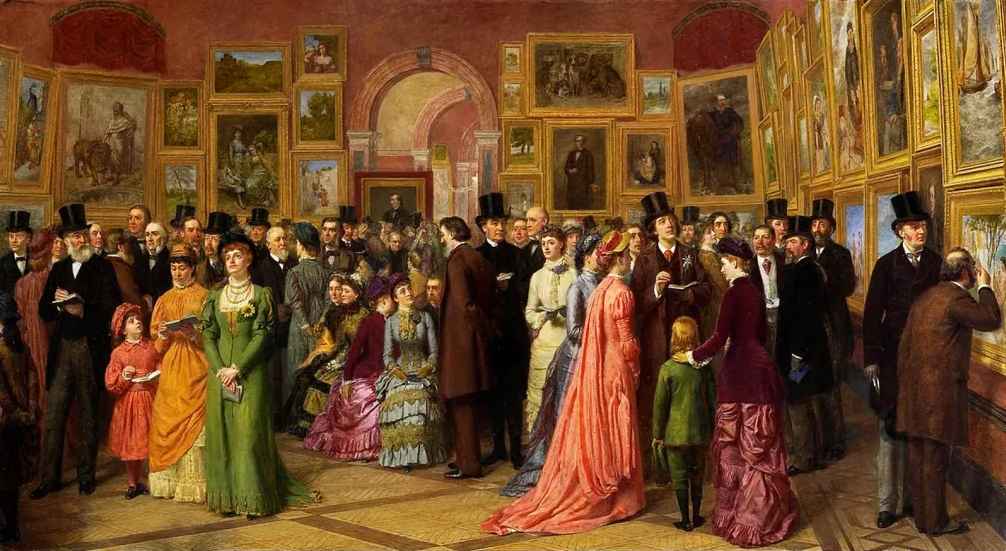
Example of Aestheticism
(The picture above, a work of William Powell Frith, presents Wilde at his best: surrounded by his admirers.)
There is a short story with some truth and some fiction, as every story should have. When Wilde wrote his first collection of poems, he offered it to several publishers. All of them refused to publish his work without even looking at it.
Wilde got the impression that they were not really looking for well-written poems. They wanted an impressive author. Somebody who would draw attention by his name and appearance. They wanted a celebrity, and he was not famous enough.
So he decided to draw attention whenever and wherever he could. His excessive behavior, the way he dressed, and his company all seemed like a constant need for attention. He entered the restaurant in such a striking dress that the guests started throwing food at him.
He was walking up and down the Pall Mall with a lily or sunflower in his hand. He was often given food when entering certain restaurants. He was escorted by police when driving in a coach because he needed protection. Not exactly the image of a contemplative thinker and peaceful artist… After all, he was the one who had said there is only one thing worse than being talked about: not being talked about!
When newspapers were full of his name, he took the manuscript to the publisher. He accepted it without even looking at the poems. Wilde’s name guaranteed sales.
His desire for attention was probably one of the main reasons for starting a fight with Queensberry, which finally led him to prison. He had many chances to move abroad and live his life and write more plays, but this would certainly not satisfy Wilde’s constant need for attention.
The truth behind The Picture of Dorian Gray
Was Dorian Gray a real person?
His only novel, and besides Salome, Oscar Wilde’s most popular work, has a very interesting background. Man, who inspired the character of Dorian Gray, was a real person, and for some time, a very close friend of Wilde.
His name was John Gray, and he was a poet coming from the working class. As we can find from various sources, some people stopped what they were doing to stare at him because he was so handsome. He looked much younger than he actually was, and even at an older age, kept the look of a young boy.
It is not known how close was the relationship between Wilde and Gray, but it is obvious that Gray for some time, enjoyed his role of being Dorian (he even signed at least one letter to Wilde with this name) and later (after Wilde started hanging out with Lord Alfred Douglas) strongly fought against everything what suggested he was the real Dorian Gray.
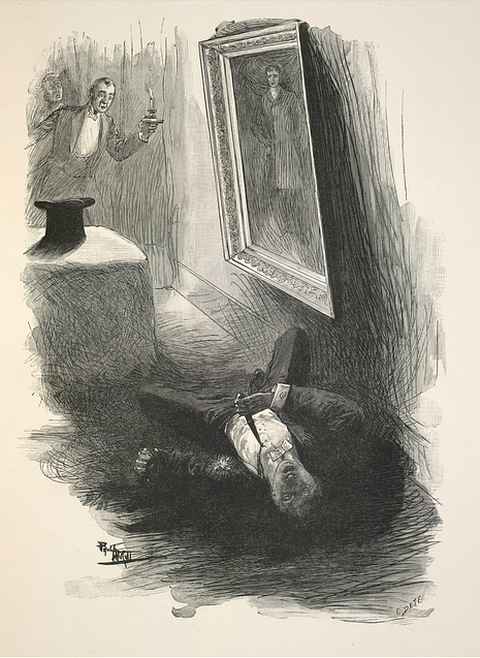
John Gray even hired a lawyer when the trial against Wilde started. Just to be prepared in case somebody wanted to involve him in the mess. He later studied priesthood and became a canon of the Roman Catholic Church in Scotland.
Wilde was for some time mocking him because of his new friend (who was supposedly so ugly even his own mother didn’t want to see him anymore), but it seems Oscar, not John, was the one who couldn’t get over their mutual past.
In De Profundis, Oscar Wilde compared his friendships with Lord Alfred Douglas and John Gray as incomparable. His feelings for John were much more sincere than his feelings for Bosie (the nickname of Lord Alfred). Knowing all this, we have another special undertone when we read The Picture of Dorian Gray.
Controversial (and Influential!) Salome
Salome is a biblical character, the daughter or step-daughter of King Herod. On his birthday, she performed a beautiful dance he (Herod) promised her anything as a reward. (This dance is sometimes called the dance of the seven veils.)
She asked for the head of John the Baptist on a silver plate, and she got it.
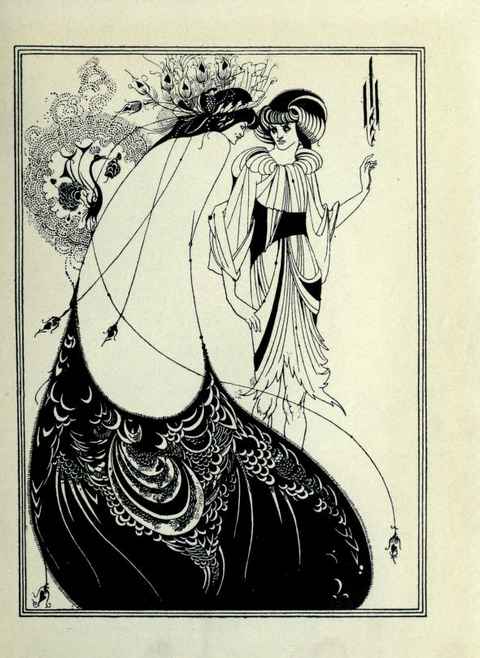
Aubrey Beardsley: Salome
Oscar Wilde used the plot from this story for his play Salome, where the title character is portrayed as a seductive woman with mysterious motifs. This play was first written in French and translated into English (partly by Wilde and partly by Lord Alfred Douglas), and it is not clear who did what part. It seems Oscar Wilde was not happy with Douglas’ translation (his French was incomparably inferior to Wilde’s), and he rewrote most of it.
The English edition of Salome was illustrated by another great and extravagant artist, Aubrey Beardsley (image above). Wilde didn’t want to give credit for the translation to his friend and lover, Lord Alfred Douglas, so he instead dedicated the work to him, which caused some controversy. Anyway, the play was banned before it even premiered because at that time it was understood as the illegal use of biblical characters on stage.
Salome first premiered privately in 1896, when Wilde was imprisoned, and later, it was performed only for a private audience. The official premiere of Salome was much later (1931), three decades after Wilde’s death. This superbly constructed play (Al Pacino played the character of Herod twice on the stage and in 2011 on the big screen) inspired many works, like Richard Strauss’ opera, Nick Cave’s play, many movies (Ken Russel’s is most notorious of all), Pete Doherty’s lyrics on the album Grace / Wastelands, and so on.
Did you know?
- Real Salome, the woman who ordered a head on the plate, later became a queen and a mother, but more interesting is the way she died.
- She was passing a frozen lake, ice cracked, she fell and was beheaded by the hit against the sharp edge of ice – beheaded her!
Boys
Oscar Wilde’s Greatest Love
Although Wilde had many affairs with men, only two of his lovers are really important.
First is certainly Robert (Robbie) Ross, a Canadian of noble origin, who moved to England when he was only two years old. He had met Oscar when Wilde’s wife Constance was pregnant for the second time, and his boyish look immediately charmed the already successful writer.
They started living together soon after, and Robbie was the man who stayed by Oscar Wilde to the very end of his life. He was with him at the deathbed, and he also edited and published several of Wilde’s works after Wilde’s death. But another man played an even more important role.
Lord Alfred Douglas (called Bosie, short for Boysie, as his mother called him) met Wilde in 1891 and was everything Wilde ever dreamed of: a charming, imaginative, spoiled, extravagant, and lazy aristocrat who lived for pleasure and nothing else. On one occasion, when Wilde was sick, he said to Wilde that he is so boring he will leave him immediately if he falls ill again.
Actually, he did that; he moved to the hotel and sent the bill to Wilde. He was also giving Wilde’s clothes to males of questionable virtue, with whom he was having fun, and on one of these occasions, he lost love letters, which were later used as incriminating material in a fatal trial, where Oscar Wilde lost virtually everything he had gained in his life.
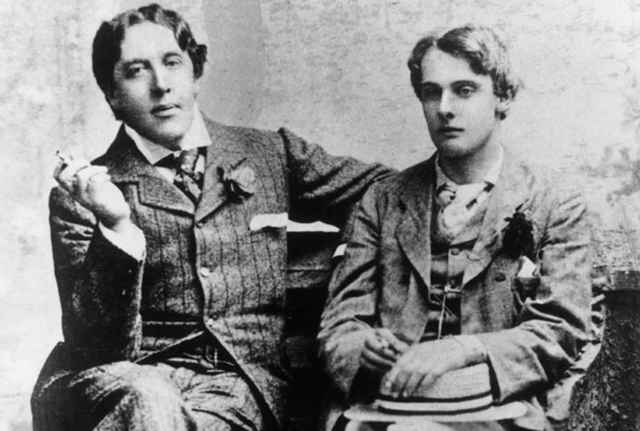
(In the photo above, we can see Oscar with Bosie)
Marquess of Queensberry
Wilde vs. Queensberry
The Marquess of Queensberry was the father of Alfred Douglas. He belonged to an old and very conservative family and had a military background with a long tradition of hunting, gambling, and suicides.
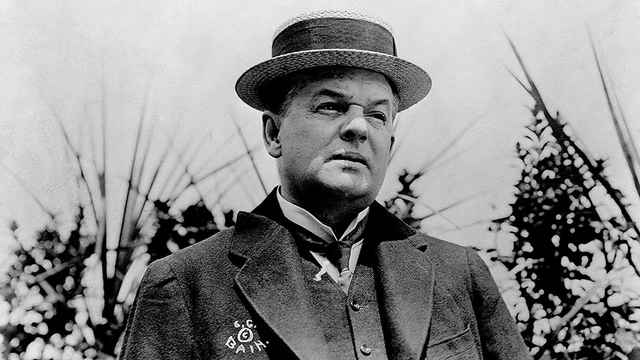
(Lord John, Marquess of Queensberry)
Lord John, Alfred’s father, also had a son named Francis, who was in a relationship with a man. Not just anybody, but Lord Rosebery, who became a Prime Minister in 1894. Queensberry blamed Rosebery for the death of Francis, which happened in very suspicious circumstances.
When Queensberry heard about his son Alfred’s partying with the infamous Wilde, he pretty much freaked out. He was trying to stop their relationship no matter what, and on one occasion, publicly insulted Wilde, addressing him as somdomite (not a typo).
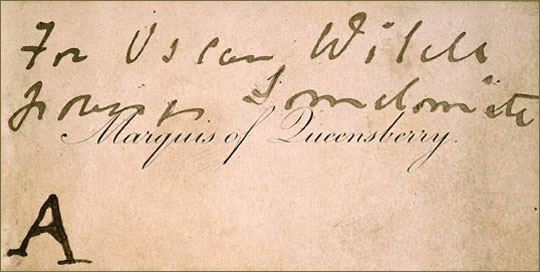
Cocky Oscar Wilde, backed by always temperamental Bosie, began a libel suit which very quickly turned against him.
Queensberry had skillful lawyers who presented Wilde as a man obsessed with boys.
For some time, Wilde quite enjoyed the show, providing witty answers and eliciting many laughs from the audience. However, in the end, he was sentenced to prison and was required to pay all the expenses, which financially ruined him.
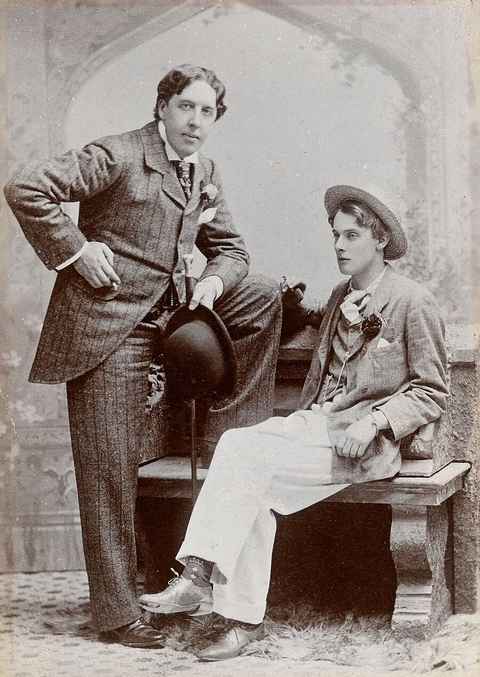
(Wilde and Douglas)
Who was Vyvyan Holland?
Son of Oscar Wilde
Wilde’s family after his imprisonment…
When Oscar Wilde was sentenced to prison, his wife Constance decided to change her and their two sons’ surnames to Holland. All three moved to Switzerland. She died in 1898, and her relatives didn’t allow Oscar to see his kids again. Robert Ross later became a good friend of both Wilde’s sons.
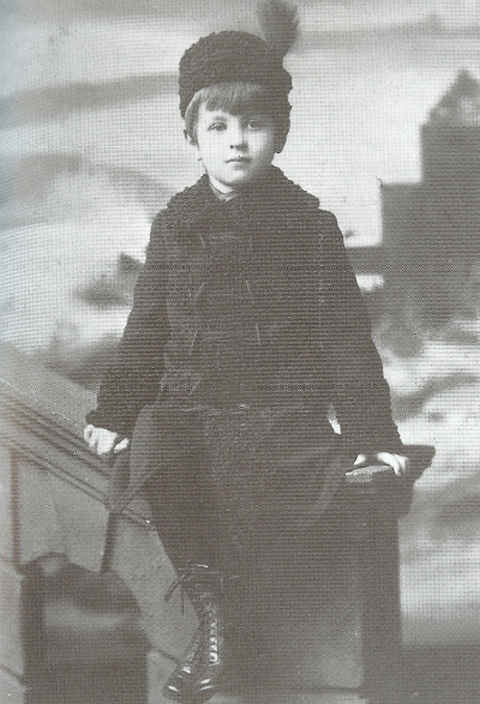
The older son, Cyril, was killed in WW1 by a German sniper, but the younger, Vyvyan (in photo), who also fought in World War I, later became a pretty successful writer and translator. He was an editor at the BBC for some time, and he had one son: Merlin Holland, who also became a writer and editor (among other occupations). He is married and has a son, so Wilde’s descendants are still alive and creative.
Oscar Wilde: De Profundis
Some trivia about De Profundis
- It is actually a really long letter to Lord Alfred Douglas,
- Wilde was not allowed to send it, but he could take it out when he was released,
- he was given only one sheet of paper a day, and this was taken away in the evening,
- Robert Ross titled the letter ‘De Profundis’ years after Wilde died.
The Artist is the creator of beautiful things. (Oscar Wilde)
Recommended works by Oscar Wilde
Here is the list of the most well-known and influential works written by Oscar Wilde. They are all in the Public Domain, but if you want to use them in your projects, please check for other details, such as copyright on translations, graphic material, and so on. These works can be read online or downloaded in different formats, depending on your preferences and gadgets.
The Picture of Dorian Gray by Oscar Wilde
It’s a well-known story resembling Faust, a classic German legend based on a real person. And like Faust was based on Johannes Georg Faust, Wilde’s Dorian Gray was partly based on John Gray, a young poet who looked not only beautiful, but also way too young.
The Importance of Being Earnest by Oscar Wilde
Wordplay on earnest and Ernest is just a start of this comedy, now considered one of Wilde’s masterpieces.
Salome by Oscar Wilde
If we have to choose only one work from Wilde’s opus, this play would be the winner. This is the English translation published in 1906, without a foreword.
De Profundis by Oscar Wilde
De Profundis is a 50 thousand words long letter addressed to Lord Alfred Douglas. It was written at the beginning of 1897 in prison. Wilde was weak and ill, and he was not allowed to send the letter; however, he was permitted to take it with him upon release. It was copied after prison.
Most people are other people. Their thoughts are someone else’s opinions, their lives a mimicry, their passions a quotation. (Oscar Wilde)
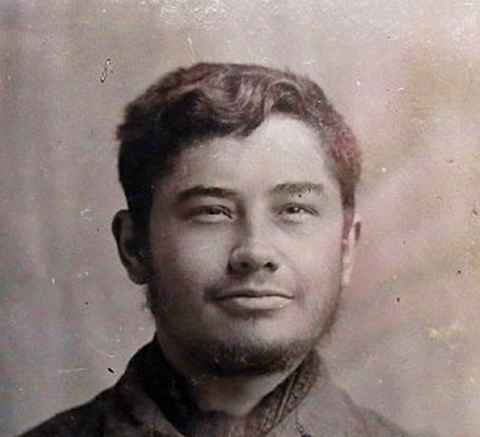
(Henry Bushnell, the Wilde’s lover in prison?)
After Prison
There’s some indication through Wilde’s letters that he had a lover referred to as ‘a dark-eyed little chap’ in prison as well. His name was Henry Bushnell, and he was sentenced for theft. His record was quite remarkable: between 1892 and 1911, he was sentenced twenty-one times! Some historians believe that after being released, Wilde occasionally sent him money. It’s not clear how physical their relationship could be. Victorian prisons were designed for maximum isolation, with a chapel having partitions between seats, inmates wearing so-called scotch caps, preventing eye contact, and strictly forbidden to talk with each other. On the other hand, Wilde was also sentenced to hard labour, where some kind of communication seemed more viable.
My existence is a scandal. (Oscar Wilde)
When Oscar Wilde was released from the penitentiary in 1897, he was without money and friends. It is known that Aubrey Beardsley, who illustrated Salome, crossed the road just to avoid meeting him on the street. Constance was sending some money to Oscar, but did not allow him to see his sons.
He moved to France and spent most of his time, money, and energy on alcohol. One of the rare friends who didn’t turn back on him was Robert Ross.
Oscar Wilde was still able to write; he corrected a couple of plays, but as he said, ‘lost the joy of writing’, so he never created anything new. Only three years later, his health deteriorated so badly that he died. Only one day before his death, he managed to do what he intended for decades: he converted from protestant to the catholic religion.
Oscar Wilde died on 30 November 1900 in Paris. This was the end of one of the most brilliant minds in literary history. If he were not such a lazy writer and so obsessed with so many eccentricities, his legacy would certainly be much bigger, probably in the range of Shakespeare or Dickens.
If this is the way Queen Victoria treats her prisoners, she doesn’t deserve to have any. (Oscar Wilde)
The grave of Oscar Wilde is a popular spot for tourists in Paris.
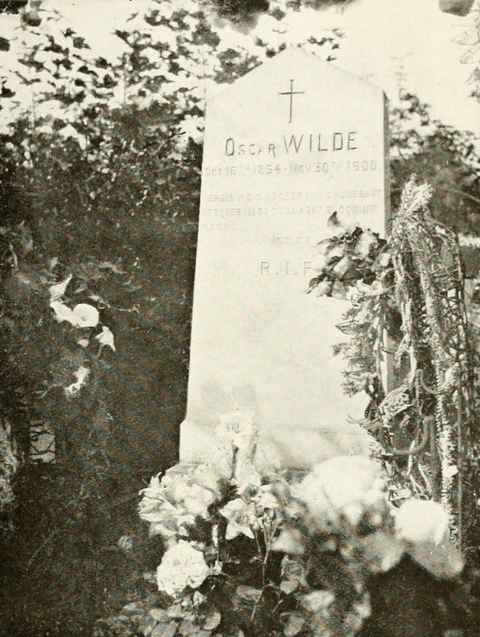
Wilde is dead, long live Wilde!
The official cause of Wilde’s death was cerebral meningitis, but it is not known what caused it. It seems the rupture of his ear from prison contributed to the development of illness, although there are also speculations about other reasons.
His tomb was constructed under the guidance of Robert Ross, whose ashes are also in an urn in the tomb. There is an angel on the tomb, and an epitaph from ‘The Ballad of Reading Gaol’.
Wilde’s grave is one of the primary tourist attractions, and the cemetery where his remains are interred is the most populous in the world. However, it is not the only one.
Cemetery as a tourist attraction – Hundreds of thousands of visitors every year
The most popular cemetery in the world
Many famous artists are buried at Père Lachaise Cemetery. Let’s take a look at the short list :
Guillaume Apollinaire
Honore de Balzac
Vincenzo Bellini
Georges Bizet
Frederic Chopin
Gustave Dore
Isadora Duncan
Max Ernst
Jean de La Fontaine
Moliere
Yves Montand
Jim Morrison
Edith Piaf
Marcel Proust
Simone Signoret
Oscar Wilde
and many, many others who were not necessarily from France but were somehow connected to France and Paris. Many people would like to have their remains in this company, but there are strict rules (you have to live in Paris or die there, and there is also a waiting list). Anyway, there are also historical monuments, and Pere Lachaise can be a really interesting place to visit when you are in France.
Leave a Reply