Jack and the Beanstalk: A Fairy Tale about Growing Up
The story about Jack and the Beanstalk can be traced to at least the first half of the 18th century, although similar tales are several centuries older. Several versions of the same fairy tale exist, depending on the writer, editor, and the publication’s intended goal. Some variations focus on fun and action, while others have an artistic, educational focus. Bursting with symbolism, they offer much more than a simple story about a boy who steals magical objects from a giant. To explore its depths, we first need to summarize it.
Summary
Jack is a poor country boy who lives alone with his mother. Their only possession is a cow. The cow gives them just enough milk to survive. One day the cow stops giving milk, and the mother suggests selling it. Jack takes the cow to the fair. On his way, he meets a strange man who offers him a fistful of beans in exchange for the cow. He claims that beans are magical, and Jack agrees to the deal.
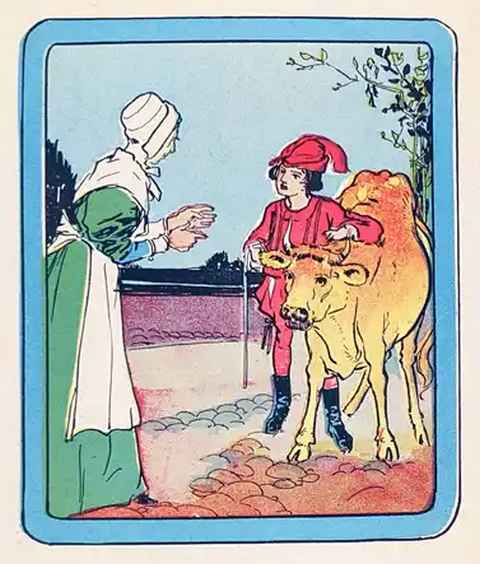
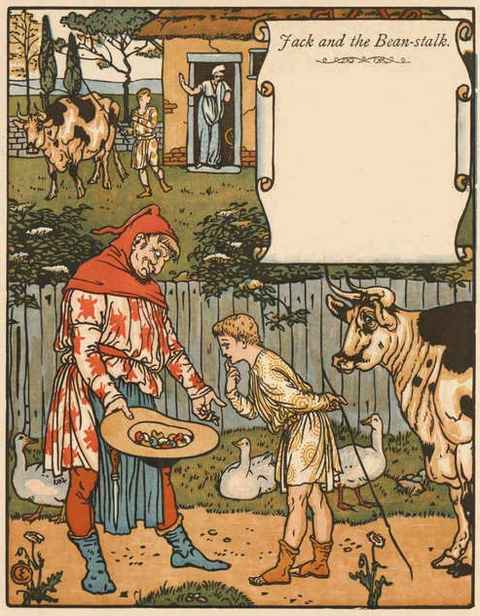
Illustrations by John Rea Neill (left) and Walter Crane (right)
Jack’s mother is furious when she finds out about his decision. She throws the beans on the ground and sends him to bed without supper. In the morning, Jack finds a large beanstalk right where the beans were thrown. The beanstalk is extremely tall, with its top lost in the clouds high above. Jack climbs up and finds a whole new world under the clouds.
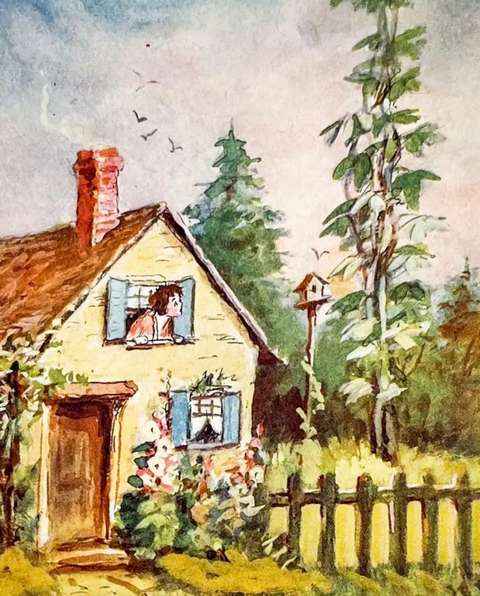
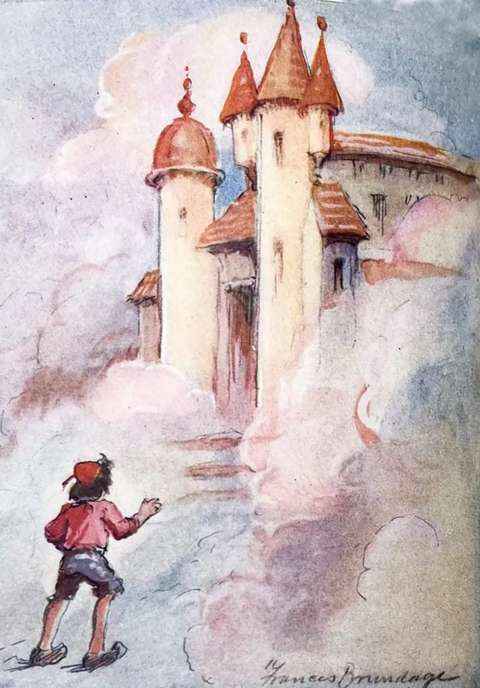
Illustrations by Frances Brundage
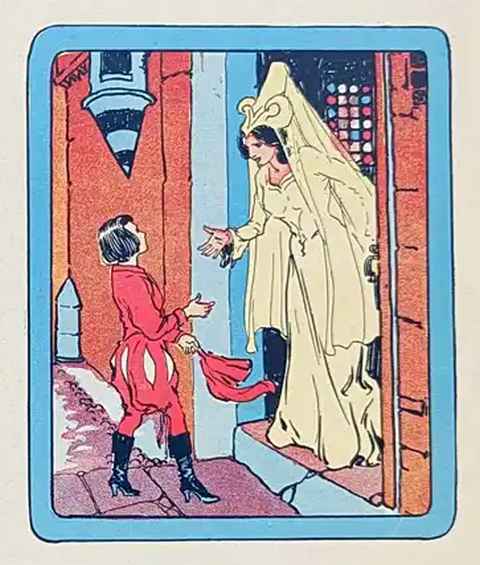
He reaches a castle where a man-eating giant lives. His wife opens the door and gives Jack some food. The giant returns and Jack hides. When the giant falls asleep, Jack steals a bag of gold coins and runs home. He and his mother live off the stolen money for a while, but eventually, it runs out.
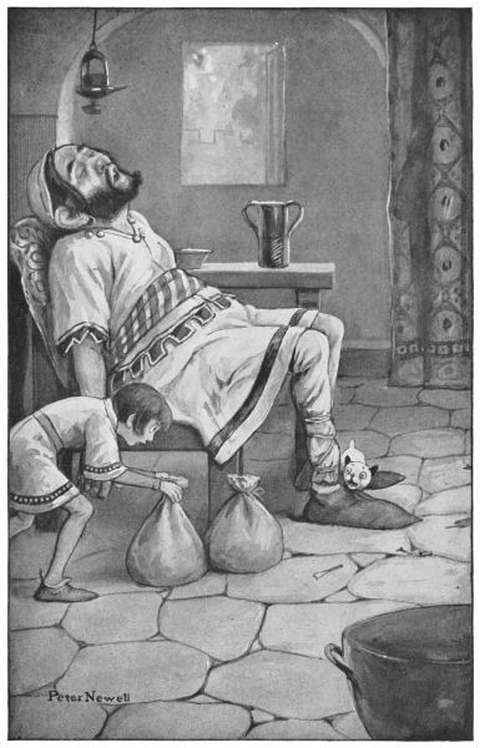
Illustrations by John Rea Neill (left) and Peter Newell (right)
Jack returns to the giant’s castle, his wife helps him again, and this time he steals a hen that lays golden eggs. This should meet his and his mother’s needs for the rest of their lives. The hen lays an egg every day, so they will never run out of money.
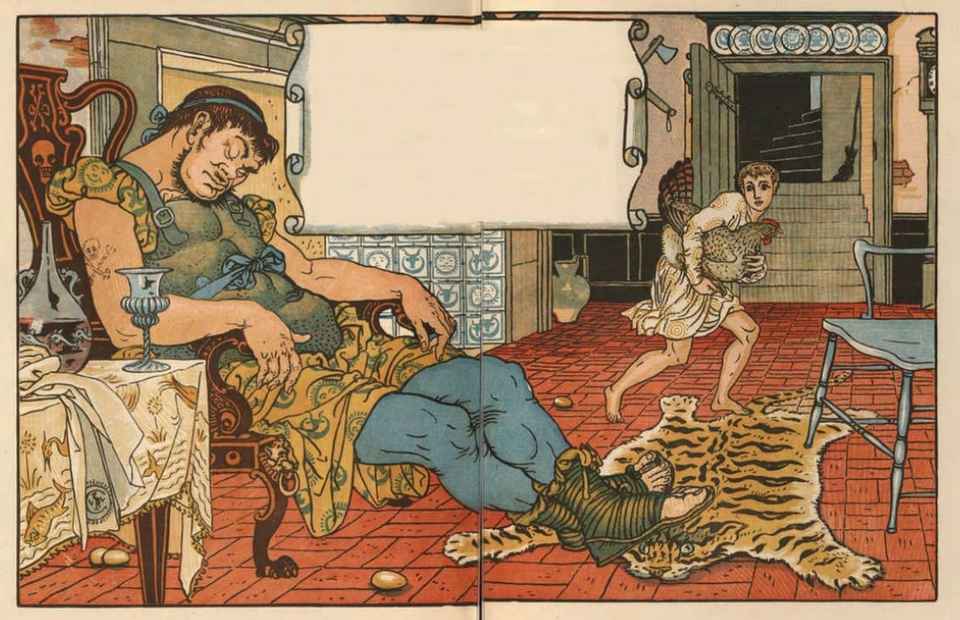
Yet Jack wants to return to the giant’s castle one more time. He steals a singing harp, but the giant wakes up and starts chasing him.
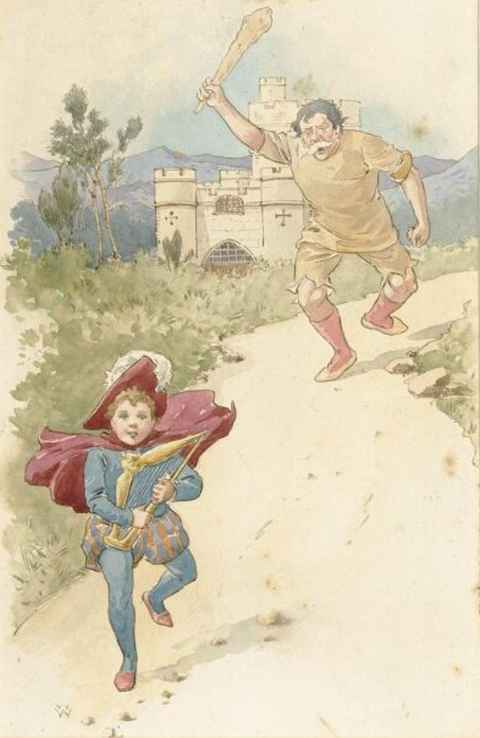
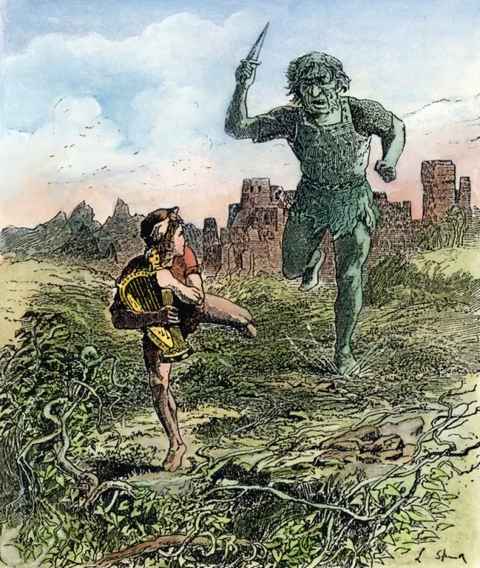
Illustrations by Victor Venner (left) and Lancelot Speed (right)
As Jack approaches the ground, he calls out to his mother. She gives him an axe, and he cuts down the beanstalk just in time to ensure the giant’s fatal fall. The connection with his world is broken, the enemy is dead, and Jack and his mom can live happily ever after.
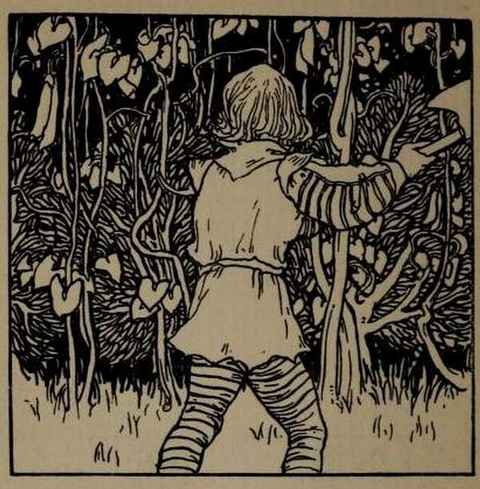
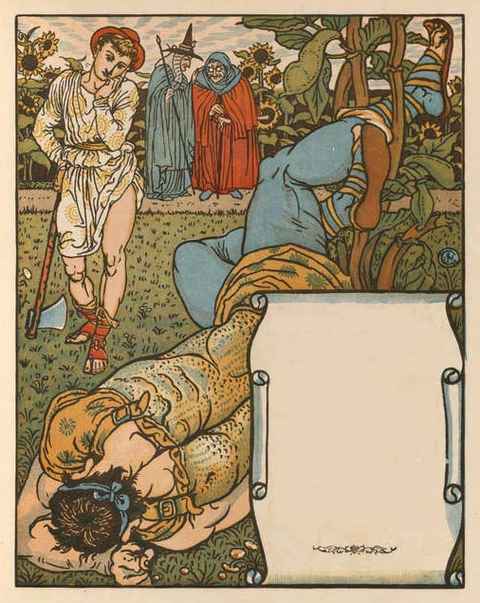
Illustrations by Robert Anning Bell (left) and Walter Crane (right)
Characters
Jack is an immature and irresponsible boy, a typical child who cares only about instant pleasures. When their mother trusts him to sell a cow, he is put to the test, and he fails. At least it seems so at first. However, his decision to take a risk by planting the magical beans gives him the chance to leave his comfortable childhood behind and face the dangers of adulthood. With the giant’s mother’s support, he enjoys some initial success. However, the real test comes when he confronts the giant. When he defeats this mighty enemy, he is ready to live on his own.
A strange man gives Jack beans for the cow. While this seems an unfair exchange, the cow is definitely part of the past. Since she no longer has any milk, Jack should no longer behave like a baby. It’s time to take some risks, and Jack accepts that. Risk always involves the possibility of winning or losing, but it also means he is ready to grow up. The mother is slowly adapting to her son’s growth. She trusts him to sell the cow, yet she punishes him for what she considers a bad bargain. She helps him with an axe, but he cuts the beanstalk himself.
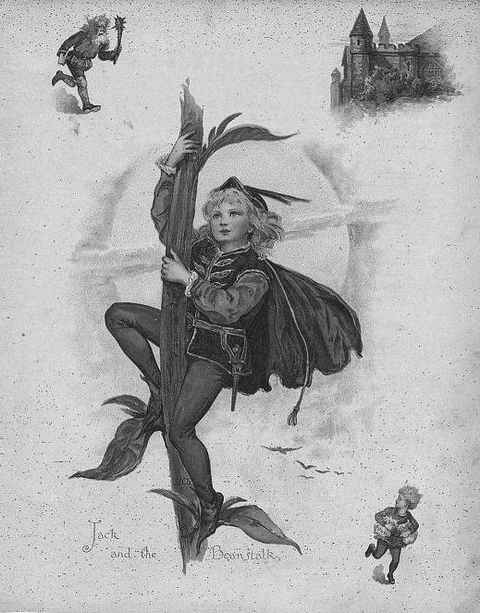
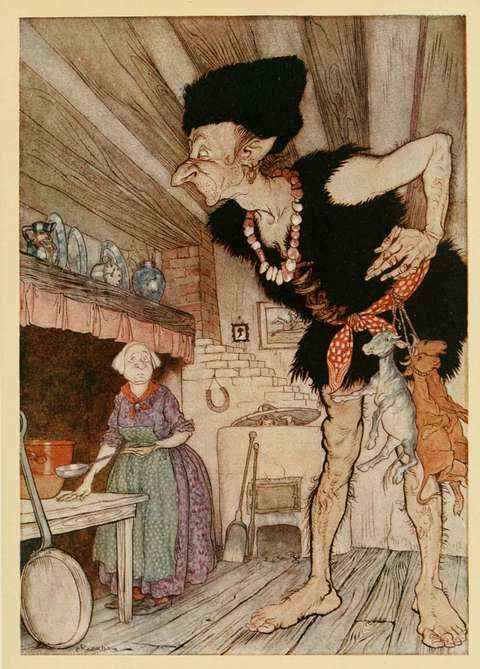
Illustrations by John Lawson (left) and Arthur Rackham (right)
(Please, note! Several authors, including Constance Wilde, added a fairy to the older version. The fairy tells him a story about his father being robbed and murdered by the giant. This justifies Jack’s actions.)
Symbolically, the giant’s wife also functions as a maternal figure. She is protective and helpful, but he is the one who has to take the objects and risk his life. A similar dualism of the mother figure is present in Hansel and Gretel, where the stepmother at home wants to get rid of the children and the witch in the woods wants to eat them. When they destroy the witch, the stepmother also dies. The giant is obviously a father figure. He is absent at Jack’s home, as so many fathers were and still are, but exists in his very own world, which is hard to reach. This is the adult world. To reach his father symbolically, Jack has to fight his mom and climb into the sky. Like many fathers, the giant possesses many valuable items, at least from his children’s perspective, and stealing them is extremely dangerous. Taking one or two objects is not enough. To become equal to his “father,” Jack must beat him. In the story, this results in the giant’s death; symbolically, Jack kills his father.
Symbolism and Simple Analysis
We have already mentioned the cow and milk. The cow represents Jack’s immature, childish phase. His willingness to sell the cow indicates that he is ready to grow up. Swapping the cow for beans is a grown-up risk. To seize a better opportunity, he gives up what is no longer valuable. Magical beans represent opportunity. The beanstalk’s shape symbolizes Jack’s manhood, but it also serves as a symbolic umbilical cord. By cutting it, he leaves the fantasy world behind and prepares for real life.
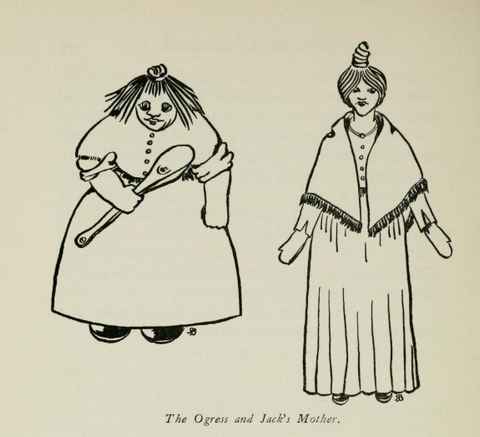
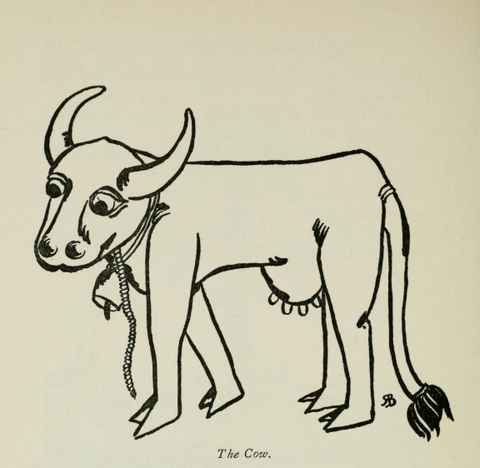
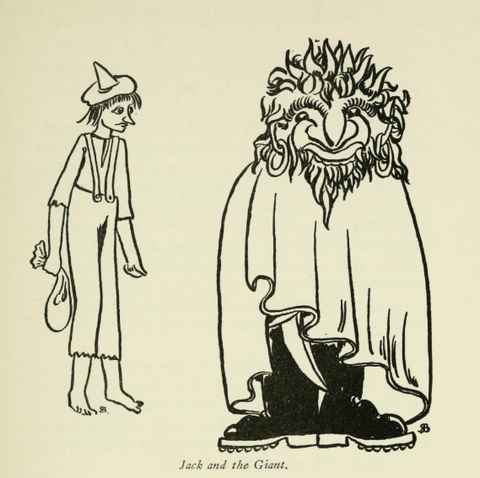
Illustrations by Remo Buffano
Further Explorations
This fairy tale bears some similarities with other fairy tales which I kindly recommend visiting:
(to be added)
Hansel and Gretel: Symbolism
Symbolism and Analysis of Hop o’ My Thumb
One More Thing
Although Jack and the Beanstalk seems like a fairy tale for boys at first, girls love it, too. The reason is simple. They are growing up as well. The two adult male characters both represent the father in different roles. The strange man with beans is a helpful dad who encourages Jack to try something new. The giant, of course, represents a possessive father who wants to protect his position and power. The two female characters should be seen as slightly different versions of Jack’s mother, each supporting him during different periods of his life. They are both protective, yet they know when to draw the line and let Jack step up. Gold coins are a means of survival. We quickly learn that money is not enough because it runs out. The hen that lays golden eggs is also a means of survival, but with additional safety. It provides a steady income and guarantees survival. The singing harp symbolizes progress beyond mere survival. Once his basic needs are met, Jack doesn’t have to risk his life by going back to the giant’s castle. Yet he needs to take this additional step to become a fully developed human being who seeks more than a full stomach.
Leave a Reply