Oscar Wilde’s fairy tales – illustrated
Oscar Wilde was a world-renowned playwright, but many people are unaware of his fairy tales. He wrote two books for them, one for each of his sons. Interesting, isn’t it? Oscar Wilde believed fairy tales are essential for raising children, but he wasn’t satisfied with the existing classic works by the Grimm Brothers, Charles Perrault, Madame d’Aulnoy, and others. Still, he obviously wasn’t indifferent to fairy tales by Hans Christian Andersen. We can find many similarities between the fairy tales of both authors.
Oscar Wilde read fairy tales to his sons, and we can also speculate that his writing was also influenced by his wife Constance, a productive editor, translator, and writer. This makes Wilde’s fairy tales a family project!
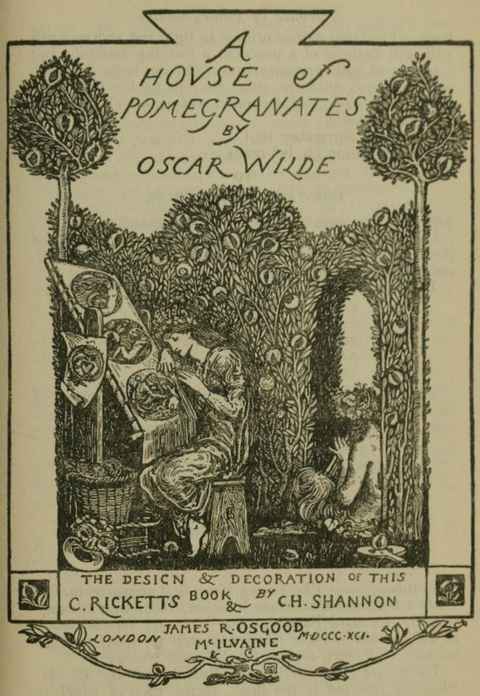
Oscar Wilde’s list of fairy tales is short. He wrote only nine, and they were published in two separate books, which are both collectible items today. Some of these fairy tales were also published together with Wilde’s works for an adult audience, especially with The Picture of Dorian Gray. Another hint that they were not necessarily made for children is some illustrations which, by today’s standards, were ‘not suitable for work.’ Don’t worry, we didn’t include any of them. Before we delve into each story, we’ll present them with summaries of all fairy tales. Let’s first look at the tales collected in Wilde’s initial volume.
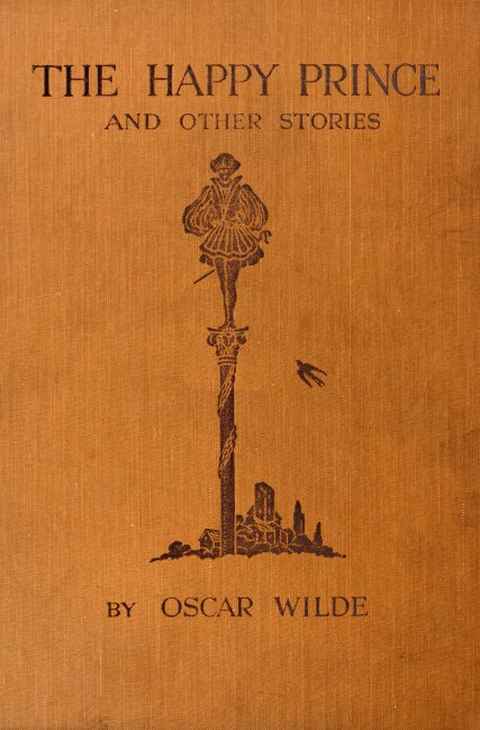
The Happy Prince and Other Tales
The book was first published in 1888, just before Cyril Wilde’s (who used the surname Holland for most of his life) third birthday. It includes five fairy tales, beginning with the title story.
The Happy Prince: summary
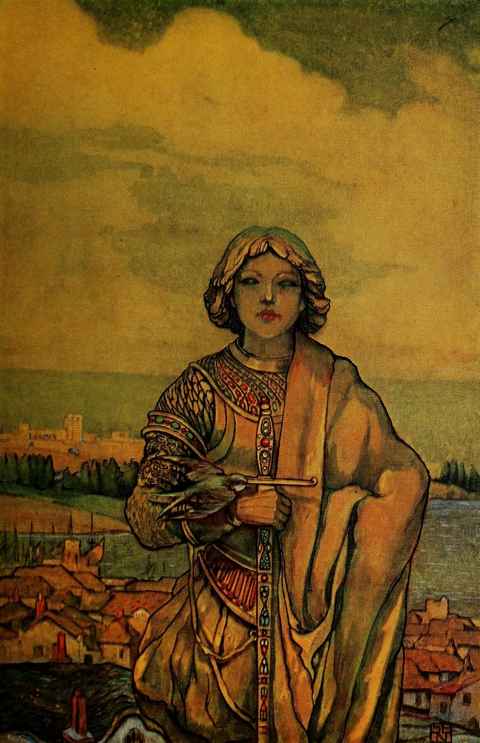
Illustration: Spencer Baird Nichols
This is one of the most well-known and popular fairy tales by Oscar Wilde. The story begins in the Palace of Sans-Souci, where the prince lived a happy but futile life of pleasures. Only after his death, when his statue was put on a pedestal, did he see all the misery, poverty, and injustice in his town.
The Happy Prince was covered with gold leaves, there were precious stones in place of his eyes, and his sword was decorated with a ruby. With the help of a swallow, the Happy Prince then literally gives himself part by part to poor people until he is left with nothing. Because ‘he was no longer beautiful, he was no longer useful,’ councilors ordered the melting of the statue.
The swallow, who was so eager to help the prince, didn’t fly south in time and froze to death. So councilors also decided to proclaim, ‘No bird is allowed to die here.’
In the ending scene, God orders them to bring him the most valuable things from town, and the angels bring him a statue heart made of lead and a dead bird.
The Nightingale and the Rose – The summary
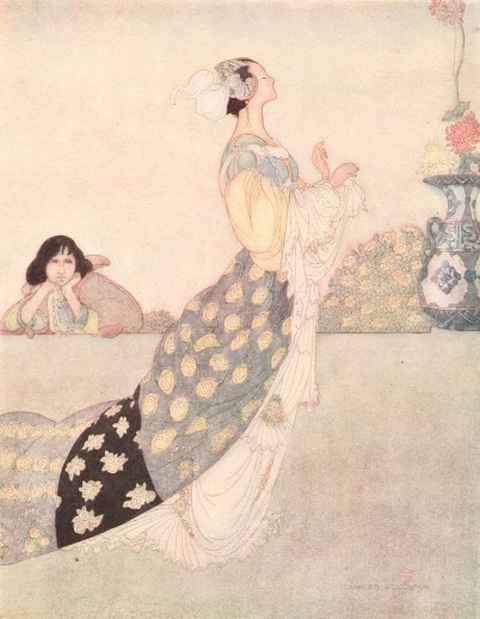
Illustration: Charles Robinson
The tale of Rose and Nightingale is one of selflessness and the ridiculousness of some of the things we all do in life.
This fairy tale starts with a student who wants to impress a princess. He discovered that she likes red roses, and he wants to give her a perfect red rose. The problem is that there are no red roses in the garden. So a nightingale makes a deal with a white rose, and they will together create the most beautiful red rose ever.
The bird sings every day, even though the rose’s thorn slowly pierces its heart, and sings the most beautiful songs of life, even though it’s really losing its heart. They succeed, but the bird dies. The princess says, “I’m afraid it won’t go with my dress.”
All the sacrifices didn’t help, and the student concludes that love is too impractical, so he shall study Philosophy.
The Selfish Giant by Oscar Wilde
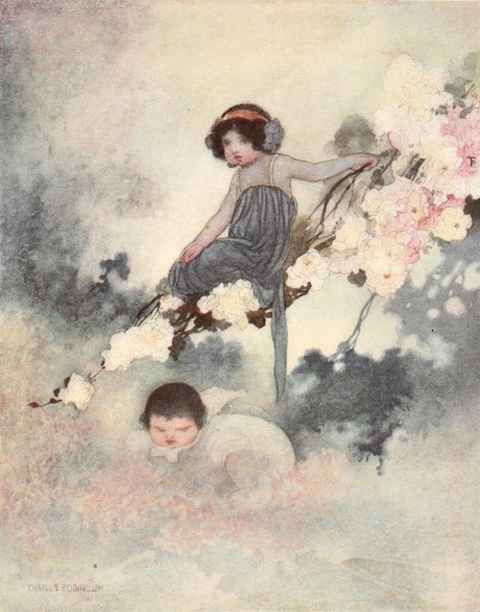
Illustration: Charles Robinson
The story of the Selfish Giant is a story about altruism. Here is a summary:
Giant has a beautiful garden with all sorts of flowers and fruits growing in it, and while he was on a visit (for several years), children from the neighborhood started to play in this garden. When he returned, he kicked the kids out. But!
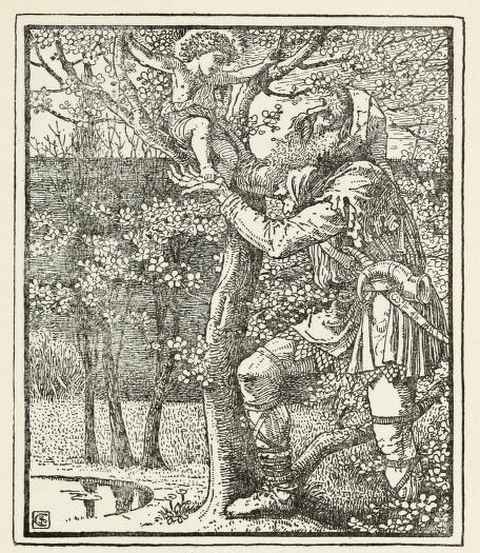
Winter came into the garden, and it stays in for the full year. Only when the giant let the children back in did the garden begin to look like a garden again. The crucial part is meeting with one child who was too small to reach up to the tree, and the giant helps him to get there.
Children once again visited the garden, and the trees were in full bloom. But the little child didn’t come back until the very end of the giant’s life. That’s when we learned that the child was Jesus.
The Devoted Friend by Oscar Wilde
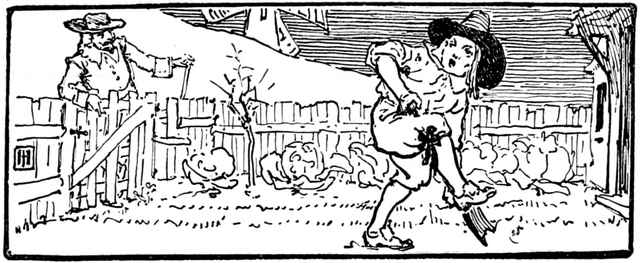
Illustration: Jacomb Hood
This fairy tale bears a slight resemblance to Andersen’s “Little Claus and Big Claus.” Here we have a rich man and a poor man, too, but the poor one doesn’t win in the end. In fact, he dies after exploitation and a series of misfortunes.
A rich miller and a poor gardener are friends, or at least they are supposed to be. Miller visits the gardener every day and picks his most beautiful flowers.
He never gives him any money. After a long winter, the gardener was almost starved to death (the miller didn’t want to bother inviting him into his warm house full of stuff because he didn’t want to spoil him).
Then the miller promised to give the gardener his old wheelbarrow in exchange for more services.
Ultimately, the gardener passed away during one of his “missions” before he could acquire a wheelbarrow, which was rendered useless and inoperable. The miller realizes that he is only concerned with his wheelbarrow and will never provide any assistance to anyone.
The Remarkable Rocket
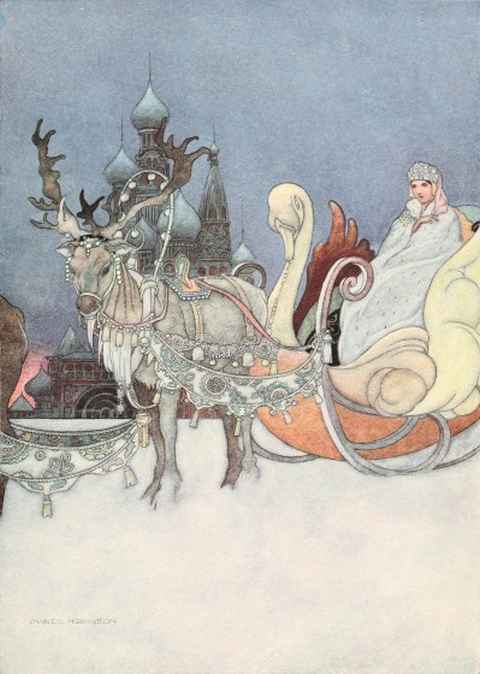
Illustration: Charles Robinson
There are many ways in which Remarkable Rocket is like Oscar Wilde’s life. It is a story about a rocket waiting to explode in its full glitter and beauty, like Wilde, most of whose life promised much more than it actually showed.
In the end, the rocket explodes when nobody sees or hears her, like Wilde died lonely and almost forgotten.
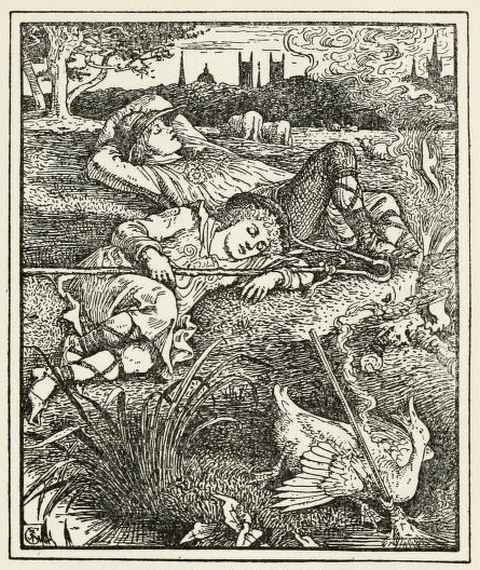
Illustration: Walter Crane
A House of Pomegranates
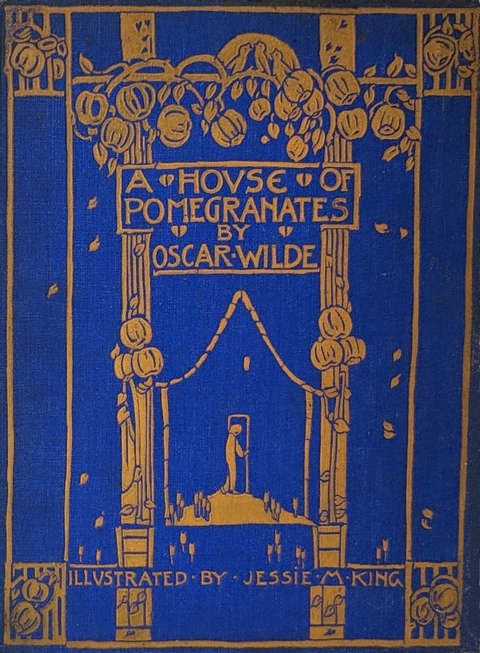
The book came out in 1891, when Oscar Wilde’s second son, Vyvyan (like his older brother, he used the surname Holland for most of his life), was almost five years old. There are only four fairy tales in this book. We’ll present them in the order they were published.
The Birthday of the Infanta
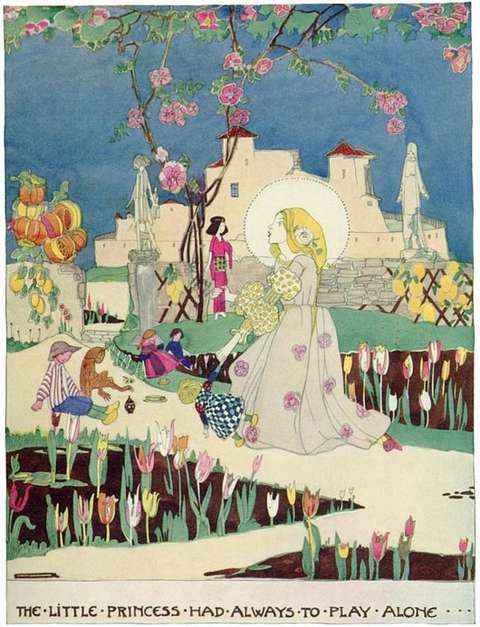
Illustration: Jessie Marion King
This is the only Wilde’s fairy tale with a woman in the title (a rocket is not considered a human being). But she, the female equivalent of the Happy Prince (when he was still alive), a spoiled child, as Oscar Wilde himself was in many ways, is not the main character.
The protagonist of the narrative is a crippled, unattractive boy who was discovered in the forest and purchased from his father solely for the purpose of entertaining the princess through dancing (the term “infantas” refers to the daughters of Spanish and Portuguese kings, and “infant” means child). She was delighted with his appearance, and he, naïve as he was, believed she really liked him.
When he hears that he will dance again after the break, he starts dreaming about how they will become friends. Then he strayed into the palace and, for the first time, saw his unattractive image in the mirror. Boy realizes the unpleasant truth. Princess never liked him. She was only laughing at him.
This literally breaks his heart, and he dies just when the princess enters. Her statement? “Those who come to play with must not have hearts!”
The Star-Child
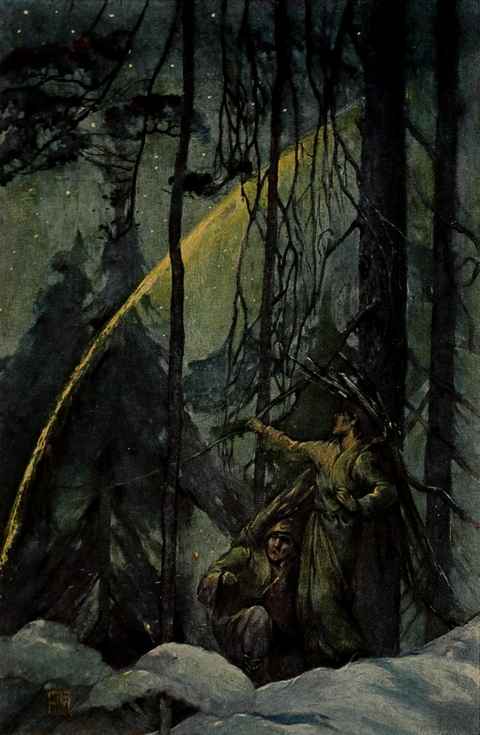
Illustration: Spencer Baird Nichols
Of all of Wilde’s works, the Star-Child story most closely resembles traditional fairy tales. It tells us about a boy found in the woods who denies his mother when he is found because he is beautiful and she is not.
After a series of tests and a lot of repentance, we got the classic transformation and happy ending, but Wilde would not be Wilde without an addition: Star-Child becomes a king (good one) only for a few years. Then he died, and the next king was evil.
The Young King
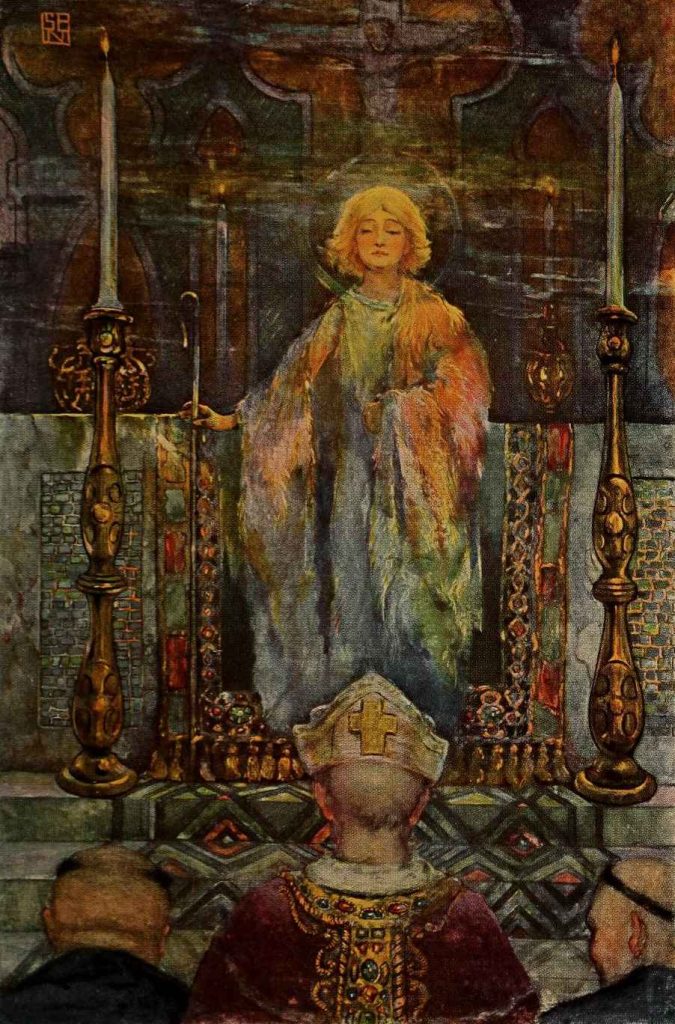
Illustration: Spencer Baird Nichols
In this Oscar Wilde fairy tale, a young man is born into the king’s only daughter’s covert marriage. There were all sorts of rumors about the boy’s father and what happened to him and the princess who vanished soon after the birth. The boy was raised by commoners, and the king, who was dying, wanted his grandson back.
The story starts when the young prince waits for his coronation. He is supposed to dress in the most precious clothes, but in his dreams, he sees so much suffering caused in the search for perfect fabric, perfect pearls, and so on, he decides he will go to church dressed like a shepherd. In the church, a miracle happens.
This child made the selfish giant change his mind.
The Fisherman and His Soul
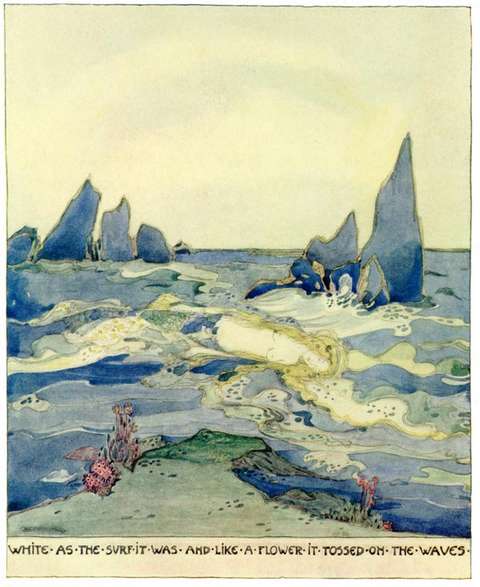
Illustration: Jessie Marion King
Wilde’s fairy tale, The Fisherman and His Soul, is a story about a man who falls in love with a mermaid. If he wants to join her, he should get rid of his soul.
He asks a witch for help, and after some delay, she tells him what to do. The problem is that his soul doesn’t want to leave. And when it does, they agreed the fisherman will return to the seaside every year just in case he changes his mind.
In many ways, this fairy tale resembles Andersen’s Little Mermaid, but is written from a different point of view and with a different message. While in Andersen’s story the soul was the ultimate goal, Wilde presents it as useless and corrupted. His sympathies are clearly on the side of the soulless creatures of the ocean.
Reflecting on these stories, we are led to consider: do the fairy tales of Oscar Wilde echo Andersen’s stories?
Some experts say the fairy tales in both books he wrote are maybe the best example of Wilde’s mastery of the language. His vivid landscape descriptions, emotional portrayals, flawless dialogues, and critiques of the social system are united to form captivating narratives that leave a profound and enduring impression on the minds of readers, despite the absence of explicit moral messages.
Wilde’s fairy tales present his view on life, not how it should be, but how it is, with a lot of pathos but also a lot of hope, which can probably be compared with only one fairy tale author: Hans Christian Andersen, whose language was much simpler and down-to-earth. If we can easily find folk stories that inspired Andersen, with Wilde, things are more complicated.
His tales contain traditional themes (a prince on a quest, the children in the forest, a conflict between good and evil), but there are also clear references to other works. The Faustian deal, perfectly written in Picture of Dorian Gray, is also present in The Fisherman and His Soul, a brilliant rewriting of Little Mermaid, one of the saddest fairy tales by H. C. Andersen, but in even darker tones.
Andersen’s fairy tales are reflected in all of Wilde’s fairy tales; sometimes this is less obvious and sometimes more so. Both writers are very religious and use a lot of humor and emotion in their writing.
In Wilde’s fairy tales, Andersen’s melancholy is replaced with cynicism, and Andersen’s irony at Wilde’s works turns into sarcasm. If we can still find a search for the place in the society in Andersen’s tales, Wilde’s tales are extremely individualistic.
It is certainly no coincidence that The Happy Prince and Other Tales (1888) and House of Pomegranates (1891) were written and published right after the births of his sons. Cyril was born in 1885, and Vyvyan in 1886, but they were not written with these kids specifically in mind. They talk to every child in the world, and the adults can benefit from them, too. Maybe even more.
Because everybody should, just like the Happy Prince, sooner or later get out of the palace ‘where sorrow is not allowed to enter.’
Some similarities between Oscar Wilde’s and Hans Christian Andersen’s lives and works
they both:
- preferred talking to writing,
- preferred theater to books,
- wrote fairy tales with a lot of emotions, criticism of society, and without happy endings,
- achieved high popularity in the highest circles, but were essentially unhappy in private life,
- wrote with a lot of irony, bitterness, and sarcasm in their works,
- wrote their works for children with their parents in mind,
- died due to the consequences of their falls a few years before.
So, share the article online, pin the images, read the fairy tales, and help keep Oscar Wilde’s legacy alive.
Leave a Reply