Giovan Battista Basile, Who?
While everybody knows Hans Christian Andersen, the Brothers Grimm, or Charles Perrault, they all borrowed material for their masterpieces from a single book written by Giambattista Basile. Who was this Italian writer? Why is his work so important, and why do most of us never hear of him?
Family
Reliable documentation about the birth of Giovan Battista (shortened Giambattista) Basile is scarce. We don’t even know his father’s name. Obviously, the Basile family has enough talent to put several of its members in the history books. Giambattista had at least one brother: Lelio, a successful poet and composer, and three sisters: Adriana, Margherita, and Vittoria, all popular singers in their time.
Adriana Basile, and later her daughter, Leonora Baroni, were the most famous singers in 17th-century Italy. Adriana especially played a crucial part in Giambattista’s literary success.
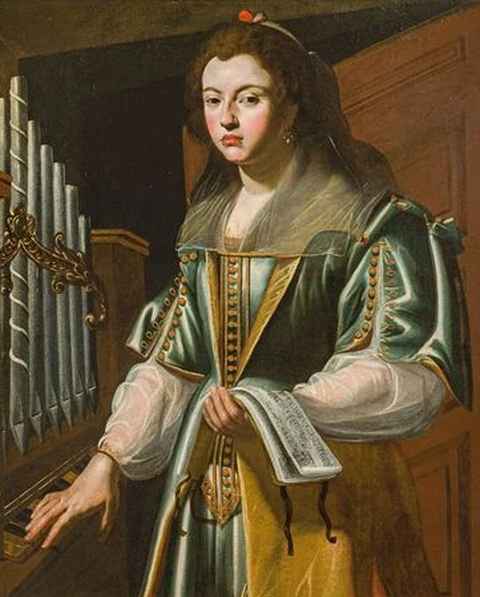
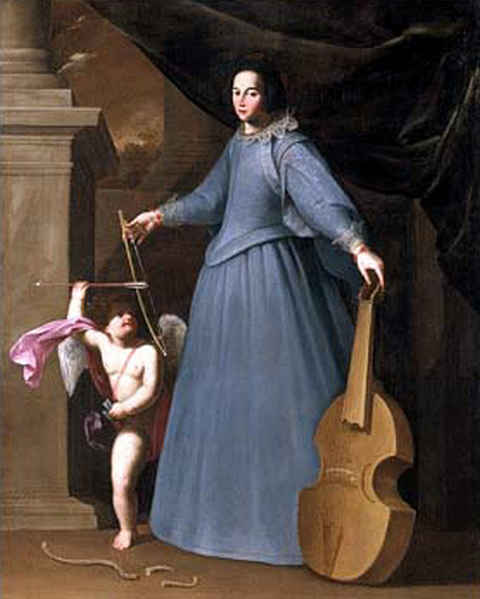
Portraits of Adrana Basile (left) and Leonora Baroni (right)
Family Basile is from Napoli, where Adriana very likely started her artistic career, but we can only find documents of her move to the court of Vincenzo Gonzaga, the Duke of Mantua. Mantua was the musical center of Italy in those times. The famous Monteverdi opera L’Orfeo premiered there in 1607. But let’s not skip the events.
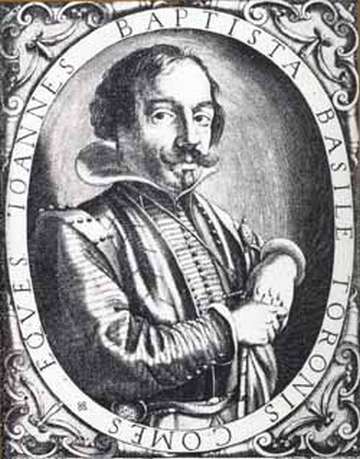
Portrait of Giovan Batista Basile
Giambattista was probably born in 1566, and we know he served as a soldier of the Venetian Republic for a short time. He also visited Crete, one of the cultural crossroads of the then-known world. He was talented in linguistics and fluent in three languages from an early age. He probably first came into contact with Giovanni Francesco Straparola’s Facetious Nights, a collection of tales containing several early versions of fairy tales, such as Puss in Boots, Donkeyskin, and Hans My Hedgehog.
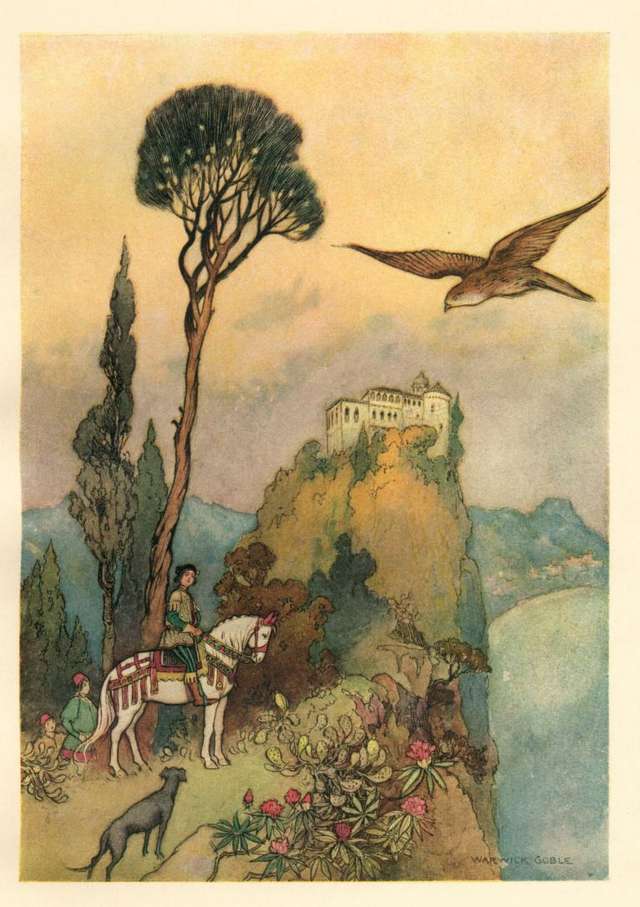
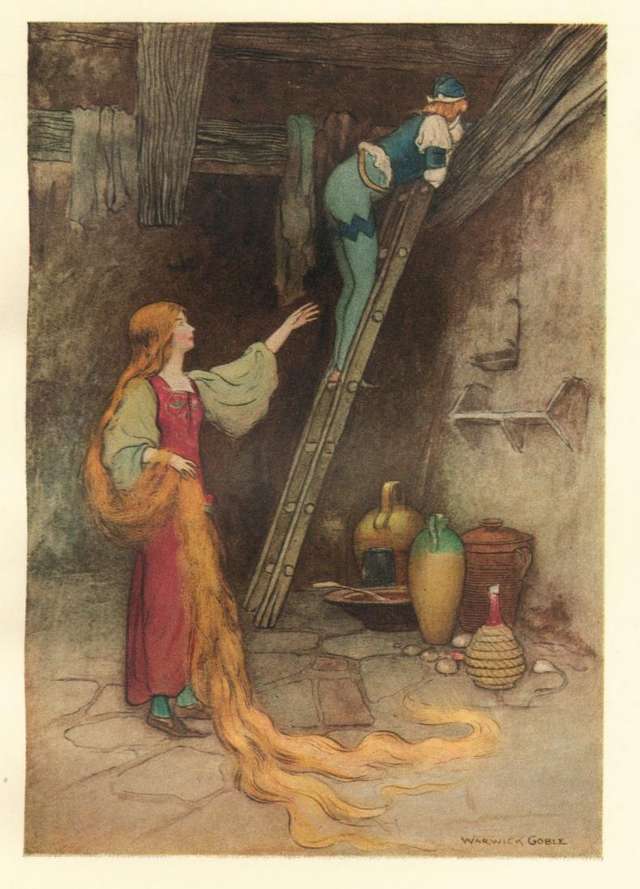
Sun, Moon, and Talia (left) and Petrosinella (right) by Warwick Goble
These tales and short stories are arranged in a format similar to Boccaccio’s famous Decameron, with storytellers telling tales to one another. The same form was later used by Giambattista Basile.
Between Mantua and Napoli
In 1610, Adriana and her husband, Muzio (Mutio) Baroni, moved to Mantua on the condition that Giambattista be hired as well. To be honest, a whole extended family, including her sisters Margherita and Vittoria, and children moved. The Duke accepted this condition, but Giambattista had another idea – he stayed in the Stigliano court, trying to occupy the emptied position of Muzio. He wrote a pastoral poem dedicated to the Prince of Stigliano, Carafa, and became a founding member of the Academy of Naples. The Academy became one of the major intellectual forces in southern Europe and an important crossroads of Italian and Spanish culture.
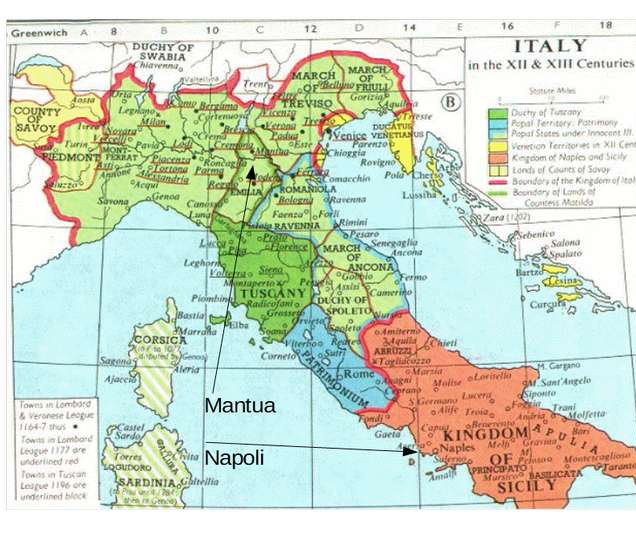
Map of Medieval Italy
In 1612, he finally moved to Mantua, where he composed numerous pieces of music for weddings, funerals, and other events of the local nobility. New duke Ferdinando promoted him to the position of the court gentleman. He proved himself a skilled organizer of various spectacles, earning him another invitation from Napoli. He became a feudal administrator and later a governor.
In a way, we can compare his roles to those of another important author from several centuries later who also worked primarily as an official in Louis XIV’s court: Charles Perrault.
These undoubtedly successful financial years probably ingrained his anti-court feelings and bitterness, which became more obvious in his later works, especially those written in the Neapolitan dialect. He signed his works in Italian and Spanish with his name and Neapolitan ones with a pseudonym – an anagram of his name – Gian Alesio Abbattutis. He maintained contact with the Neapolitan dialect and peasants throughout his life because his position required frequent visits to various properties belonging to his masters. One of his greatest wishes was to elevate the Neapolitan dialect to the status of the Tuscan dialect. Boccaccio, Dante, and Petrarch popularized the Tuscan dialect to such an extent that it later became the official language of Italy, which did not become a state until the second half of the 19th century.
The Count of Torone
Giambattista Basile worked for various princes and dukes as a governor and court writer, writing in Italian, Latin, and Spanish. He wrote many spectacles, including a masquerade for the visit of Maria of Austria, the sister of the Spanish king, to Naples.
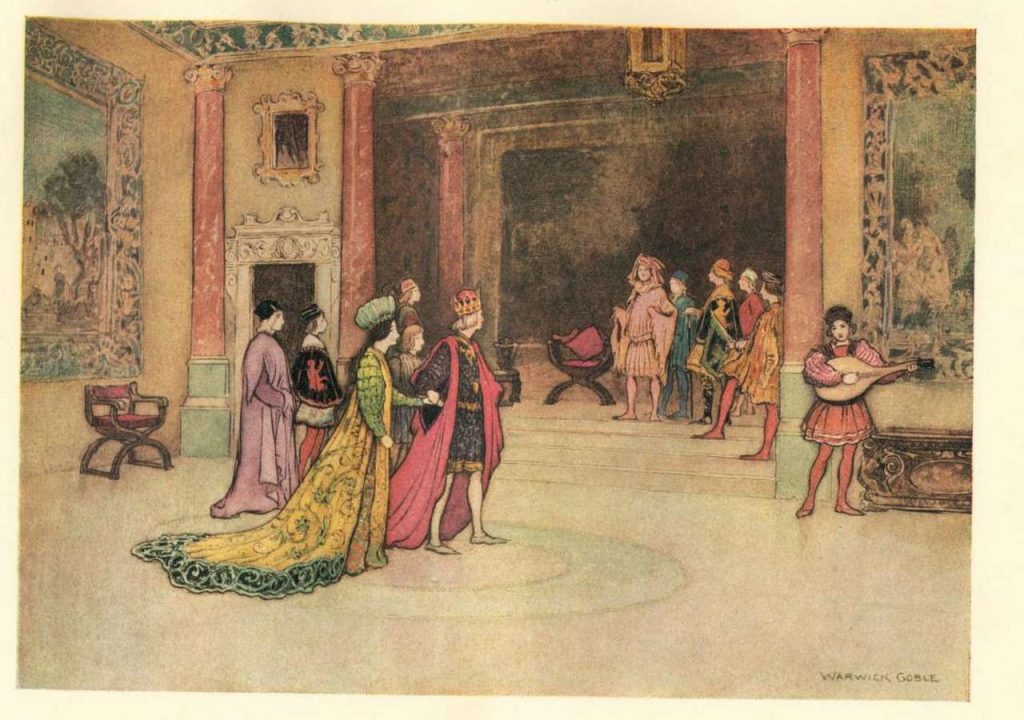
Pippo (Cagliuso) by Warwick Goble
Basile was an important member of several academies. He officially became Count of Torone, a town in the province of Caserta, in 1624, signing all subsequent works with this title. His final position was governor of Giugliano in the province of Naples. In 1631, Mount Vesuvius erupted, followed by a deadly flu epidemic. Basile was one of its numerous victims. He died on February 23, 1632.
Several of his works remained unpublished, but fortunately, his sister Adriana decided to find publishers and preserve the literary heritage of her brother, who never experienced even a fraction of her glory but created one of the most important literary works in human history. Adriana decided to continue his legacy by signing his books in Neapolitan dialect with Gian Alesio Abbattutis.
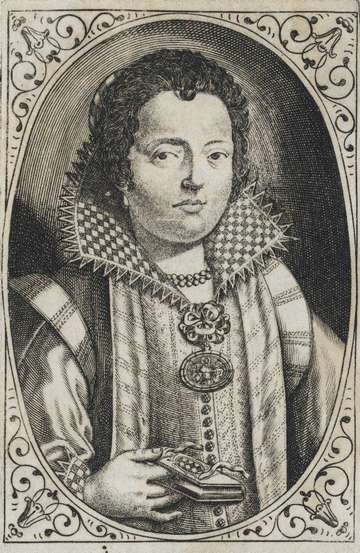
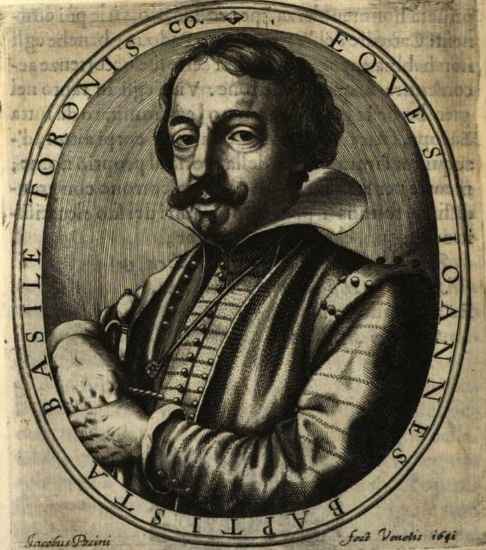
Portraits of Adriana (left) and Giambattista (right) Basile
The Pentamerone
The Pentamerone was originally titled The Tale of Tales, with a subtitle, Entertainment for Little Ones. It is the first national collection of fifty fairy tales arranged in a frame format similar to that of Boccaccio’s Decameron, Straparola’s Facetious Nights, Chaucer’s Canterbury Tales, and the Arabian Nights. There are numerous old versions of today’s classic fairy tales, such as The Sleeping Beauty, Rapunzel, Cinderella, The Goose Girl, and Diamonds and Toads. This book inspired many major fairy tale writers in the following centuries and remains an invaluable source for fiction writers and other artists.
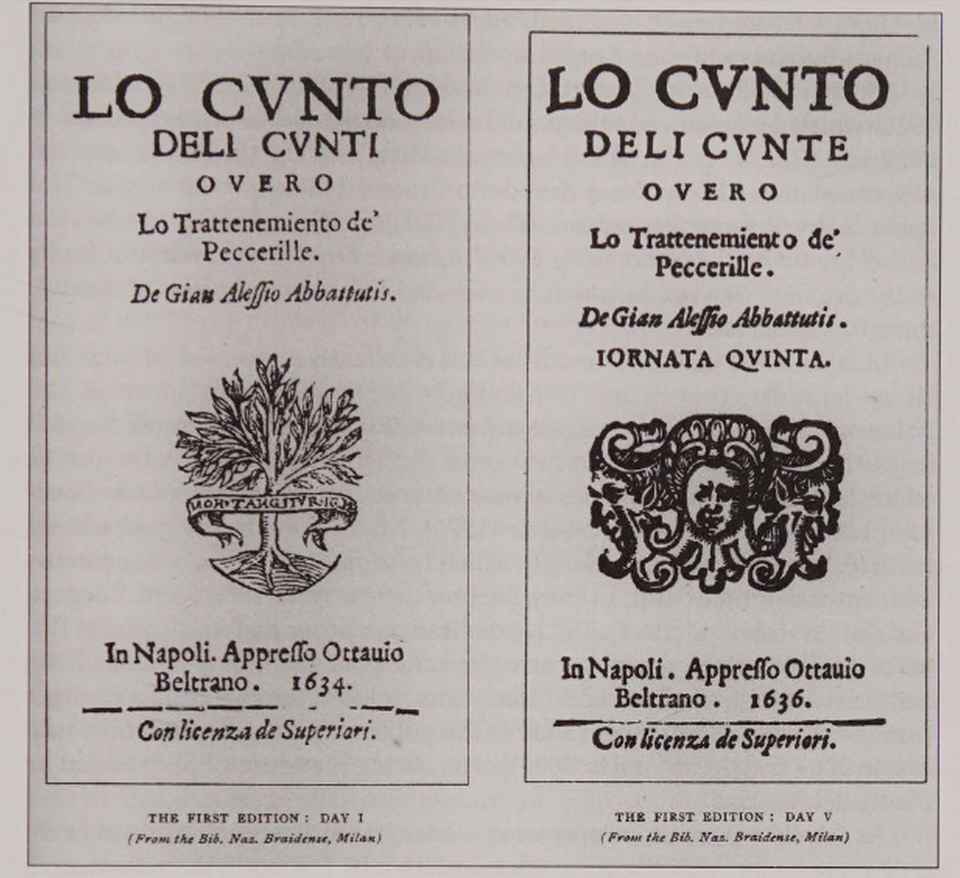
First editions of Il Pentamerone (in two books)
Written in the Neapolitan dialect, the text presented a significant challenge to translators and raised controversial issues for editors. Sir Richard Francis Burton completed the first full English translation, which was published posthumously by his wife. She did not allow any changes to the translation. But the second edition was rigorously censored just like all previous translations. Finally, in 2007, Nancy L. Canepa, a longtime scholar of Basile’s life and work, completed a full translation into modern English, which has been available in paperback since 2010.
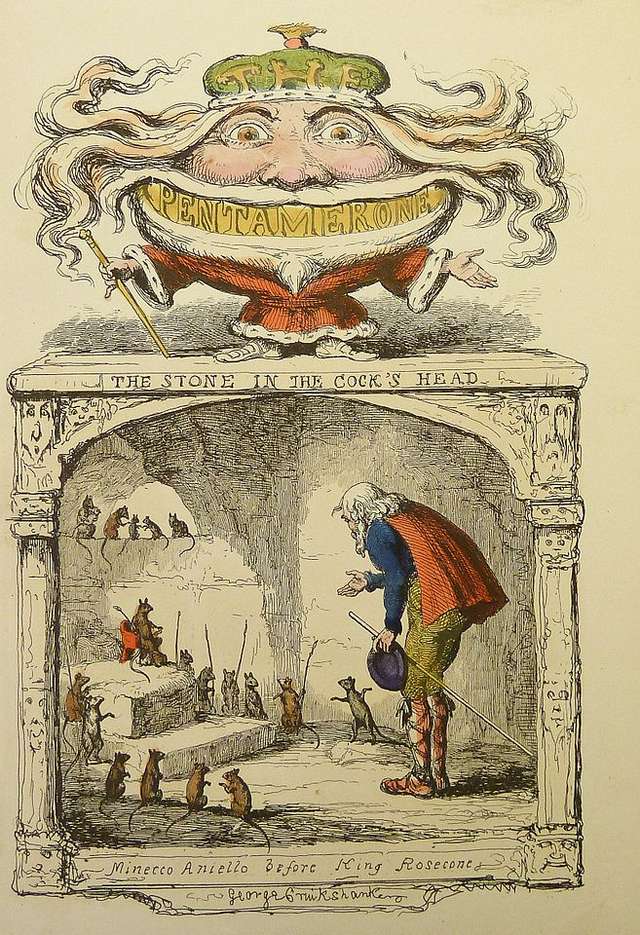
Pentamerone illustration by George Cruikshank
Here is also a full article about Pentamerone.
The 2015 movie of the same name is based on three stories from the book and uses elements from several others. Don’t miss it. Giambattista Basile would love it!
Can you add another fact about Giambattista Basile’s life and work?
Leave a Reply